Meeting the Prime Ministers Dementia Challenge – 16 April 2013
by Vanessa Heaslip, Senior Lecturer
During April practitioners from a variety of different areas (housing, acute trusts, primary care, nursing homes) joined together with staff from BUDI to critically explore ways in which services can ensure they are meeting the expectations set out in the Prime Ministers Dementia Challenge. During the day we explored current policies drives, local services, ways to support each other and engage people with dementia in service evaluation.
Feedback from the day included
- “I was shocked to hear that 67% of those with dementia do not feel part of their community. This encourages me to
try harder to involve the community in our home and with our residents”
- “Not intimidating, friendly day, went away enlightened”
- “Great varied day, reinforcing some things we are already doing as an organisation as well as areas to develop”
- “Ideas and ways where I can start to put my vision in to practice”
Professor Debra Morgan
Professor Debra Morgan from the University of Saskatchewan, Canada has recently been awarded visiting Professor status at Bournemouth University.
On Wednesday 30th January, Professor Morgan gave a lunch time seminar on her work in Rurual Dementia Care.
Professor Anthea Innes inaugural lecture
Professor Anthea Innes gave her inaugural lecture at Bournemouth University on November 14th, highlighting her exciting plans for the future of dementia care through the Bournemouth University Dementia Institute (BUDI). Prof Innes is Professor of Health & Social Care Research at the University, with a specific remit focusing on dementia research. Her lecture touched on her personal journey, from witnessing dementia first-hand in a relative; experiencing low standards of care at home and overseas, as well as examples of excellent practice in care homes, day hospitals and in the community.
Dorset has one of the oldest populations in the UK, yet one of the lowest rates of diagnosis of dementia. This suggests that under-diagnosis is rife, and Prof Innes is keen to support both the individuals affected by the condition and their carers through her work. She is building a great team of specialists including psychologists, technology experts and tourism researchers, and BUDI is a member of the Dorset Dementia Partnership. She would love Dorset to become a beacon for good practice in the UK and become the first fully dementia-friendly county.
BUDI @ Alzheimer Europe annual conference 2012

Prof. Anthea Innes, Patricia Mc Parland and Clare Cutler were accepted to deliver presentations on-going projects at the Alzheimer conference held in Vienna.
Anthea presented a paper on Telehealth for the diagnosis, assessment and management of dementia in remote Scottish communities; Patricia presented a paper on a current BUDI project concerning Dementia Friendly Tourism; Clare Cutler also presented a current BUDI project concerning International Rural Dementia care.
BUDI presents @ Brendoncare annual event
Patricia Mc Parland and Michelle Board were keynote speakers at the annual event hosted by the chairty Brendoncare. Brendoncare is dedicated to improving the quality of life for older people and this year decided to highlight dementia at their event which was attended by approximately 300 people including staff and carers.
September 2012 – Public Engagement Event
Carers experiences to inform direction of dementia work at BU
Bournemouth University Dementia Institute (BUDI) held our second public engagement event (the first was back in May when we held a public meeting that also served as the launch of our Institute). The focus this time was on hearing the experiences of carers of people with dementia from across Dorset with the aim of finding out what they felt were the key issues terms of dementia services locally; and also to gather their views about future work that BUDI should prioritise that could be captured under our remit of research, service evaluation, consultancy and education.
The carers were very open and shared their experiences of getting a diagnosis for the person with dementia from short (minority of examples) to protracted and difficult journeys (this is sadly a common finding across the UK and beyond). There were lots of examples of difficulties encountered after receiving a diagnosis too; a lack of peer support, a lack of sign posting to follow to help access help and support, a lack of concern from service providers. There were positive examples too, with specialist dementia care units being a marked improvement compared to general hospital wards and agency staff coming in to the person with dementia/carers own home to deliver personal care. What is remarkable, and again from previous research, if the creativity and perseverence carers display in finding help, finding practical solutions to the challenges of caring, finding activities that are meaningful and enjoyable for both carer and the person with dementia, I say remarkable as the absence of help and support for commonly reported problems is something that really needs to be addressed. Local clubs run by the Alzheimer’s Society and AgeUK were really valued by carers but had often been found after considerable difficulty, this might partly explain why carers were telling us that they would like more sign posting, in the words of one carer ‘a hitch hikers guide to dementia’, something that provides a short checklist with more detailed information to follow up on if requried. This was said within the context of acknowledging the wealth of information available on the internet and via service providers, but this is a maze to navigate and what carers in our forum said was that they needed the information in a simple and more accessible format.
When we asked carers what they thought BUDI should be focusing our work on, they had some reallyinteresting things to say: ‘more opportunities to talk like this’ being one, the idea of public engagement and having a chance to have a say was something they really valued. Ideas for training courses we should run to address the lack of knowledge about dementia from care providers they had encountered were readily given. Ideas for research projects focusing on carers needs, activities for people with dementia and carer support and general information giving have given us food for thought in how we turn these ideas into research projects that can be matched to funding opportunities.
We knew from previous experience of working with carers that it was important to have space for their relative with dementia to also be able to attend. In the end, of the eleven carers who participated, four brought their relative with them. We had organised a separate room with BU colleagues experienced in working directly with people with dementia offering a range of activities as well as the opportunity to share their experiences and thoughts about memory loss and what they felt was important about living with dementia; the discussion highlighted the importance of family and being able to talk to peers – the space we had created during our carers forum offered the opportunity to have this peer discussion.
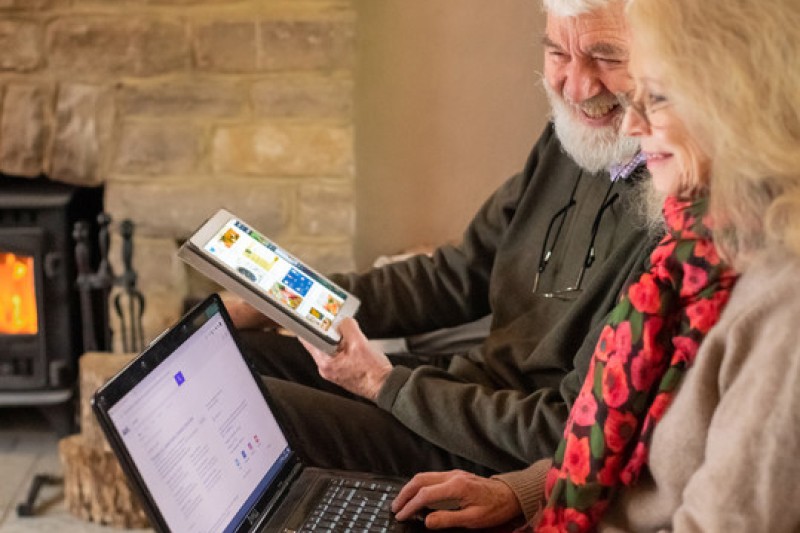
The activities that we offered that were most popular with those with dementia were Apple I pads and Nintendo DS games, technology that is often rarely offered to people with dementia based on negative expectations of the ability of people with dementia to be able to learn new skills and to engage with gaming technologies (something we are addressing via a technology club we are running for Bournemouth Council).
Engaging with a range of stakeholders is one of BUDI’s aims; we want to work in partnership with local people, to develop collaborative ways of working and to engage with local issues – after all one of our aims is to make a real contribution to improving the lives those affected by dementia. Our next engagement event is likely to bring together different stakeholders, carers, people with dementia, service providers as well as our academic community at BU working in this field. This is necessary as an academic institution can’t often deliver practical solutions directly, rather we need to find ways to influence and inform policy and practice based on our empirical work, but to do so requires acknowledging and embracing the starting points and concerns of those most directly affected by dementia, those with the diagnosis and those who provide the support and care.
16th May 2012 – BUDI Launch
Bournemouth University launched the Bournemouth University Dementia Institute (BUDI). The event was an open lecture and discussion for people with dementia, families and professionals. With BUDI, Bournemouth University seeks to address this concern locally by working with local people with dementia, their families and health and social care workers. The lecture brought together interested stakeholders in the Bournemouth area to listen to others and to discuss their experiences and views of dementia in our locality.
This well attended event was a great success and paved the way for similar events in the future.