A bumper edition covering lot of news across all the HE interest areas. We have also done a special edition on this week’s big OfS’ report analysing the future of HE Access and Participation.
Parliamentary News
Select Committee elections were held on Wednesday with some big names being elected. Here are the Chairs of the Committees most relevant to BU’s interests.
- Education – Robert Halfon (unopposed). Robert was the Chair of the Education Select Committee under the previous Parliament. He has a wealth of experience within Education and is willing to speak out to challenge and push agendas. Most recently he has been a strong supporter for FE to receive more funding and for technical education to become a mainstream alternative to the academic route with equal parity of esteem.
- Science and Technology – Greg Clark. Greg has a wealth of related experience. He was Secretary of State for Business, Energy and Industrial Strategy (which Science sits within) from 2016-19, Minister of State for Universities and Science 2014-15, and a list of other related junior minister roles as long as his speeches. He was also did a stint in Opposition as Shadow Minister for energy and climate change in 2008-10.
- Health and Social Care – Jeremy Hunt. Jeremy was the Minister for Health from 2012-2018. His ministerial period saw several bold and controversial decisions putting him at odds with the Royal College of Nursing and other major stakeholders. He stated that his role as Health Minister was “likely to be my last big job in politics” during the protests over the junior doctor contracts. He also stated he felt he was doing the “right thing” and “making difficult decisions to have better care for patients and deliver [the] manifesto commitments”.
- Business, Energy and Industrial Strategy -Rachel Reeves (unopposed). Rachel is a Labour MP and chaired this Committee under the previous Parliament since 2017. She was an economist in her pre-political career.
- Digital, Culture, Media and Sports – Julian Knight. Julian fought off Damian Collins for the Chairmanship. Damian was the previous Chair of this Committee since 2016.
- Defence – Tobias Ellwood. Local MP Tobias was a Defence Minister under Theresa May’s government. During this period he handled the responses to defence parliamentary questions and lead several areas of defence policy.
- International Development – Sarah Champion
- International Trade – Angus MacNeil
- Foreign Affairs – Tom Tugendhat
- Environmental Audit – Philip Dunne
- Environment, Food and Rural Affairs -Neil Parish (unopposed)
- Exiting the EU – Hilary Benn (unopposed)
- Home Affairs – Yvette Cooper (unopposed)
- Housing, Communities and Local Government – Clive Betts (unopposed)
- Northern Ireland Affairs – Simon Hoare (North Dorset MP, continues his Chairmanship of this Committee which commenced in 2019).
- Justice – Bob Neill
- Transport – Huw Merriman
- Treasury – Mel Stride (unopposed)
- Welsh Affairs – Stephen Crabb (unopposed)
- Women and Equalities – Caroline Nokes (unopposed)
- Work and Pensions – Stephen Timms
Global Talent Visa and other immigration news
The new fast tracked visa scheme aiming to attract scientists, researchers and mathematicians opens on 20th February. The bespoke Global Talent route will have no cap on the number of people able to come to the UK, replacing the Tier 1 (Exceptional Talent) route. UKRI are to endorse applicants from the scientific and research community.
The route aims to:
- Enable UK-based research projects that have received recognised prestigious grants and awards to recruit top global talent, benefitting HEIs, research institutes and eligible public sector research establishments
- Double the number of eligible fellowships, such as Marie Skłodowska-Curie Actions, the European Research Council and Human Frontier Science, which also enable individuals to be fast tracked.
- Continue to ensure dependents have full access to the labour market.
- Preserve the route’s flexibility by not requiring an individual to hold an offer of employment before arriving or tying them to one specific job.
- Provide an accelerated path to settlement for all scientists and researchers who are endorsed on the route.
- Provide for an exemption from our absences rules for researchers, and their dependants, where they are required overseas for work-related purposes, ensuring they are not penalised when they apply for settlement.
Home Secretary, Priti Patel, said: The UK is a world leader in science, with research and innovation that changes lives being undertaken every day in this country. To keep the UK at the forefront of innovation, we are taking decisive action to maximise the number of individuals using the Global Talent route including world-class scientists and top researchers who can benefit from fast-tracked entry into the UK.
Business and Energy Secretary Andrea Leadsom commented: Leaving the EU gives us new freedom to strengthen research and build the foundations for the new industries of tomorrow. By attracting more leading international scientists and providing major investment in mathematics, we can make the UK a global science superpower and level up our country.
Professor Julia Buckingham, President of Universities UK stated: We share the Prime Minister’s vision to position the UK as a magnet for global science and research talent. The Global Talent visa is a positive step towards this for UK universities…Universities are globally connected and this announcement signals that the UK remains open to talent from around the world. Our universities carry out life-changing research and our knowledge base, economy, and wider society will benefit from the international staff we can attract through this visa route.
Immigration – salary threshold recommendations
In June 2019 the Migration Advisory Committee (MAC) was tasked to review immigration related salary threshold levels, the threshold calculation mechanism, exemptions, and whether there should be regional salary thresholds. By September the requirement to consider how an Australian-style points-based immigration system could be introduced in the UK, with the aim of strengthening the UK labour market was added onto their task list. They were asked to consider how additional flexibility could be added to the operation of salary thresholds by awarding points for migrants’ attributes and whether these points should be tradeable (i.e. allowing points for some attributes to make up for a lack of points for others), which migrant characteristics should be prioritised and what lessons can be learnt from international comparators. The Chair of the MAC, Professor Alan Manning, has written to the Home Secretary to introduce the Committee’s findings. Manning will continue as Chair of the MAC until the end of February 2020 to ensure continuity during this key period. Here is the full report – A points-Based System and Salary Threshold for Immigration. Or if you don’t fancy wading through the 278 pages the summary at pages 5-11 gives the key points.
Alistair Jarvis, Chief Executive of UUK, responded to the report:
- Some of the MAC recommendations are a step in the right direction, recognising the importance of employer demand but concluding the skilled entry route needs reform. While there is welcome recognition that the salary threshold of £30k was too high, there should be a further reduction to attract the diverse workforce, including lab technicians and language assistants, who are vital to supporting the success of our universities. We are also concerned that standard salary levels in higher education sectors would no longer be recognised, meaning it will be harder to attract international talent into key lecturer roles. Our recent polling showed the British public overwhelmingly believe that immigrants should be welcomed into the country on the strength of their skills and potential and not be judged on their salary alone.
- Combined with the recently announced changes to Tier 1 a package of positive immigration reforms is developing but needs further improvement. The Government must ensure that new immigration arrangements avoid potential unintended negative consequences for the ability of universities to attract the brightest talent with minimal barriers and to continue our world leading research and teaching.
Research news
Maths
The new global talent route is accompanied by £60m funding available per year to double funding for new mathematical sciences PhDs, as well as boost the number of maths fellowships and research projects. This is part of the Government’s ambitions to considerably boost R&D spending.
- “Also announced by the Prime Minister was a significant boost to the UK’s world-leading mathematical sciences community, increasing support for this key discipline and expanding the pool of trained mathematicians.
- Up to £300 million of additional funding will more than double the current funding for the mathematical sciences delivered by the Engineering and Physical Sciences Research Council (EPSRC), part of UK Research and Innovation (UKRI)”.
Research Professional say:
- It is also “subject to business case”, so it might never see the light of day. Nonetheless, the £60m commitment in principle is to be welcomed, and will provide £19m of additional funding for PhD studentships (double the existing funding, ministers say). There is also £34m of additional funding for “career pathways and new research projects”, and £7m a year extra to be shared between Bristol’s Heilbronn Institute for Mathematical Research, the Isaac Newton Institute for Mathematical Sciences in Cambridge and the International Centre for Mathematical Sciences in Edinburgh.
Reduction of research bureaucracy
- “In line with the commitment to reduce administration for researchers and innovators, UKRI has also announced that applicants to UKRI will no longer be required to provide a ‘Pathways to Impact’ plan or complete an ‘Impact Summary’ within grant applications from 1 March 2020.
- The impact agenda remains incredibly important and UKRI exists to fund the researchers who generate the knowledge that society needs, and the innovators who can turn this knowledge into public benefit.
- Pathways to Impact has been in place for over a decade and we recognise the research and innovation landscape has changed since its implementation and impact is now a core consideration throughout the grant application process.
- The move supports UKRI’s ambition to create a stronger research and innovation environment that is focussed on supporting talented people and realising the full potential of their work.”
Research Integrity paper: See the paper here.
Research Professional say:
- Universities should be doing more to ensure the integrity of their research and to retain the trust of society at large, says a paper from League of European Research Universities.
- The Leru paper published on 24 January is co-authored by Antoine Hol, a law professor at Utrecht University in the Netherlands, and Inge Lerouge, an ethics and integrity coordinator at KU Leuven in Belgium, with an input from its thematic group on the issue.
- “Universities should be at the forefront of developing and implementing new approaches to research integrity that will maintain and strengthen the confidence of the public, governments, research funders and end users,” say Hol and Lerouge in the paper.
- Among their recommendations are that universities should devise and share research integrity guidelines, appoint specialist personnel on the issue, and make integrity education mandatory for students.
Chris Skidmore speech on research and innovation (24th Jan)
- I have, as science and research minister, commissioned UKRI to publish new data today on how their investments are balanced across the regions. This is a first step on the way to greater transparency of where our money is going
- …Because it will be crucial, if we are to level up R&D funding, that we not only strengthen existing capacity in every corner of the UK, but also that we can support emerging excellence in universities and institutions that are growing their research capability. We are determined to provide the funding and support to achieve this.
- Already I have announced a record increase to Higher Education Innovation Funding, bringing it to £250 million per year, which will turbocharge universities’ knowledge exchange activities. We have launched the first round of the Expanding Excellence in England Fund, we’ve got the first phase of the Connecting Capabilities Fund up and running, and we’re already well into the second round of the Strength in Places Fund.
- We are embarking on the largest ever expansion of university R&D right across the UK.
- And when it comes to supporting and growing excellent university research departments all over the country, I fully recognise the value of QR. Perhaps in the past, our focus on challenge-led funds masked a decline in that important mainstream of basic, curiosity-driven research.
- But this isn’t about picking one type of research over another. All should be lifted if we are to succeed. Already last year I worked to deliver the first real terms increase in QR in England for over a decade. And I want to do so again this year. But I also want to ensure that we are ‘levelling up’ university departments right across the country. Not just making it easier and quicker to apply for funding.
- But critically, we need to think very carefully about how all of our schemes, including QR, can benefit existing institutions in all regions. I am determined to support existing institutions, right across the country, to work with you to foster and build networks. We can already see how universities are working together in networks like the N8 group of research-intensive institutions in the North, or Midlands Innovation, or GW4 in the South West. I want us to build on these partnerships, to develop new alliances between existing universities, driving up collaboration, developing deeper partnerships with industry, and working together at scale.
- ….Because universities are not just engines of growth, or producers of skilled human capital. They are complex organisations, with complex relationships with those around them. Relationships that need to be nurtured, developed and brought to bear for the benefit of us all.
- And it’s why it was so important that Research England published the next steps on the Knowledge Exchange Framework last week. It is hard to overstate the importance of this – it is a huge step on the journey towards levelling up. The KEF will provide universities with that all-important strategic driver, putting knowledge exchange right at the heart of universities’ missions, on a par with their teaching and research. Let me be clear – the KEF will not be some meaningless, bureaucratic, tick-box exercise. It is about empowering institutions to shift up to a higher gear, not just in commercialisation or technology transfer, but elevating their entire purpose as institutions – institutions that have such extraordinary potential to make a positive difference to their towns, cities and regions.
- And our review of HEIF will help us take this even further.
- …And when it comes to improving academic life, I am committed to working with you to improve your working conditions, to address the issues raised by Wellcome Trust in their report on research culture last week, and again by UCU in their report earlier this week. I want to work with you on developing a Research People Strategy for the next decade, a new overarching approach to transforming research practice and culture.
- I want more research – but I also want better research. For I want our investment to ensure our R&D landscape is above all sustainable for the future. And that means investing sustainably in people. This is of course about building the pipeline of talent. But I also want to recognise and reward best practice in how research is being administered. So in return for increasing funding, I want to see research departments equally commit to transforming their environments. Not just by reducing bureaucracy, and fully embracing networked and open research. But also by improving reward and recognition for staff. Supporting and nurturing early career researchers who need time and space to develop, but also those with significant experience and wisdom. Giving our backing to initiatives like the Declaration on Research Assessment. And the UKRI committee on research integrity. Adopting modern approaches to knowledge exchange and technology transfer. And tackling long-standing issues around bullying and harassment.
Regional Context
A Place Strategy for UK R&D will be published in the summer, aiming to ensure funding builds on strengths of the regions. And the government will examine how the UK’s catapult centres can strengthen R&D capacity in local areas, improving productivity and contributing to greater prosperity across the UK.
Read the full UKRI data – Regional distribution of funding for research and business.
Research – Future Frameworks
A parliamentary question on the future frameworks
Q – Lord Fox: To ask Her Majesty’s Government when they intend to respond to the report by Professor Adrian Smith and Professor Graeme Reid Changes and choices: advice on future frameworks for international collaboration on research and innovation, published on 5 November 2019. [HL453]
A – Lord Duncan Of Springbank:
- Sir Adrian and Professor Reid’s report ‘Changes and Choices’ makes overarching recommendations which highlight the importance of stabilising and building on the UK capability, it presents opportunities for the future funding landscape of UK research and innovation globally, and it also provides options should the UK decide not to associate to Horizon Europe.
- The Government is carefully considering the recommendations including how this might inform future policy and plans to publish a response in due course.
Engineering & Construction
The Engineering and Construction Industry Training Board (ECITB) have launched a new Graduate Development Grant programme costing £5 million. It will support the key leadership and management skills through an apprenticeship style training scheme for graduates embarking on engineering construction careers. It is planned to support at least 150 individuals each year with each graduate receiving £12,000 over three years. The new scheme is part of the ECITB’s new business plan, is in line with employers’ October 2019 decision to raise the industrial training levy, and will help tackle the major challenges facing the engineering construction industry. This includes the need to deliver £600 billion worth of major infrastructure projects over the next decade, replace an ageing industry workforce, and supporting the transition to a net zero carbon economy. The high-level postgraduate apprenticeship style programme is interesting because, while the Government is committed to technical education to deliver Britain’s industrial strategy priorities, there has been criticism that apprenticeship levy funds have been too often used for higher level training at the expense of the level 2 and 3 apprenticeships. However, in this case skills gaps and employer support for the training runs contrary to the sector criticism
Chris Claydon, Chief Executive of the ECITB, said: “Across the engineering construction industry there is both a need to recruit and train the highly skilled workforce of the future and also to round off individuals’ academic learning with the soft skills required by employers. We have listened to calls from industry employers to fund graduate training in a similar way to apprenticeships and we are proud to support the investment employers make in their new recruits.”
Languages
Languages have been of interest for a third week running. This week the British Council have published a report on gender differences in language learning and how some schools have trialled methods to close the gender gap. The report was compiled by EPI and finds that boys’ entry and performance in GCSE languages is persistently lower than girls, with a pupil’s gender a stronger predictor of outcomes than a pupil’s level of disadvantage. These trends are salient because overall entries for languages have significantly declined in recent years. Key findings:
- There is a significant gender gap in GCSE modern foreign languages: girls are more than twice (2.17 times) as likely as boys to achieve a pass (Level 4).
- Just 38% of boys sat GCSE languages in the 2018 cohort, compared to half (50%) of all girls.
- The gap is so pronounced that gender is a stronger predictor of success in languages than a pupil’s level of disadvantage: a female pupil from a poorer background is more likely to outperform a male pupil from a more affluent background.
- While nationally the gender gap in entry and attainment is wide, there are a number of schools in England that have ‘beaten the odds’, by successfully boosting the participation and performance of boys at GCSE level. These are schools that would be expected to have lower than the average language attainment for boys, given their context, but in practice have performed well. You can read what worked in the full report from page 31 onwards and there are useful charts on pages 37 and 38 illustrating some of the approaches that were successful with boys in 31 schools.
One of the recommendations in the report is that Ofqual should continue to address the difficulty of the assessment of language GCSEs to enable more inclusive language learning for all abilities. It should monitor the impact of its recent intervention to adjust French and German grading, and consider whether similar adjustments are needed for other languages.
David Laws, Executive Chairman, Education Policy Institute, said: Progress on the uptake of languages in schools has lagged. Our Language Trends research shows that the more disadvantaged you are, the less likely you are to learn a language at school (Language Trends 2019)… Strikingly, once we control for a range of pupil characteristics, including disadvantage and prior attainment, girls are over twice as likely as boys to enter and achieve at least a grade 4 (equivalent to the old “C” grade) in a language GCSE.
Kevin Courtney, Joint General Secretary of the National Education Union, said: Gender stereotypes limit opportunities for both boys and girls. While schools do a great deal to provide all students with a broad and balanced curriculum, as this report shows, gender continues to shape the subjects chosen by pupils at GCSE . Girls are more likely to study languages, boys more likely to study physics – and this gender bias limits life chances for both. Schools can open up those horizons for both sexes, however Government policy is in many cases a barrier to this.
The Value of HE
HEPI has published a series of blogs on the value of HE.
Rachel Hewitt from HEPI wrote about 2020 being the year of value:
- “Already this year, however, there has been a bigger drive in this area, with the Office for Students releasing a consultation on the money they distribute through teaching grants due to the Department for Education setting out a reduction of £58 million. The Secretary of State for Education and the Office for Students are therefore making judgements about the value of higher education in deciding where to allocate the more limited resources.
- With the Conservative manifesto commitment to ‘tackle the problem of low value courses’ in mind, this feels like the first step in a process over the next year. This year will see the outcomes of the independent review of the Teaching Excellence Framework published and the Government’s response to the Augar review, providing plenty of opportunities to consider ways to identify courses not believed to be up to scratch – or providing good enough returns to the taxpayer. With significant spending pledges made elsewhere throughout the election campaign, this may be the beginning of university’s own period of austerity.
- While the Government might be less likely to let a university go under than their rhetoric implies, they may be quite happy to let plenty of courses they do not see as important or cost-effective go to the wall. Instead of universities needing to make the case for why their funding should not be cut, the sector will need a strong argument for why the courses they are offering the government are high quality and high value to both students and the taxpayer. And if they do not want the methods of doing this to be LEO data or TEF, they should be thinking closely of what alternatives they can offer.”
Kim Ansell (from AdvanceHE) wrote about articulating value:
- “Following a successful pilot project to test and evaluate a different way of understanding, reporting and demonstrating value, Advance HE built on work by the British Universities Finance Directors Group (BUFDG) and engaged mission groups and a small group of institutions in Let’s Talk Value, which looks at value through the lens of integrated thinking and reporting. This is a principles-based framework which helps organisations to think and report holistically considering all the resources or ‘capitals’ at their disposal, beyond just financial capital – for example, intellectual capital and human capital. This approach promotes a mature discussion about performance, provides transparent and authentic board oversight and helps a whole institution connect to a purpose and strategy.
- So what does it mean for universities in practice?
o It develops a collective vision of what value means for an institution, framed around its purpose and taking into account external factors.
o It re-defines reporting as a tool to tell a consistent story to stakeholders about the unique value proposition of an institution.
o It enables an understanding of the value of all resources and how they work together to create value by using strategic resources more holistically (such as people, knowledge and relationships and social capital).”
The latest (by Nick Hillman) is about taxpayer contribution:
- “The many changes to student funding in England over the past 20-odd years have created a system in which it is thought that taxpayers cover around 45% of the costs and students / graduates around 55%. Of course, this is a guess incorporating some heroic assumptions: you cannot know for certain until we know how well graduates will do financially in coming decades, plus we don’t know if the repayment terms will be changed again.
- However, if public funding should reflect the scale of public benefits, then we possibly have it about right, at close to 50:50 – though some might say we should slightly rebalance the burden towards taxpayers a bit, so that they pay a little more than half rather than a little under half.
-
- Yet, intriguingly, despite calling for big changes to student funding, the Augar panel did not envisage a shift in the proportions paid from public and private sources. Their review called for a shift in public funding from loans to grants. But they still envisaged taxpayers picking up half the tab and students / graduates picking up the other half.
- And as the wheels in Whitehall and Westminster grind slowly on, we should consider this: the overall idea that working out the split between public and private benefits and then charging taxpayers accordingly is unlikely to convince many people in the corridors of power…..The argument can seem overly insular and naïve, as well as unpersuasive, to public funders for three reasons.
- First, it ignores the almost limitless demands of taxpayers – which will be uppermost in the minds of policymakers as we approach the spending review. Some of these might be educational (like early years’ provision or primary school class sizes) and others might have little direct link to education (like A&E waiting lists and better transport infrastructure). Whether they actually want to or not, many students and graduates seem willing to pay more than half of the costs of their higher education, given the proportion of school leavers moving on to higher education has gone up despite the increases in cost. Asking them to continue doing paying (or even to pay more through higher fees or tougher repayment terms) frees up resources for other things in education and elsewhere, including items which are generally deemed more urgent priorities by voters.
- Secondly, we don’t apply the argument that public funding should reflect the ratio of public and private benefits to other areas of public policy. We don’t generally say, for example, that many of the benefits of healthcare are personal and thus seek to charge individuals accordingly for them – indeed, we don’t even try to recover the costs from progressive income-contingent repayments. Nor on the other hand, do we tend to argue that because some benefits of, say, private schooling are public (think of all those extra Olympic medals, Oscars and Nobel Prizes that we win), then the state should fill independent school coffers. (Although I look forward to hearing if this claim is made at today’s HMC / IDPE / AGBIS conference on independent school bursaries.)
- Thirdly, arguing that public funding should reflect public benefit plays into the hands of those policymakers who want to defund courses that look like they have particularly low financial returns – deemed ‘low quality courses’ in the 2019 Tory manifesto. If we argue public funding of courses should match the public value of those courses, then we also have to accept that public funding should be low when the public value is low.
- This is not an argument for less public funding of higher education. I have often written of:
Admissions
Coverage of UCAS data released this week suggests that at this early stage the number of conditional unconditional offers is declining. Wonkhe report that 75% of providers who currently use the dreaded “conditional unconditional offers” predicted to no longer do so in 2020. The data isn’t publically released until 6 Feb and Wonkhe’s blog is useful because it contains a tableau chart through which we can gain more hints. The UCAS prediction that conditional unconditional offers are decreasing is based on the number of early offers (but it is really too soon to tell)
Conditional unconditional offers are where a provider turns a standard offer dependent on the student achieving certain grades into an unconditional offer where they can enter the institution without reaching those grades if they agree to make the provider their first choice of institution. The Government, and schools, are vehemently opposed to this practice. They state it causes pupils to perform more poorly in their exams and sways their choice away from other institutions (particularly higher tariff institutions) where the individual might be better placed or have better long term prospects.
Research Professional (RP) write that the Education Secretary, Gavin Williamson, is considering whether conditional unconditionals are breaching students’ consumer rights: “students are being let down by the universities that are using these offers to get students through the door”. Moreover, Gavin is in favour of a full admissions overhaul describing it as an opportunity for the sector to get its house in order. Today he committed to: “Under no circumstances are ‘conditional unconditional’ offers justified and I will write to all universities continuing them asking them to end this practice.”
RP report that according to the UCAS end-of-cycle data there were:
- 33 providers whose conditional unconditional offers accounted for 1% or more of their total offers made last year, up from 29 providers in 2018.
- At 17 providers, conditional unconditional offers accounted for 20% or more of their total offers made—a net increase of two providers compared with 2018.
There were seven providers where conditional unconditional offers made up more than 50% of the total offers made to students, compared with two providers in 2018: Falmouth University (68%); Canterbury Christ Church University (66%); the University of Lincoln (59%); Birmingham City University (56%); Bournemouth University (56%; and De Montfort University (55%). Four (including BU) have confirmed they will not make conditional unconditional offers for the 2020 recruitment cycle.
RP continue:
According to UCAS Medium-tariff providers (as determined by the average number of UCAS points required to get onto a course) are most likely to make a conditional unconditional offer..
- In 2019, 13.7% made by medium tariff providers were conditional unconditional (up 1.3% on 2018)
- It was 9.4% lower-tariff and 3.3%t for higher-tariff institutions.
Clare Marchant, Chief Executive of UCAS, stated: “Early indications point very strongly to a behaviour change in 2020. We forecast as many as 75% of universities and colleges which made conditional unconditional offers in the 2019 cycle will no longer make these in 2020.
Whilst we predict a fall in these types of offers, we will likely see universities and colleges deploy other offer-making strategies, including direct unconditionals, in this competitive market.”
Research Professional make a tongue in cheek response: As Playbook has said before, it could be considered harsh for the political powers that be to introduce a more marketised higher education and then get annoyed when universities start competing like they are in a market.
OfS welcomed the predicted decline in these types of offers and reminded the sector that their review of the HE Admissions system, including considering a post-qualification admissions system would begin soon. Nicola Dandridge stated: We will shortly be launching a review of England’s admissions system, working with partners from across education to ensure that we have a system of admissions which is fair, easy to understand, and allows students to demonstrate their achievement and potential. This review will build further evidence about unconditional offers and their impact in the context of the entire admissions system.
Equality Data
The UCAS end of cycle data also highlights that:
- more students in receipt of free school meals (fsm) are attending high-tariff universities – the between fsm students (18.9%) and other students (35.6) is at a record low.
- Students from a less advantaged background are more likely to study closer to home
And Wonkhe’s David Kernohan has a more nuanced delve into the offer making data here (scroll down to the bottom half of the email).
Student Accommodation
The Minister for Universities gave a speech on students accommodation this week, raising a number of concerns and outlining some possible solutions.
- As your Universities Minister, I am keen to ensure that no student is exposed to the types of issues we sometimes see in the news; no student should be left in the lurch due to late completion, priced out of adequate accommodation or end up in a building with too few social spaces that can leave them feeling isolated or lonely.
- … Tackling these awful and disappointing issues will require sustained collaborative effort. That’s why I called together students, sector bodies, universities, PBSA providers and regulators just before Christmas, to make sure their voices are heard on how we work together to identify solutions in this new decade.
- I’ve had a chance to reflect on the fascinating insights that came out of this summit, and I am struck by the opportunity student involvement can pose for developers and universities.
- Meaningful consultation with students in the design of rent structures can help ensure timely rent payments while easing money worries and boosting wellbeing. Involving students, universities and local authorities at the design stage of new accommodation allows individual places to ensure they have the right mix of rooms and spaces for their specific student population, and makes sure students are happy with what they’re paying for.
- Some messages were not as positive. It is not right that accessible accommodation is often the most expensive option available to students; if disabled students are forced to pay premium prices for suitable rooms, this is tantamount to a tax on disability, and cannot be allowed to continue.
- … Speaking to some of you in the sector, I have been impressed by the real-life benefits that have been realised through partnership-working. There are so many positive examples of this; I want to continue to see PBSA suppliers notifying universities early of construction delays so impacts on students can be minimised, and of accommodation managers developing information sharing arrangements to deliver support to struggling students.
- … We also need to look at what the latest updates to the Unipol and UUK accommodation codes should be. I want us to consider not only what we can do to strengthen compliance with them, but also to hit developers hard in the pocket if they refuse to seek code accreditation.
- We all need to think hard about the quality and availability of accommodation information to students and their families, including its costs and where the profits go. Students must have access to the right facts to be able to make the right choices – they have consumer rights. And I want us to think about what the best-practice models of PBSA provision are and how we ensure the sector adopts them.
Fee changes
A statutory instrument (SI) with implications for HE was laid in the House of Commons on the 24th January: The Education (Student Fees, Awards and Support etc.) (Amendment) (No. 2) Regulations 2020. The regulatory changes will become law on 13th February 2020 although there is an objection period window ending on 12th March 2020. You can read all the changes here, below are the most relevant changes:
- To provide that a student who has been granted indefinite leave to remain in the United Kingdom as a victim of domestic violence or domestic abuse is eligible to receive funding in respect of a further education course, an undergraduate higher education course, a master’s degree course or doctoral degree course, or a course at the European University Institute
- To provide that a student who transfers from a full-time course which started before 1st August 2019 to an accelerated course which started on or after 1st August 2019 will be entitled to apply for a fee loan for their accelerated course up to the higher limits that apply for an accelerated course starting on or after 1st August 2019 and grants and loans for living and other costs.
- Makes provision in circumstances where a student’s household income is based on the incomes of both parents, or a student’s parent and the parent’s partner. In these circumstances, where the parents’, or parent and partner’s, income falls by 15% or more compared to either the “prior financial year”, or the previous financial year, the Secretary of State may assess the parent’s, or parent’s partner’s, income for the current financial year.
- In relation to a course which begins on or after 1st August 2020, to provide that a student who has previously received a grant under regulation 33(1) of the Education (Student Support) Postgraduate Master’s Degrees (Wales) Regulations 2019 is not eligible for a master’s degree loan.
- To provide that when a student repeats a module or similar unit of work forming part of a master’s degree, that repeat study is not funded.
- In relation to a course which begins on or after 1st August 2020, to provide that a student who is in receipt of funding under the Educational Psychology Funded Training scheme is not eligible for a doctoral degree loan.
- To increase the maximum amounts of master’s degree and doctoral degree loans for students beginning those courses on or after 1st August 2020.
Social Mobility
We’ve done a special feature on this week’s big news – the OfS report which analyses the future of HE Access And Participation by amalgamating all the HE providers’ Access and Participation Plan targets to create a national change picture. Read it here.
Other news
Merchandise: Brexit will be a major historical event. The Conservatives are celebrating Brexit with some thoroughly British official merchandise. The tea towel is my favourite!
Student health: Derek Thomas MP used Prime Minster’s Questions to highlight that 40% of students haven’t seen a dentist in the last year. He asked whether the PM would meet with him to resolve this inequality, Boris agreed.
Antisemitism: The Government has announced new funding to help universities tackle antisemitism.
The new funding will enable 450 student leaders, journalists and academics to be taken to Auschwitz over the next three years. They will be expected to educate tens of thousands of students on their return. Specifically, students will participate in a seminar which will deal explicitly with campus-specific issues and how to identify and tackle antisemitism. The student programme will be delivered by the Holocaust Educational Trust in partnership with the Union of Jewish Students, following a successful scheme ran in 2018-19. To drive engagement amongst the student population, the programme is planned to work with influential student publications and media, as well as student leaders and networks to disseminate the messages they have heard first hand to tens of thousands of students across the country. Alongside the announcement Communities Secretary Robert Jenrick is urging all universities and Local Authorities to adopt the International Holocaust Remembrance Alliance (IHRA) definition of antisemitism.
Fire Safety: A Parliamentary question on university fire safety –
Q – Steve Reed (Croydon North): To ask the Secretary of State for Education, how many university vice-chancellors have replied to his letter of November 2019 on the issue of fire safety procedures and safeguards across university residential, teaching and research accommodation. [5444]
A – Chris Skidmore (Kingswood): We are pleased to see that the engagement with the letter of 18 November… to all 138 higher education institutions has had a 100% response rate. The safety of pupils, students and staff remains ministers’ highest priority. Since the Grenfell fire, the department has worked closely with the Ministry of Housing, Communities and Local Government, as part of the cross government programme to remediate buildings with potentially dangerous cladding, including student accommodation. That approach will continue, and we welcome the package of measures to improve building safety standards announced on 20 January by my right hon. Friend, the Secretary of State for Housing, Communities and Local Government. We are already looking at ways to ensure the education estate complies fully with the updated advice to building owners, announced as part of that package, on actions they should take in relation to cladding.
MATHS Resit: Mathematics in Education and Industry have published a report investigating the feasibility of a new maths GCSE curriculum for post-16 resit students which tackles a recommendation from the Smith review – “In view of the low GCSE resit success rates and new GCSE requirements the DfE should review its 16-18 resit policy with the aim that a greater proportion of students…attain appropriate mathematical understanding by age 18. The report outlines a curriculum for a new qualification that focuses on the maths needed for everyday life and work, which also has sufficient rigour to meet the requirements of a GCSE qualification. It recommends that such a post-16 maths GCSE qualification should be developed and that it should have the same status as GCSE Mathematics at the same grade.
Maintenance Grants: This Parliamentary Question gives no hints on the Augar Review outcomes the sector is waiting for
Q – Caroline Lucas: To ask the Secretary of State for Education, what recent assessment he has made of the potential merits of introducing non-repayable maintenance grant funding in (a) further and (b) higher education. [5382]
A – Chris Skidmore: The independent panel’s report on the Review of Post-18 Education and Funding was published in May 2019. The government is considering the recommendations made in the report, including those relating to maintenance support for higher education and further education students. The government will conclude the review alongside the next spending review.
Overseas Campus: If you ever wondered how universities with an overseas campus are monitored here is your answer:
Q – Lord Storey: To ask Her Majesty’s Government whether they inspect the overseas campuses of UK universities. [HL478]
A – Baroness Berridge: UK higher education providers with degree-awarding powers are responsible for the academic standards of their awards and for the quality of provision, irrespective of where or how courses are delivered or who delivers them. The external review of Transnational Education (TNE) has been carried out by the Quality Assurance Agency for Higher Education (QAA) on behalf of funders, regulators and UK providers since it was established in 1997. As higher education is a devolved matter, each nation of the UK will deliver quality assurance of TNE according to the process adopted for higher education institutions within its jurisdiction.
Historically, QAA has carried out TNE reviews, which have included a range of activities including overseas campus inspection, scrutiny of partnerships from the UK end including video conferences with providers, and the analysis of data on TNE provision.
The process for carrying out TNE review activity for UK higher education institutions has been the subject of a recent consultation which ended in January 2020, carried out by Universities UK International, Guild HE and QAA.
The consultation responses are currently being considered and the future model of TNE review, including overseas campus inspection, will be decided through this process and the consulting organisations will jointly analyse the responses and develop an action plan.
Micro aggressions:
Q – Dr Julian Lewis: To ask the Secretary of State for Education, whether he plans to take steps in response to proposals by Sheffield university to pay some students to monitor and report on statements made by other students which might be regarded as micro-aggressions; what progress he has made on bringing forward proposals to safeguard free speech in colleges and universities; and if he will draw the lessons of George Orwell’s Nineteen Eighty-Four to the attention of college and university staff during this 70th anniversary year of the author’s death. [5319]
A – Chris Skidmore: This government will ensure that our universities are places where free speech can thrive and work to strengthen academic freedoms. The freedom to express views openly, challenge ideas and engage in robust debate is crucial to the student experience and to democracy. Lawful freedom of speech and the right to discuss all kinds of issues is an integral part of our higher education system.
Under the Education (No 2) Act (1986), higher education providers have a specific duty to take reasonably practicable steps to secure freedom of speech within the law for staff, students and visiting speakers. Higher education providers also have clear responsibilities under the Equality Act (2010).
Higher education providers should discharge their responsibilities fully and have robust policies and procedures in place to comply with the law and to investigate and address incidents reported to them. Universities, as autonomous bodies regulated by the Office for Students, should ensure that they are balancing their legal duties carefully and proportionately.
The government worked with the Equality and Human Rights Commission, who published clear guidance in February 2019 on freedom of speech in higher education to support higher education providers and students’ unions in delivering their duties.
The government will be looking closely at how well higher education providers are meeting their obligations and will consider whether further action is needed, working with a range of partners.
Schools: There was a written ministerial statement on the new application system for initial teacher training and the pilot scheme being trialled in the South West. Education Minister Gavin Williamson announced £24 million investment for North East schools to tackle challenges in the region through extra teacher training and greater access to employers and universities for young people.
Equality Charters:
Q – Caroline Lucas: To ask the Secretary of State for Education, if he will take steps to ensure that universities use universally accessible (a) student surveys and (b) data collection processes to monitor university compliance with equality charters; and if he will make a statement. [6062]
A – Chris Skidmore: Higher education providers (HEPs) are independent and autonomous institutions. While we recognise the work of Advance HE and the value that both the Race Equality and Athena Swan charters bring to the sector the government does not compel HEPs to participate in equality charters.
However, progress on addressing both gender and racial equality in HE has been unacceptably slow, particularly for minority ethnic staff securing senior university leadership positions. It is essential that HEPs urgently address those institutional and cultural barriers standing in the way of women and minority ethnic staff and students so that everyone who has the potential to thrive at university, does so.
The government has brought forward sweeping reforms of higher education to tackle equality of opportunity through the Higher Education and Research Act 2017 (HERA). This includes a mandatory condition of registration which, for the first time, requires all higher education providers registered with the Office for Students (OfS) to publish data including the number of applications for admissions, offers made and acceptance rates broken down by gender, ethnicity and socio-economic background. The OfS has issued guidance to higher education providers on how to comply with the transparency condition.
The OfS has also made available online an interactive dashboard of data, which will help to evaluate access and participation at specific universities and colleges. The dashboard can be used to compare different student groups (for example, disabled students or students by their ethnic background) and their peers, and reveal gaps in access, continuation, success and progression. More information is available at the link.
Subscribe!
To subscribe to the weekly policy update simply email policy@bournemouth.ac.uk
 The 2025 NIHR Global Health Research Academy Member event will take place on Tuesday 13th and Wednesday 14th May. The NIHR recognizes that career progression is a common challenge for early-career researchers. This year the event’s theme is ‘Empowering Early-Career Researchers: Navigating Careers in Global Health’. This two-day online event aims to equip participants from across the globe with the skills and knowledge to navigate and build a career in global health research.
 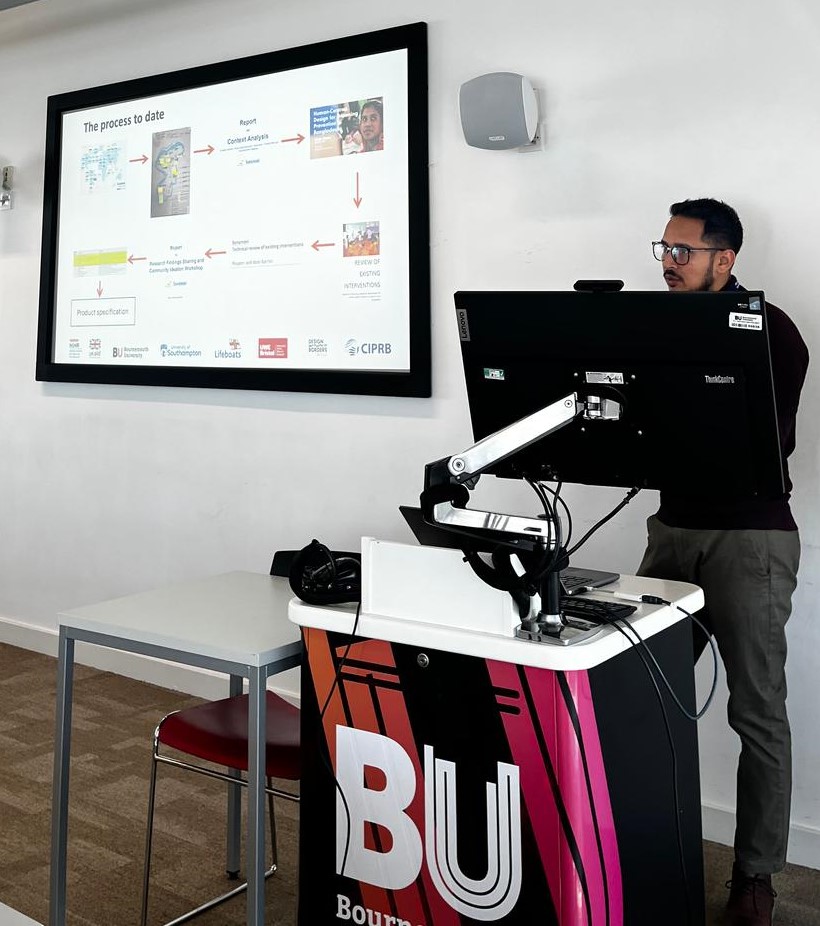 Bournemouth University staff and students participating in the NIHR Research and Innovation for Global Health Transformation Call 4: Drowning Prevention for newly mobile infants under 2 years in Bangladesh programme have been invited. This NIHR-funded project is called Sonamoni and BU’s student Md. Shafkat Hossain, whose PhD assessed the work in Bangladesh, is one the participants, as is our colleague from Bangladesh Notan Dutta. In the afternoon BU’s Edwin van Teijlingen who will be chairing a session on ‘Funding & Grant Writing’.
 Sonamoni is being coordinated by Bournemouth University in collaboration with the Centre for Injury Prevention and Research (CIPRB) in Bangladesh as well as the University of the West of England, Bristol, the University of Southampton, Design Without Borders (DWB) in Uganda, and the Royal National Lifeboat Institution (RNLI). This project, with Prof. Dr. Aminur Rahman (at CIPRB) as Bangladesh lead, includes the above mentioned BU-based PhD project. The interdisciplinary team at Bournemouth University covers three faculties through: Dr. Mavis Bengtsson, Dr. Kyungjoo Cha, Dr. Mehdi Chowdhury, Dr. Yong Hun Lim, Mr. John Powell, and Prof. Edwin van Teijlingen.
 Hydreco Hydraulics is sponsoring and supporting two PhD projects from BU’s Department of Design and Engineering, in the Faculty of Science and Technology. One project involves the design and provision of the mechanical parts, while the other project involves the provision of the control systems. The company has just started testing the first prototype valve and its control system algorithm. The aims of the planned tests are to study the performance of the valve, compare it to the simulation predictions, and to identify its mechanical characteristics needed to fine tune the control algorithms.
 Mr Philip Godfrey and


![InnovateUK_LogoA_Interim_RGBx320govuk[1]](http://blogs.bournemouth.ac.uk/research/files/2014/12/InnovateUK_LogoA_Interim_RGBx320govuk11-300x90.jpg) Innovate UK and the
Innovate UK and the 



 EPSRC have issued the following









 Art and Design: History, Practice and Theory academics – would you like to get more involved in preparing our next REF submission?
 UKCGE Recognised Research Supervision Programme: Final Deadline Reminder
 The significance of Rights and Protocols in Disaster Response
 Celebrate World Wellbeing Week This June
 Official book launch at Bournemouth University
 Take a Break: Join the Creative Wellbeing Event
 Horizon Europe Cluster 3 (Civil Security for Society) 2026 Calls Now Open
 MSCA Doctoral Networks 2026 Call Information Webinar
 ESRC Festival of Social Science 2026: Application Deadline Extended to Thursday 25 June 2026
 Reminder: Register for the ESRC Festival of Social Science 2026 Information Session
 ECR Funding Open Call: Research Culture & Community Grant – Apply now
 ERC Advanced Grant 2025 Webinar
 Update on UKRO services
 European research project exploring use of ‘virtual twins’ to better manage metabolic associated fatty liver disease