Bournemouth University (BU) is teaming up with the Swedish National Defence College (SNDC) to organise a one day workshop in London on 18th June 2014 to analyse the implications of the recent events in Ukraine.
The event is sponsored by the SNDC and forms part of BU’s Conflict, Rule of Law and Society research activities. In particular, the workshop is aligned with the research projects by Dr Bachmann and Dr Klinkner in the area of international law and security. Dr Bachmann has recently authored two blogs on the topic: “Crimea and Ukraine 2014: A Brief Reflection on Russia’s ‘Protective Interventionism” and “Russia’s ‘spring’ of 2014”.
The workshop will bring together legal experts from Oxford, Sussex and Kings College as well as military experts to discuss a variety of issues arising from Russia’s annexation of the Crimea in spring 2014 and its continuing expansion into Ukraine. Particularly, the focus will be on the:
(1) Legality of Russia’s actions in Crimea and Ukraine and the Legality of Crimea’s referendum.
(2) Tactics and Operations: Russia’s use of Hybrid and Cyber Assets in its operations.
(3) History and Lessons for the future.
The organisers are Associate Professor Hakan Gunneriusson (SNDC) and Associate Professor Sascha DOV Bachmann and Dr Melanie Klinkner from Bournemouth University.







 It’s International Open Access week
 3C Event: Research Culture, Community & Connections – Wednesday 11 November 3-4pm
 ECR Opportunities: New Development Programme, Researcher Grants & Upcoming Events
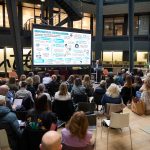 Help us capture BU’s knowledge exchange activity HE-BCI survey 2025–26
 Verbal autopsy paper published two days ago
 ESRC Studentships for 2027 Entry: Opportunity Now Open
 Horizon Europe Cluster 3 (Civil Security for Society) 2026 Calls Now Open
 MSCA Doctoral Networks 2026 Call Information Webinar
 ESRC Festival of Social Science 2026: Application Deadline Extended to Thursday 25 June 2026
 Reminder: Register for the ESRC Festival of Social Science 2026 Information Session
 ECR Funding Open Call: Research Culture & Community Grant – Apply now
 ERC Advanced Grant 2025 Webinar
 Update on UKRO services
 European research project exploring use of ‘virtual twins’ to better manage metabolic associated fatty liver disease