Category / Women’s Academic Network

New chapters published in maternity book on risk

A few days ago Palgrave Macmillen published Risk and Uncertainty in Maternity Care: Putting Risk in Its Place.  This edited book examines the way risk is defined and employed in maternity care across the world.  The 25 chapters reflect in different ways on how the management of risk shapes the organization and experience of maternity services. Drawing from investigations of the way risk operates in contemporary society, the authors challenge taken-for-granted understandings of risk in maternity care and early parenting, showing how risk is not simply a value-free assessment of potential harms but is, in fact, a complex social and political way of seeing, knowing about, and performing pregnancy and birth.

This edited volume contains two chapters which have co-authors associated with BU.  Chapter 15 ‘Communicating Maternity Risks Using Social Media in England and Australia is written by Sheena Byrom, Mandie Scamell, Hannah Dahlen, Joanne Rack.  This chapter addresses childbirth in the digital age. Over the last two decades, social media—a group of internet-based applications that facilitate the development and sharing of information—revolutionised the way we connect and communicate. These new media are now an ever-present part of our daily lives. The authors explore how social media shapes the way risk is understood by all of those involved in pregnancy, labour, and birth.Sheena Byrom holds an honourary doctorate from Bournemouth University, and Joanne Rack is doing her for-year Clinical Doctorate in the Centre for Midwifery & Women’s Health (CMWH) specialising in personalised care for women of advanced maternal age. This PhD study is matched-funded by University Hospitals Dorset (UHD) NHS Foundation Trust and Bournemouth University.

Whilst chapter 16 From Uncertainty to Risk: How Mass Media in the UK and the US Generate Fear of Childbirth is co-authored by professors Hundley and van Teijlingen who are co-leads of the CMWH.  This chapter addresses the growing intolerance for the uncertainties associated with childbirth. While research has yet to establish a cause-and-effect relationship between media representations of pregnancy and birth and societal views of the childbirth experience, analysis of mass media accounts of childbirth can help explain why those involved in childbirth—maternity service users and providers alike—increasingly define birth as a site of risk. Existing studies of the representation of birth in mass media allow us to examine how the complex interaction between media, culture, and birth amplifies perceptions of risk. The authors illustrate the ways mass media influence, not just attitudes towards birth, but the way birth is managed.


References:

  1. Byrom, S., Scamell, M., Dahlen, H., Rack, J. (2026)  Communicating Maternity Risks Using Social Media in England and Australia [Chapter 15], In: Scamell, M., De Vries, R, Coxon, K. (eds) Critical Studies of Risk and Uncertainty in Maternity Care : Perspectives from Australia, Europe, and the United States, Palgrave Macmillan, pp. 309-326.
  2. van Teijlingen, E., Hundley, V., De Vries R. (2026) From uncertainty to risk: how mass media in the UK and the US generate fear of childbirth [Chapter 16], In: Scamell, M., De Vries, R, Coxon, K. (eds) Critical Studies of Risk and Uncertainty in Maternity Care : Perspectives from Australia, Europe, and the United States, Palgrave Macmillan, pp. 327-346.

Gender and street names

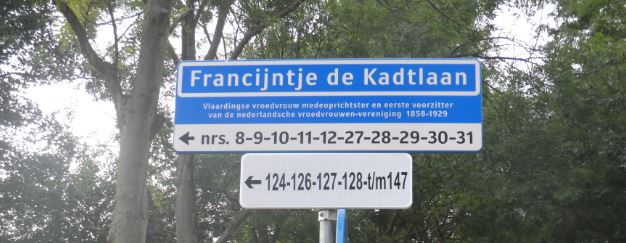
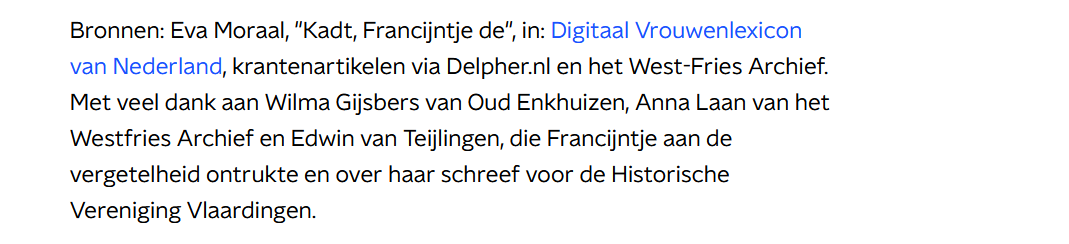
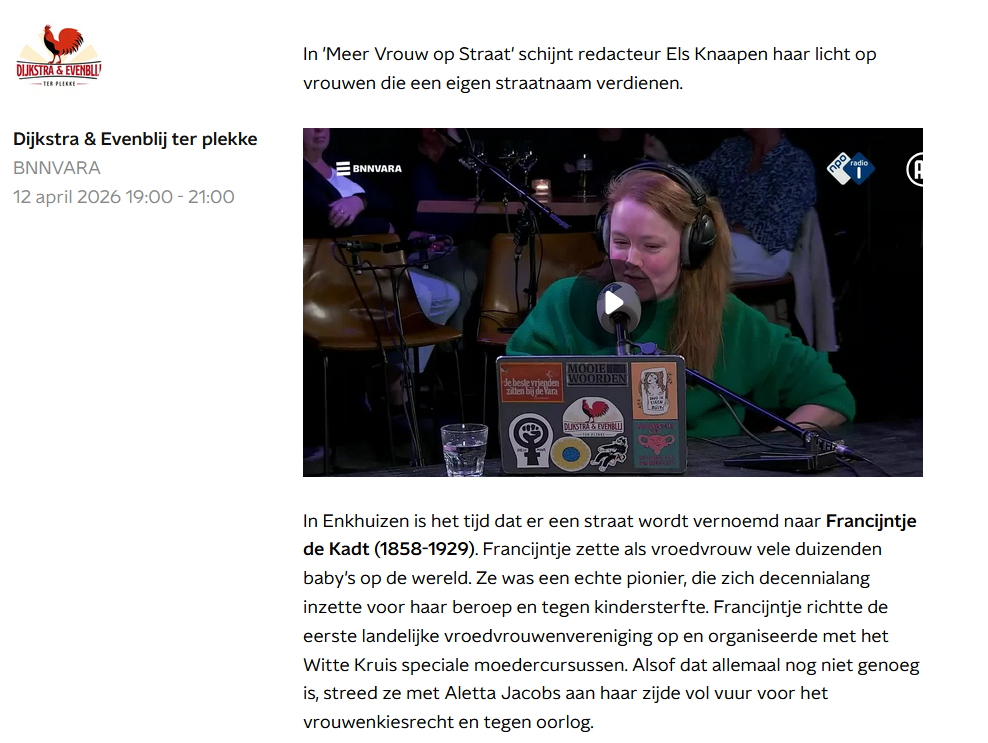
Last week I was contacted by a Dutch journalist, Els Knaapen, about the live and work of Francijntje de Kadt.  The latter was the first chair of the Dutch Midwifery Association and I had come across her 30 years ago as part of my own PhD research.  Els was interested in the contribution Francijntje had made in the town of Enkhuizen after her retirement as a midwife.  As part of a radio programma called ‘Meer Vrouw op Straat’, refering to the fact that too few women have been given streetnames to honour their contributions to society.  Els was calling for the Enkhuizen town council to name a straat after Francijntje, just like the town of Vlaardingen had done a decade ago.
Some 15 years ago I proposed to the city of Vlaardingen argueing that Francijntje de Kadt deserved a street name, as highlighted in an earlier BU Research Blog. With my recommendation I sent the ‘Street Name Committee’ in Vlaardingen my Dutch-language publications on the work of Francijntje de Kadt [1-3]. A few months later the secretary to the Street Name Committee wrote to say that my proposal had been accepted and that her name would be given to a street in a new development of the former local hospital grounds.
Yesterday the radio programme, which is part of a progressive station BNNVARA, was aired in which Els Knaapen justified why Enkhuizen needs to honour its former citizen.  In Enkhuizen Francijntje was active in maternity care education and she was a member of the Assocation for Women’s Votes.  All this after she retited from being the town’s midwife of Vlaardingen.
Prof. Edwin van Teijlingen
References:
  1. van Teijlingen, E. (2002) Ondergang eerste pensioenfonds voor vroedvrouwen (in Dutch: Decline of the first pension fund for midwives), Tijdschrift voor Verloskundigen (in Dutch: Journal for Midwives), 27(12): 684.
  2. van Teijlingen, E.R. (2003a) Berichten – Francijntje de Kadt (1858-1929), Tijdschrift voor Verloskundigen (in Dutch: Journal for Midwives), 28(12): 630-633.
  3. van Teijlingen, E.R. (2003b) Francijntje de Kadt (1858-1929). Vroedvrouw te Vlaardingen en eerste voorzitter van de Nederlandsche vroedvrouwenvereeniging, Tijd-schrift (in Dutch: Time-Magazine) 88: 14-23.

Four BU students at national midwifery conference

This week four postgraduate midwifery students from Bournemouth University attended the Royal College of Midwives annual Education & Research conference in London.  Their contributions included studies on: (1) ‘A Unique Approach to Smoking Cessation During Pregnancy’ by Ph.D. student Louise Barton; (2) Investigating how women make decisions about prescribed psychiatric medication use during pregnancy by M.Res. student Jessica Correia; (3) Harnessing midwives’ research delivery expertise to encourage medics’ participation in research’ by M.Res. student Susara Blunden; and (4) ‘Personalised care for women of advanced maternal age, from conception to postnatal care: A mixed-methods study’ by Ph.D. student Joanne Rack. Joanne was also at this conference in her capacity of the newly appointed Editor-in-Chief of The Practising Midwife. 

Congratulations to these postgraduate students and their supervisors.

Profs. Vanora Hundley & Edwin van Teijlingen


New CMWH paper on maternity care

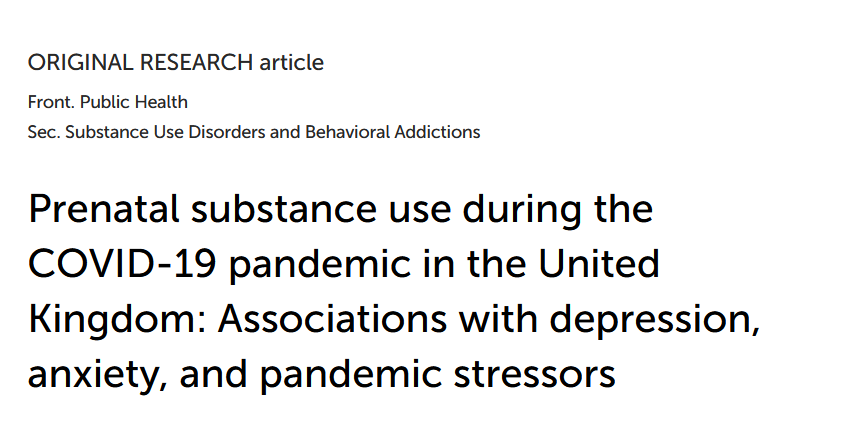
The editor of Frontiers in Public Health have accepted our latest article from the EPPOCH study.  This latest paper ‘Prenatal substance use during the COVID-19 pandemic in the UK: Associations with depression, anxiety, and pandemic stressors‘ focuses on the use of substances in pregnancy in the UK during the COVID-19 pandemic [1].  Our previous EPPOCH paper, in line with several other population-based studies, highlighted that COVID-19 was associated with high levels of depression and anxiety during pregnancy in the UK [2].

This new publication reports on a cross-sectional analysis of baseline EPPOCH data (n = 3292; June – Nov. 2020). Participants reported alcohol, tobacco, cannabis, and illicit drug use before and after recognition of pregnancy, alongside validated measures of depression, anxiety, pregnancy-related anxiety, and pandemic stressors. Linear regression models examined associations between mental health, COVID-19 stressors, and substance use after pregnancy recognition. A qualitative thematic analysis of 380 open-ended responses explored perceptions of substance use post-pregnancy recognition. Results: Alcohol was the most commonly used substance before pregnancy. Following pregnancy recognition, tobacco (8.75%) and alcohol (8.60%) were the most frequently reported substances, followed by cannabis (1.49%) and illicit drugs (0.12%). Tobacco use after pregnancy recognition was associated with higher levels of depressive symptoms and pandemic stressors, including perceived personal health threat and not receiving necessary care. Prenatal co-use of substances was associated with higher depressive symptoms and pandemic-related financial difficulties. Qualitative themes included continued substance use until pregnancy detection, vaping as a perceived safer-use strategy, and midwifery advice influencing prenatal substance use decisions.

In this large UK pregnancy cohort recruited during the COVID-19 pandemic, substance use following pregnancy recognition – particularly tobacco – was linked to depression and pandemic-related stressors. These findings highlight the importance of equipping midwives and other healthcare professionals with clear, evidence-based guidance on prenatal substance use, particularly during global health crises.

This interdisciplinary project is led by Dr. Melanie Conrad in Germany.  The lead author for the paper is Ph.D. candidate Swarali Datye, whilst three members of the Centre for Midwifery & Women’s Health (CMWH): Dr. Latha Vinayakarao and Prof. Minesh Khashu both working in University Hospitals Dorset NHS Foundation Trust (UHD) and both Visiting Faculty at BU and Prof. Edwin van Teijlingen are team members and co-authors on this paper.


References:

  1. Datye, S., Peters, E.M.J., Windhorst, A.C., van Teijlingen, E., MacRae-Miller, A., Vinayakarao, L., Khashu, M., Fahlbusch, F.B., Conrad, M.L. (2026) Prenatal substance use during the COVID-19 pandemic in the UK: Associations with depression, anxiety, and pandemic stressors Frontiers in Public Health. (forthcoming)
  2. Datye, S., Smiljanic, M., Shetti, R.H., MacRae-Miller, A., van Teijlingen, E., Vinayakarao, L., Peters, E.M.J., Lebel, C.A., Tomfohr-Madsen, L., Giesbrecht, G., Khashu, M., Conrad, M.L. (2024) Prenatal maternal mental health and resilience in the United Kingdom during the SARS-CoV-2 Pandemic: A cross-national comparison, Frontiers in Psychiatry, 15 https://doi.org/10.3389/fpsyt.2024.1411761

New Social Work text with BU editors

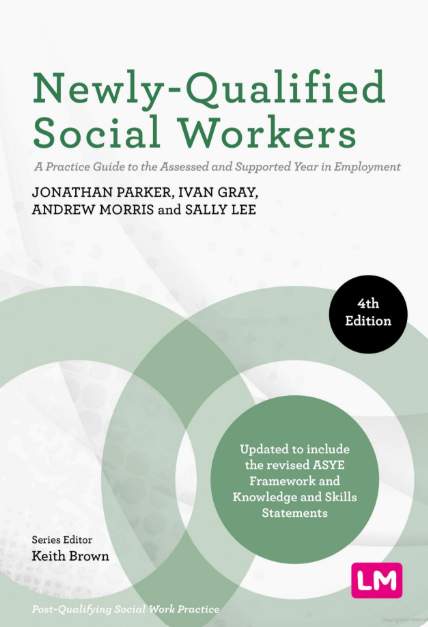
Congratulations to Jonathan Parker, Ivan Gray, Andrew Morris and Sally Lee, the editors of the fourth edition of Newly-Qualified Social Workers: A Practice Guide to the Assessed and Supported Year in Employment [1].  This new edition has eleven chapters.  Apart from the various chapters produced or co-produced by the editors, this 2026 text also include a chapter by two further Bournemouth University academics, including Dr. Richard Williams and Dr. Louise Oliver.  The latter contributed ‘Chapter 7: Research and NQSW: Developing yourself as a research minded and critically reflective practitioner’.

Congratulations!

Prof. Edwin van Teijlingen

Faculty of Health, Environment & Medical Sciences


Reference:

  1. Parker, J., Gray, I., Morris, A. and Lee, S. (eds.), Newly-Qualified Social Workers: A Practice Guide to the Assessed and Supported Year in Employment (4th edn.), London: Learning Matters, SAGE, 2026.

BU PhD student newly appointed journal editor

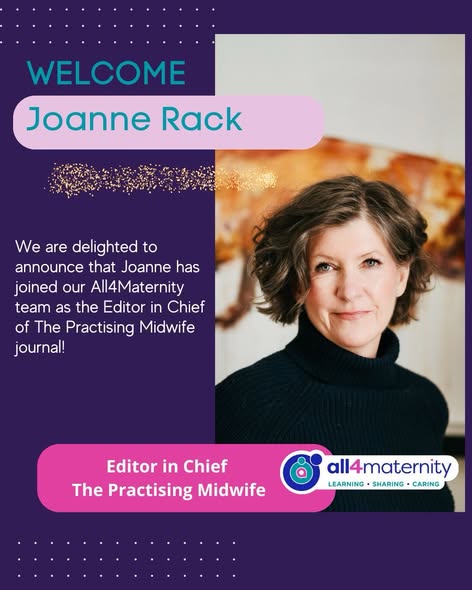
Congratulations to Joanne Rack, PhD student (Clinical Doctorate) in the Faculty of Health , Environment & Medical Sciences (HEMS) who has been appointed this month as the new Editor in Chief of The Practising MidwifeJoanne is doing her Clinical Doctorate in the Centre for Midwifery & Women’s Health (CMWH) specialising in personalised care for women of advanced maternal age (AMA).  This PhD study is matched-funded by University Hospitals Dorset (UHD) NHS Foundation Trust and Bournemouth University.  Her PhD is supervised and supported by Profs. Vanora Hundley and Edwin van Teijlingen at BU and former BU Professor Ann Luce (who has recently moved to the University of the West of Scotland) and Dr. Latha Vinayakarao in Bournemouth Maternity Hospital.

Well done!

Prof. Vanora Hundley & Edwin van Teijlingen

On Christmas Day in the Morning…

On Christmas Day (25 December 2025) the Journal of Mixed Methods Studies published Dr. Orlanda Harvey’s latest paper ‘Using A Range Of Recruitment Strategies To Recruit Those Who Use Anabolic Androgenic Steroids[1]. The Journal of Mixed Methods Studies is an Open Access journal, hence this paper is freely available to anybody with internet access.

Dr. Harvey is a Senior Lecturer in Social Work in the Faculty of Health, Environment & Medical Sciences. This is the latest in a series of publications based on Orlanda’s Ph.D. work at Bournemouth University.  She has published a steady stream of papers over the past six years [2-7].

Congratulations!

Prof. Edwin van Teijlingen

References:

  1. Harvey, O., van Teijlingen, E., Parrish, M. (2025). Using A Range Of Recruitment Strategies To Recruit Those Who Use Anabolic Androgenic Steroids. Journal of Mixed Methods Studies, 11: 43–60. https://doi.org/10.59455/jomes.42
  2. Harvey, O., van Teijlingen, E., Parrish, M. (2024) Using a range of communication tools to interview a hard-to-reach population, Sociological Research Online 29(1): 221–232 https://journals.sagepub.com/doi/pdf/10.1177/13607804221142212
  3. Harvey, O., Keen, S., Parrish, M., van Teijlingen, E. (2019) Support for people who use Anabolic Androgenic Steroids: A Systematic Literature Review into what they want and what they accessBMC Public Health 19: 1024
  4. Harvey, O., Parrish, M., van Teijlingen, E., Trenoweth, S. (2020) Support for non-prescribed Anabolic Androgenic Steroids users: A qualitative exploration of their needs Drugs: Education, Prevention & Policy 27:5, 377-386. doi 10.1080/09687637.2019.1705763
  5.  Harvey, O., Parrish, M., van Teijlingen, E, Trenoweth, S. (2022) Libido as a reason to use non-prescribed Anabolic Androgenic Steroids, Drugs: Education, Prevention & Policy 29(3):276-288.
  6. Harvey, O., van Teijlingen, E., Parrish, M. (2022) Mixed-methods research on androgen abuse – a review, Current Opinion in Endocrinology & Diabetes 29(6):586-593.
  7. Harvey, O., van Teijlingen, E. (2022) The case for ‘anabolics’ coaches: selflessness versus self-interest? Performance Enhancement & Health 10(3) August, 100230

New Nepal scoping review on maternal & neonatal health

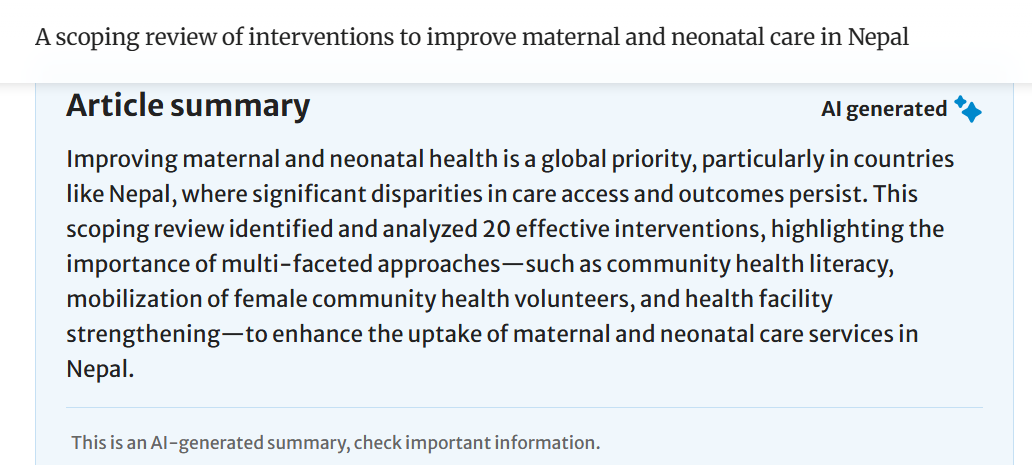
Today, Discover Public Health, published our latest academic paper on maternity and neonatal care in Nepal [1].  Our latest paper ‘A scoping review of interventions to improve maternal and neonatal care in Nepal‘ is lead by Dr. Sharada Prasad Wasti at the University of Greenwich and co-authored by Bournemouth University’s Prof. Edwin van Teijlingen.

For this scoping review we found 418 studies, and twenty were included, which used various interventions that aimed to improve maternal and neonatal health. Five overarching interventions were identified: (1) community-based maternal health literacy; (2) health facility strengthening, including health staff training, (3) mobilisation of female community health volunteers (FCHV) for birth preparedness and identifying danger signs; (4) mobile health messaging, and (5) involving husbands in improving the uptake of maternal and neonatal care. Most interventions were a mixture of activities with a combination of interventions rather than a single intervention.

The authors note that no single intervention is sufficient on its own; indeed, a combination of approaches is needed to improve the uptake of maternal and neonatal care services.

This scientific paper in Discover Public Health is open access and, therefore, freely available worldwide to anybody with internet access.  Interestingly, the journal has added an AI generated summary, despite the fact that we as authors had provided a perfectly useful abstract.


Reference:

  1. Wasti, S.P., van Teijlingen, E., Adhikari, N. Morgan, J. (2025) A scoping review of interventions to improve maternal and neonatal care in Nepal. Discover Public Health 22, 855 . https://doi.org/10.1186/s12982-025-01241-x

Up2U: New BU academic publication

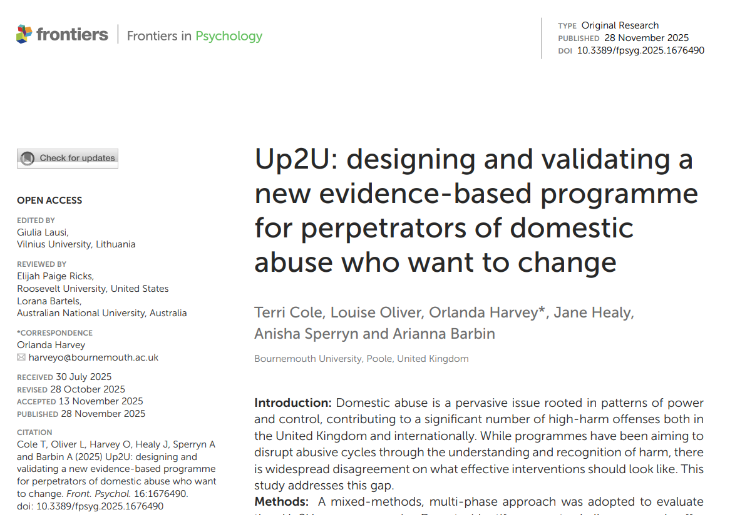
Congratulations to the interdisciplinary BU team on the publication of the paper ‘Up2U: designing and validating a new evidence-based programme for perpetrators of domestic abuse who want to change’ in Frontiers in Psychology [1].   The new paper is part of the series ‘The Dynamics of Emotion Regulation and Aggressiveness in Gender-Based Violence Contexts’, and it appeared in an Open Access journal and is therefore easily accessible.

Domestic abuse is a pervasive issue rooted in patterns of power and control, contributing to a significant number of high-harm offenses both in the UK and internationally. While programmes have been aiming to disrupt abusive cycles through the understanding and recognition of harm, there is widespread disagreement on what effective interventions should look like. This paper addresses this gap.

The authors of this paper include both psychologists and social workers, as well as a student co-author.  The lead author, Terri Cole, is a Principal Academic in Forensic Psychology.


Congratulations!

Prof. Edwin van Teijlingen


Reference:

  1. Cole, T., Oliver, L., Harvey, O., Healy, J., Sperryn, A., Barbin, A. (2025) Up2U: designing and validating a new evidence-based programme for perpetrators of domestic abuse who want to change, Frontiers in Psychology, Volume 16 – 28 Nov.2025 | https://doi.org/10.3389/fpsyg.2025.1676490

Further CMWH contributions to 2026 ICM congress

Congratulations are due to BU’s Midwifery Lecturer Laura Stedman whose abstract ‘The impact of neonatal intensive care admission at term following gestational diabetes mellitus: A neglected area’ has been accepted for presentation at the 2026 ICM (International Confederation of Midwives) in Lisbon, Portugal.  Also congratulations to BU’s Lead Midwife for Education, Dr. Juliet Wood.  She been accepted to present a workshop at the ICM Congress under the heading ‘Supporting student midwife confidence to facilitate physiologic birth: A workshop for clinical and academic faculty‘.  The latter workshop is a proper international collaboration as the team also includes colleagues from Northern Ireland, the USA, Poland and Australia.

The ICM works with midwives and midwives’ associations globally to ensure that women and gender diverse people have access to a midwife’s care before, during and after childbirth. We advocate for midwives to practise the full scope of our profession, providing education, sexual and reproductive health services and newborn care.

Congratulations to both!

Prof. Edwin van Teijlingen

Centre for Midwifery & Women’s Health

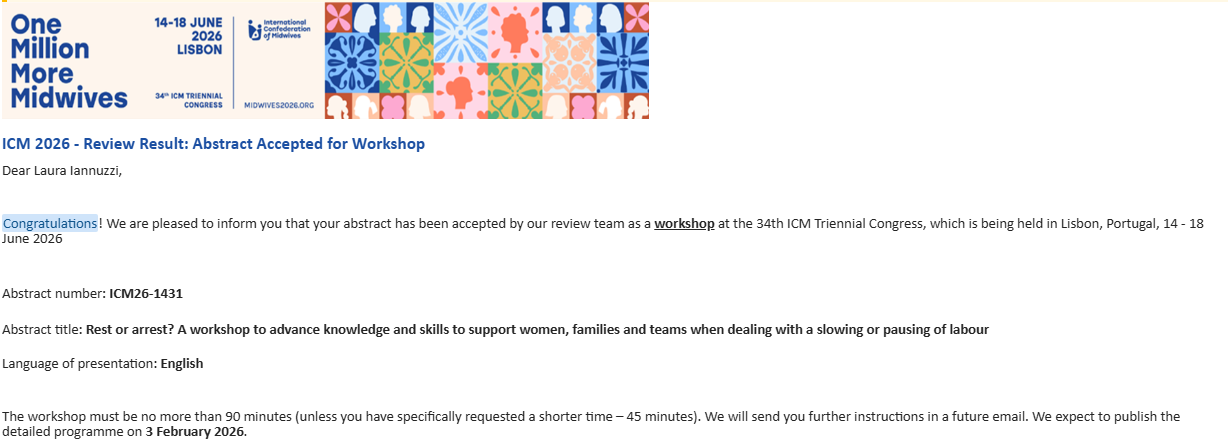
Early labour research accepted for ICM 2026 congress

The ICM, the International Confederation of Midwives, holds its congress every three years, and the next one will be in Portugal in summer 2026.  Dr. Dominique Mylod had her abstract accepted with the title ‘Supporting women in early labour: An interdisciplinary, digital approach’, whilst Prof. Vanora Hundley’s ‘Can we identify women who will need additional support in the early (latent) phase of labour?’ abstract was also acceptedBoth Dr. Mylod and Prof. Hundley are based in the Centre for Midwifery & Women’s Health (CMWH) in the Faculty of Health, Environment & Medical Science.

Congratulations!

Prof. Edwin van Teijlingen

New BU midwifery publication

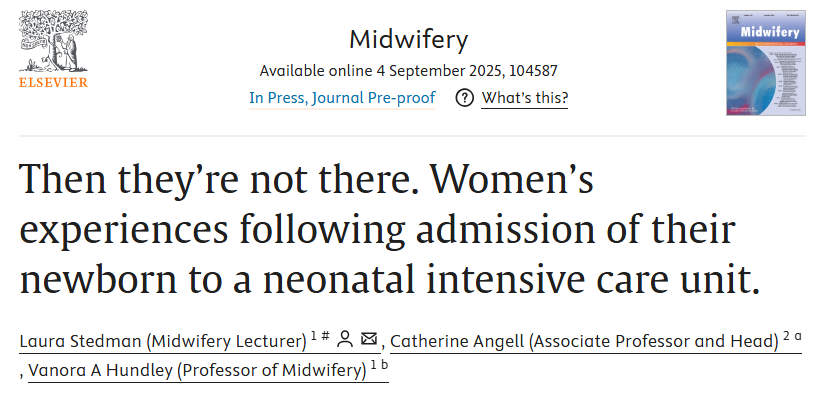
Congratulations to Laura Stedman in the Centre for Midwifery & Women’s Health (CMWH) on the publication of a new paper in the international academic journal Midwifery.  This new paper Then they’re not there. Women’s experiences following admission of their newborn to a neonatal intensive care unit[1], has been co-authored with two fellow midwives: Associate Prof. Catherine Angell and Prof. Vanora Hundley.

The paper reports an online study into the experiences of UK women been diagnosed with Gestational diabetes mellitus (GDM) whose baby was admitted to a Neonatal Intensive Care Unit (NICU) at or shortly after birth. The qualitative analysis identified two themes: ‘experience’ and ‘understanding’; the former had five sun-themes and the latter was based on three sub-themes. A lack of understanding and knowledge was identified, with calls for enhanced education and joint decision making. Women recalled feelings of grief, isolation and stress as a result of the admission. For many, this experience was traumatic with lasting effects. For babies born at term, feelings of surprise and separation were paramount, in contrast to those born pre-term.  The authors concluded that there is need for more education and improved material to support for those facing this outcome. Future research should also focus on reducing the incidence of admission to NICU for women who have received a diagnosis of GDM.

Well done!
Prof. Edwin van Teijlingen
Reference:
  1. Stedman, L., Angell, C., Hundley, V. (2025) Then they’re not there. Women’s experiences following admission of their newborn to a neonatal intensive care unit, Midwifery [online first]