Universities are increasingly recognised as anchor institutions within entrepreneurial ecosystems, shaping how innovation emerges and how new ventures develop. Beyond research and teaching, universities now act as hubs where ideas, talent and industry intersect to support venture creation and technological innovation (Guerrero et al., 2014). In the context of technology entrepreneurship, this role becomes particularly significant.
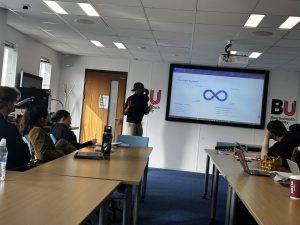
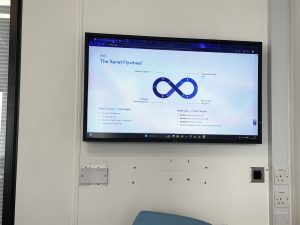
A guest session within the MBA Technology Entrepreneurship unit at Bournemouth University Business School highlighted this intersection between academic learning and real-world venture building. Andrew Olowude, Chief Technical Officer of Xenet AI, joined MBA students to discuss the realities of building AI-driven ventures. Yet the central lesson from the session was not about algorithms or computing architectures. It was about entrepreneurial mindset.
Technology entrepreneurship is often misunderstood as being driven primarily by technological breakthroughs. In practice, many ventures fail because founders focus on what technology can do rather than what markets actually need. Entrepreneurship research consistently shows that venture creation requires iterative learning and market discovery, where founders test assumptions and respond to user feedback in uncertain environments (Fisher, 2012; Shepherd & Gruber, 2021). During the discussion with students, one idea captured this principle particularly well: listening to the market with intention. Rather than attaching technology to an idea simply because it exists, entrepreneurs must identify whether there is genuine market pull for the solution. In this sense, technology becomes an enabler of value creation, not the starting point of the venture.
Understanding how innovations spread is therefore essential to technology entrepreneurship education. One of the most influential frameworks explaining this process is Everett Rogers’ Diffusion of Innovation theory, which describes how innovations move from early adopters to mainstream users, the early majority. Building on Rogers’ work, Geoffrey Moore (1991; 2014) introduced the concept of “Crossing the Chasm,” describing the difficulty many technology ventures face when attempting to move from early adopters to the broader market. The transition requires a shift from technological enthusiasm to clear problem- solution fit and demonstrable value. For technology entrepreneurs, the lesson is simple but powerful: innovation does not succeed because technology works; it succeeds because people adopt it.
The rapid rise of artificial intelligence has also brought renewed attention to the ethical dimensions of technology entrepreneurship. Increasingly, scholars argue that founders must consider the societal implications of the technologies they create, including issues of bias, transparency and social impact (George et al., 2021; Markman et al., 2016). Technology entrepreneurship therefore sits at the intersection of technical capability, market understanding and responsible innovation. Entrepreneurs must not only build technologies that function, but technologies that contribute meaningfully to society.
This is precisely where universities play a vital role. Entrepreneurial universities help shape innovation ecosystems by mobilising knowledge, talent, partnerships and infrastructure to support venture creation (Löfsten, 2025; Wang, 2026). Through incubators, industry collaborations and entrepreneurship programmes, universities increasingly act as innovation hubs that connect research with market application.
Equally important is how entrepreneurship is taught. Traditional lecture-based approaches are increasingly being complemented by experiential learning environments where students engage directly with real-world problems, industry partners and venture creation processes (Motta et al., 2023; Monllor et al., 2024). Such approaches mirror how entrepreneurs actually learn — through experimentation, reflection and iteration. Guest engagements with founders and technology leaders therefore become an important part of entrepreneurship education. They help students see beyond theoretical frameworks and understand the lived realities of venture creation: uncertainty, pivoting and the constant need to align technological possibility with market demand.
As artificial intelligence and digital technologies continue to reshape industries, the responsibility of universities within entrepreneurial ecosystems will only deepen. Preparing students for this environment requires more than teaching technological tools. It requires cultivating entrepreneurial judgement ;the ability to interpret market signals, recognise ethical implications and translate technological potential into meaningful innovation. Technology entrepreneurship, ultimately, is not about technology alone. It is about people, problems and the thoughtful application of technology to solve them.

References:
Audretsch, D.B., Belitski, M. & Caiazza, R. (2021). Start-ups, Innovation and Knowledge Spillovers. Journal of Technology Transfer, 46, 1995–2016 https://doi.org/10.1007/s10961-021-09846-5
Fisher, G. (2012). Effectuation, causation, and bricolage: A behavioral comparison of emerging theories in entrepreneurship research. Entrepreneurship Theory and Practice, 36(5), 1019–1051.
https://doi.org/10.1111/j.1540-6520.2012.00537.x
George, G., Merrill, R. K., & Schillebeeckx, S. J. D. (2021). Digital sustainability and entrepreneurship. Entrepreneurship Theory and Practice, 45(5), 999–1027.
https://doi.org/10.1177/1042258719899425
Guerrero, M., Urbano, D., Cunningham, J. A., & Organ, D. (2014). Entrepreneurial universities in two European regions: A case study comparison. The Journal of Technology Transfer, 39(3), 415–434.
https://doi.org/10.1007/s10961-012-9287-2
Löfsten, H. How Entrepreneurial are Universities? (2025). A Typological Analysis of Swedish Higher Education Institutions. Higher Education Policy, https://doi.org/10.1057/s41307-025-00428-w
Markman, G. D., Russo, M., Lumpkin, G. T., Jennings, P. D., & Mair, J. (2016). Entrepreneurship as a platform for pursuing multiple goals. Journal of Management Studies, 53, 673-694. https://doi.org/10.1111/joms.12214
Monllor, J., Michels, N., & Adderley, S. (2024). Pivoting an Entrepreneurship Experiential Learning Module Online: Applying a Concrete Experience Framework. Entrepreneurship Education and Pedagogy, 7(4), 416-438.
Motta, V. F., & Galina, S. V. R. (2023). Experiential Learning in Entrepreneurship Education: A Systematic Literature Review. Teaching and Teacher Education, 121, Article 103919.
https://doi.org/10.1016/j.tate.2022.103919
Moore, G. A. (2014). Crossing the chasm (3rd ed.). Harper Business.
Rogers, E. M. (1962). Diffusion of innovations. 3rd ed Free Press.
Shepherd, D. A., & Gruber, M. (2021). The Lean Startup Framework: Closing the Academic–Practitioner Divide. Entrepreneurship Theory and Practice, 45(5), 967-998.
Wang, Q., Kim, N., Thrush, B. C., & Ochoa, R. (2026). Minority-Serving Institutions as Entrepreneurial Universities: Evidence from an Underserved Region. The Professional Geographer, 78(1), 1–13. https://doi.org/10.1080/00330124.2025.2581610
 An Impact Surgery is a focused 30-minute online session delivered by the REF Team providing practical, tailored support for academic colleagues working towards REF2029






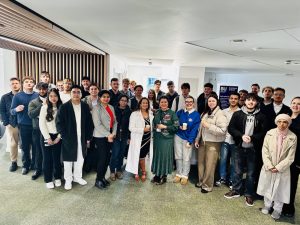
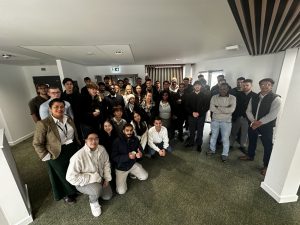




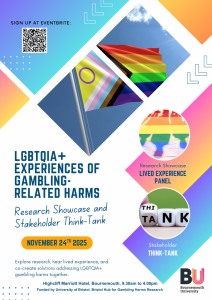








 ECR Opportunities: New Development Programme, Researcher Grants & Upcoming Events
 Help us capture BU’s knowledge exchange activity HE-BCI survey 2025–26
 Verbal autopsy paper published two days ago
 ESRC Studentships for 2027 Entry: Opportunity Now Open
 SONAMONI contributions to Safety Conference 2026 in South Africa
 Horizon Europe Cluster 3 (Civil Security for Society) 2026 Calls Now Open
 MSCA Doctoral Networks 2026 Call Information Webinar
 ESRC Festival of Social Science 2026: Application Deadline Extended to Thursday 25 June 2026
 Reminder: Register for the ESRC Festival of Social Science 2026 Information Session
 ECR Funding Open Call: Research Culture & Community Grant – Apply now
 ERC Advanced Grant 2025 Webinar
 Update on UKRO services
 European research project exploring use of ‘virtual twins’ to better manage metabolic associated fatty liver disease