Tagged / conference

Three CMWH presentations at Berlin conference

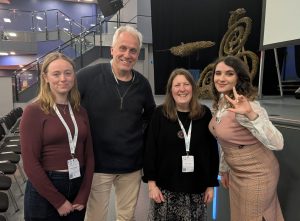
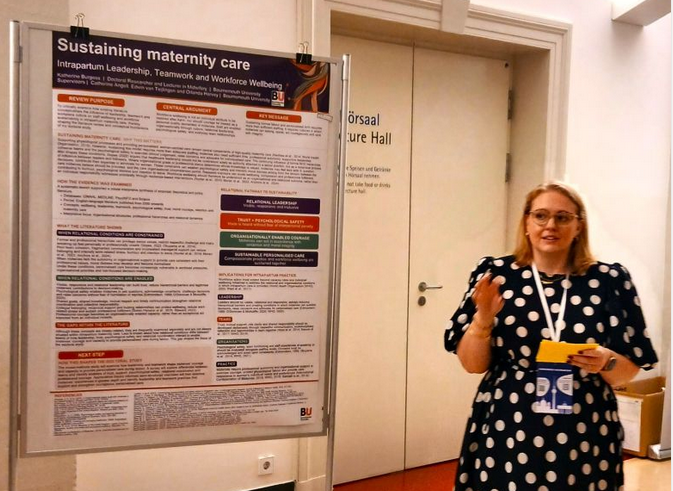
Two Ph.D. students and one member of staff from Bournemouth University’s Centre for Midwifery & Women’s Health (CMWH)  presented their work at the 25th International Normal Labour and Birth Research Conference held in mid-September 2026 in Berlin.  Ph.D. student and CMWH midwifery lecturer Kate Burgess presented her poster ‘Sustaining Maternity Care: Intrapartum Leadership, Teamwork and Workforce Wellbeing’.  This poster shared her on-going literature review on how leadership and teamwork influence midwives’ courage and capacity to provide personalised care during labour. 
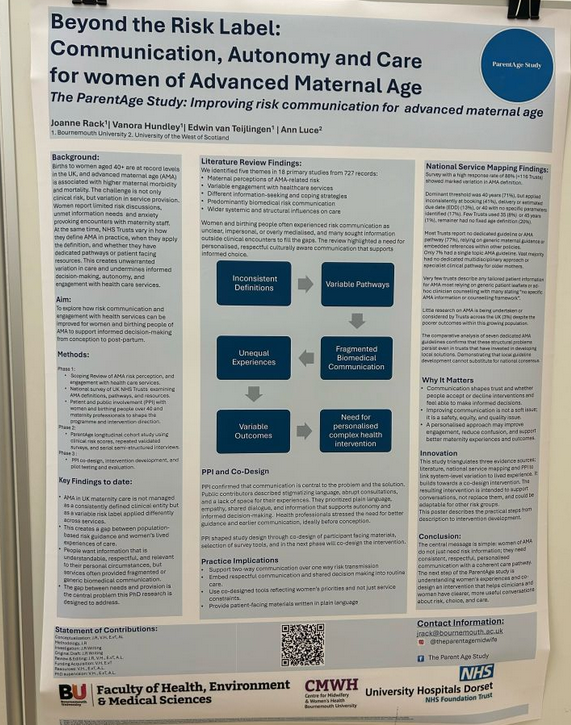
Whilst Joanne Rack presented work from her clinical doctorate ‘Beyond the Risk Label: Communication, Autonomy and Care for Women of Advanced Maternal Age’.   Joanne’s Ph.D. research (the ParentAge Study) started from an important observation: births to women aged 40+ are at record levels in the UK, these women consistently experience increased morbidity and yet report limited risk discussions, unmet information needs, and anxiety-provoking encounters with maternity services. This, combined with the last three MBRRACE reports, that have repeatedly identified this as a discrete and growing population at increased risk of poorer mortality outcomes.

Furthermore, CMWH academic Dr. Dominique Mylod presented ‘The Early Labour App as a Digital Solution: Ten Lessons Learned’ based on midwifery research conducted with Prof. Vanora Hundley.  The Early Labour App is in development as an innovative digital tool which combines evidence-based strategies to support families in preparing for early phase labour. It includes a dedicated website, an educational video to promote birth ball use and a Slow and Deep Breathing visual graphic. The project has been underpinned by co-creation since its inception, involving women, birth partners and midwives, with the recognition that current service users are the first digital natives. This collaboration has validated the app concept and informed the content, structure and design of the app.


Well done!

Prof.Edwin van Teijlingen
 

NIHR Insight South West Central Conference 2026 at Bournemouth University

Today Bournemouth University (BU)  is hosting the annual NIHR-funded Insight South West Central Conference.  The event bring together current students, prospective students and past students on the Insight programme from both BU and the Bristol-based UWE (University of the West of England).

The opening two key note speakers were BU’s Professor of Social Care Lee-Ann Fenge and Helen Lewis-White, Deputy Director of Research and Innovation at North Bristol NHS Trust and a Health and Care Research Director (NMAHP) for the NIHR Southwest Central Research Delivery Network.  The conference includes invited speakers, research speed-dating sessions as well as students’ presentations (both oral and posters).

BU PhD student presented at World Safety Conference in South Africa

PhD student Mr. Md. Shafkat Hussain was invited to present at the World Conference on Injury Prevention and Safety in South Africa at the beginning of September.  Shafkat based in the Faculty of Health, Environemnt & Medical Science (HEMS) is conducting hs PhD on the use of human-centred design in drowing prevention interventions and programmes aimed at children under the age of two, which is part of our NIHR-funded Sonamoni project.

The SONAMONI Project is a large interdisciplinary research project co-ordinated by Bournemouth University (BU) and CIPRB (Centre for Injury Prevention and Research, Bangladesh) to help reduce drowning in young children (under the age of two) in rural Bangladesh.  The SONAMONI project is a collaboration between BU, CIPRB, the University of the West of England, the University of Southampton, the RNLI (Royal National Lifeboat Institution) and Design Without Borders (Uganda).

This £1.6m project has been made possible thanks to a UK grant from the National Institute for Health and Care Research (NIHR) through its Research and Innovation for Global Health Transformation programme. This exciting four-year project will run until February 2027.

Why some commons survive and others don’t

BU’s research presented at the Royal Geographical Society Annual Conference

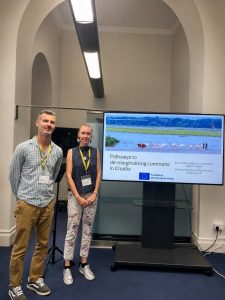
Dr Marin Cvitanović, Principal Academic in Human Geography at BU’s School of Life and Environmental Sciences, presented research on commons at the Royal Geographical Society (with IBG) Annual International Conference, held at the Society and Imperial College London from 1 to 4 September 2026.

Commons are resources, such as pastures, forests and water, that are shared and managed collectively by a community, rather than owned privately or by the state. The presentation, “Pathways to de-marginalising commons in Croatia,” was co-authored with Dr Lana Slavuj Borčić of the University of Zagreb. It used Croatia as a case study to ask a question that is relevant well beyond one country: why do some shared-resource systems survive generations of political, economic and demographic change, while others quietly fall out of use? Cvitanović and Slavuj Borčić argue that commons can become marginalised in several ways at once. This includes geographical marginalisation in depopulating rural regions, institutional marginalisation through long periods of legal ambiguity, and economic marginalisation through exclusion from subsidies and leasing markets. A further, generational, form of marginalisation can also occur, where legal recognition arrives only after the community that once sustained a commons has already aged out of it.

To understand how some commons manage to persist despite these pressures, the researchers compared cases where common pastures had fallen out of use, with a case where a commons continued to function. The comparison points to a broader pattern. Legal recognition on its own rarely saves a commons. What tends to matter is whether governance support, funding routes and recognition of a resource’s wider ecological value arrive while a community of users still exists to make use of them. Even then, moving away from marginalisation looks more like an ongoing process than a finished achievement.

This work is linked to Dr Cvitanović’s involvement in Resilient Rules, an ERC-funded Horizon Europe project led by the University of Zaragoza, which studies the diversity and resilience of rules that communities worldwide use to govern shared natural resources. Dr Cvitanović contributes to the project’s global field research team, covering Croatia.

The RGS-IBG Annual International Conference is one of the world’s largest gatherings of geographers, bringing together more than 2,000 researchers each year. The 2026 conference theme, “Geographies of inequalities: towards just places,” was chaired by Professor Peter Hopkins of Newcastle University.

BU professor invited speaker at Huddersfield University

Last Friday (July 10th) Prof. Edwin van Teijlingen presented at University of Huddersfield staff development ‘Academic Writing Retreat’.  After attending the Global Consortium for Public Health Research Conference held earlier in the week at the University of Huddersfield, he was invited to stay a little longer to present at, and help facilitate, this staff writing day.  Edwin spoke about what motivates academics to write, the role of the Research Excellence Framework (REF), selecting an appropriate journal for your academic paper, and a range of other relevant topics and questions raised by participants on the day. The day was organised by Huddersfield’s Dr. Bibha Simkhada (who is also a BU Visiting Faculty), and included two further facilitators: Ph.D. student Joshua Oykere and Dr. Devendra Raj Singh.


BU contributions to successful Global Health conference

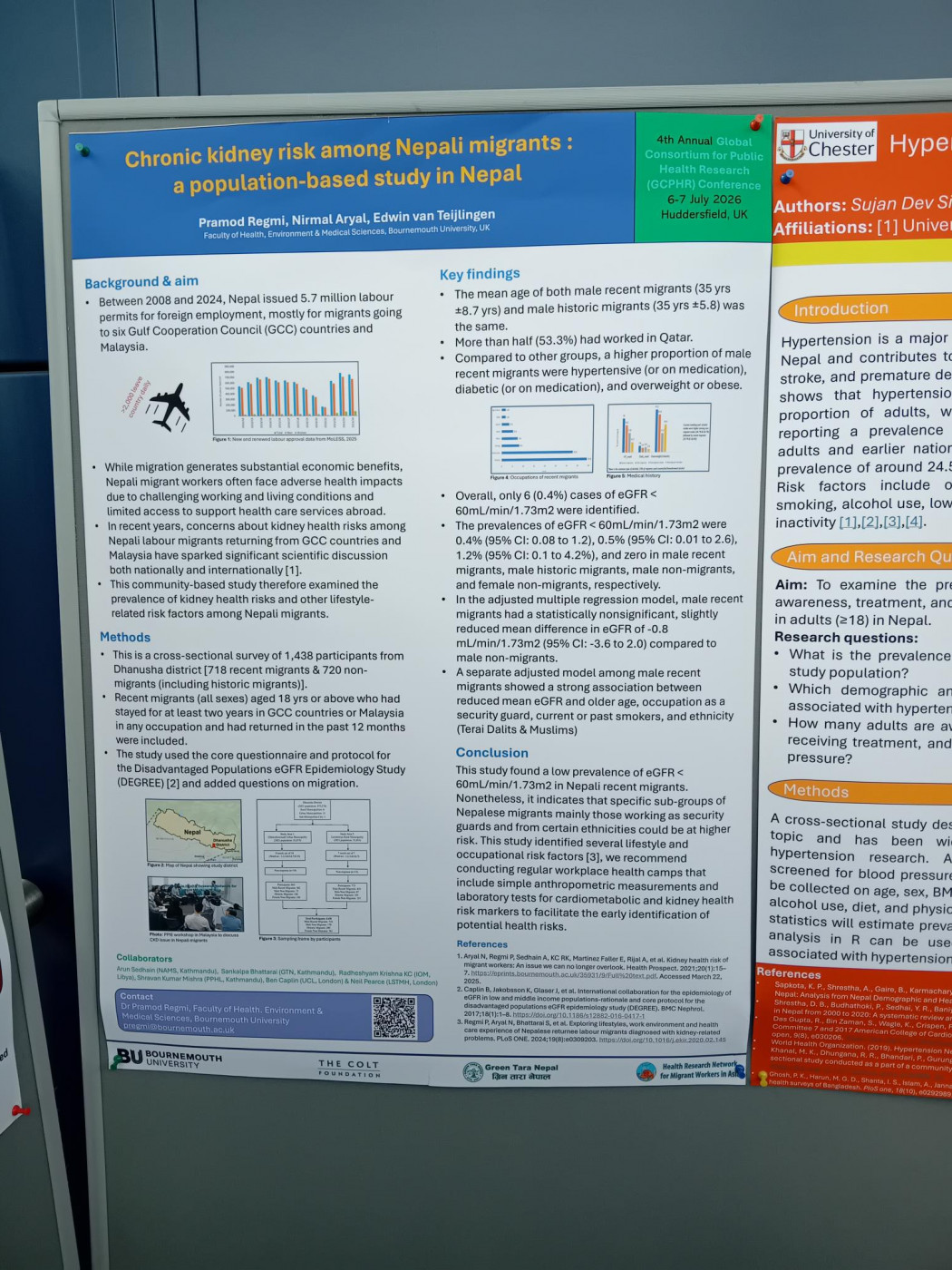
Dr. Pramod Regmi and Prof. Edwin van Teijlingen attended this week’s Global Consortium for Public Health Research (GCPHR) 4th Annual Conference at the University of Huddersfield.  The conference was very well attended with delegates from India, Nepal, Ghana, Finland and the UK.  BU’s contribution included a poster on the recently completed study on kidney disease in Nepalese migrant workers, a study funded by The Colt Foundation.

Prof. Chandra Kala Sharma, President of Nursing Association of Nepal and Dr. Bibha Simkhada, Reader in Nursing at the University of Huddersfield presented on ‘Implementing Continuous Professional Development (CPD) in Nursing in Nepal’.  In this very topical presentation they highlighted the importance of the research conducted in Nepal by UK universities (which included Bournemouth University) in getting the regulations changed in Nepal around CPD.  This effect of research into CPD in Nursing will make a useful REF Impact Case Study.

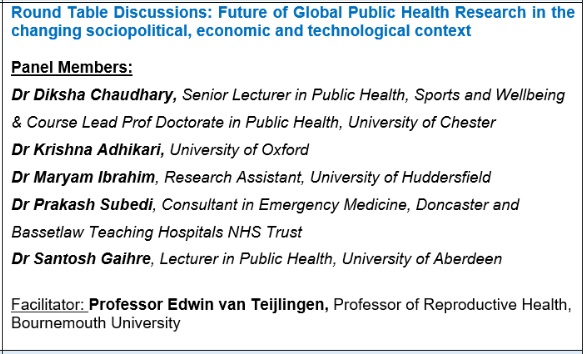
Both Pramod and Edwin chaired a session on different days of the conference.  Whilst Prof. van Teijlingen gave an invited presentation on the topic of ‘Equitable participation on academic publications’.    He also facilitated a Round Table Discussion with five selected panel members on the final day.

INSIGHT MRes Students Present at Sigma Annual Conference

On Friday 5th June the Phi Mu Chapter of Sigma held its 2026 Annual Conference at Brunel University of London. An excellent scientific programme included keynote presentations from Howard Catton (CEO, International Council of Nurses) and Joanne Bosanquet MBE (CEO, Foundation of Nursing Studies).

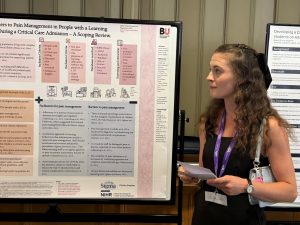
Two Bournemouth University INSIGHT MRes students also presented posters. Dan Bradshaw, supervised by Dr Stephen Richer and Dr Leslie Gelling, presented ‘How have educational programmes for young people addressed stigma toward people with schizophrenia?’ Laura Potter, supervised by Dr Vikram Mohan and Professor Carol Clark, presented ‘The barriers to pain management in adults with a learning disability during a critical care admission’. Well done to both Dan and Laura, but special congratulations to Laura who received a prize for her poster presentation.

The Phi Mu Chapter of Sigma is the English Chapter of this International Honor Society for nurses and is hosted by nurses at Bournemouth University. If you are a nurse and interested in joining Sigma, please contact Sigma@Bournemouth.ac.uk.

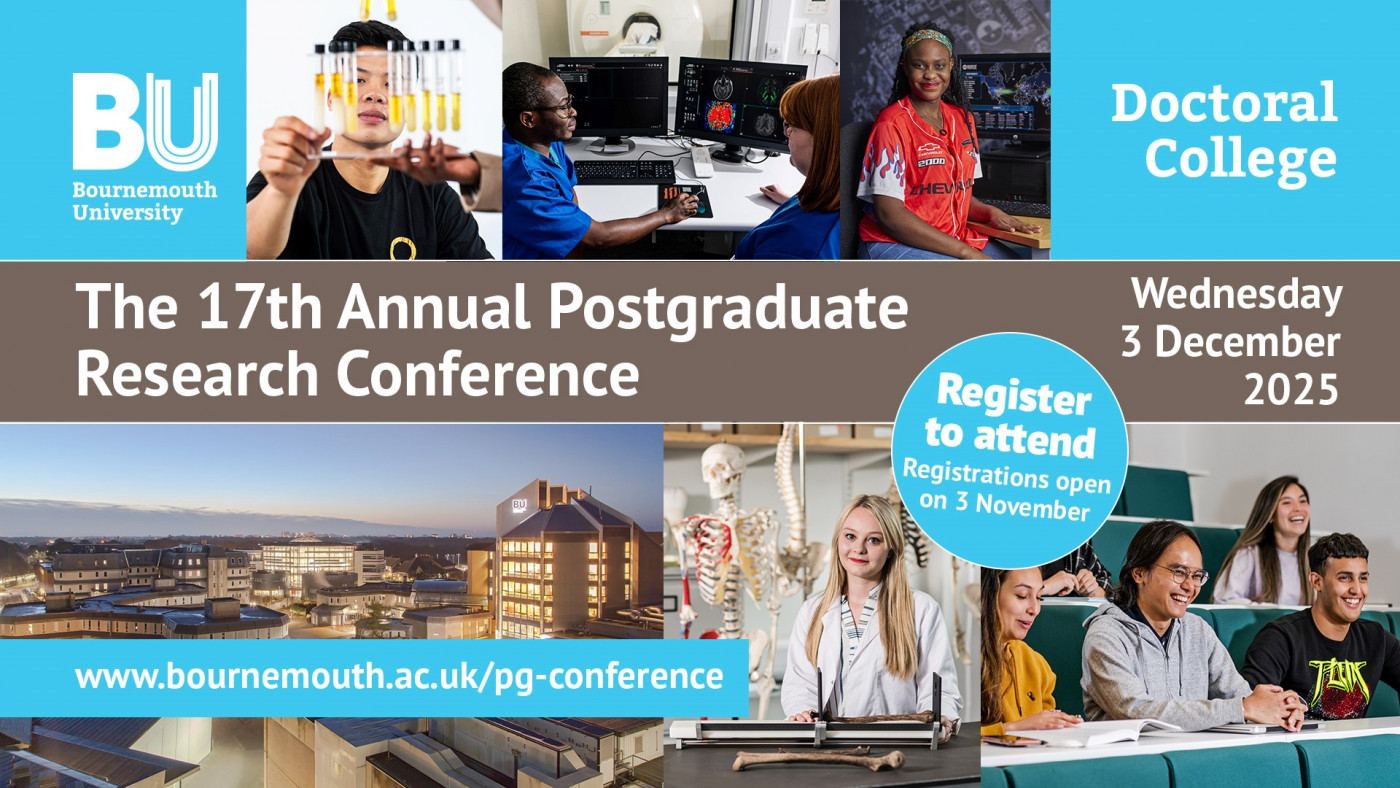
Join the 17th Annual Postgraduate Research Conference – Wednesday 3 December 2025

17th Annual Postgraduate Research Conference: Register now

Register now to attend the 17th Annual Postgraduate Research Conference, hosted by the Doctoral College.

Join us for a day of showcasing some of the excellent research taking place across BU by our postgraduate research community. This event provides a platform for our postgraduate researchers to present their research, share insights, and engage in meaningful discussions with peers, university colleagues, and external partners.

Date & Time: Wednesday 3 December, 9am-4:30pm

Location: Fusion Building, Talbot Campus

This year, the Poster Exhibition will take place in FG04 & FG06, Fusion Building, with viewings taking place in the morning and during the lunch break. Oral presentations hosted in Share Lecture Theatre in the Fusion Building.

Whether you’re a researcher, academic, colleague, or just interested in the cutting-edge work happening at BU find out more and book your place here 

The detailed programme will be available soon.

BU PhD student attending HIV conference on scholarship

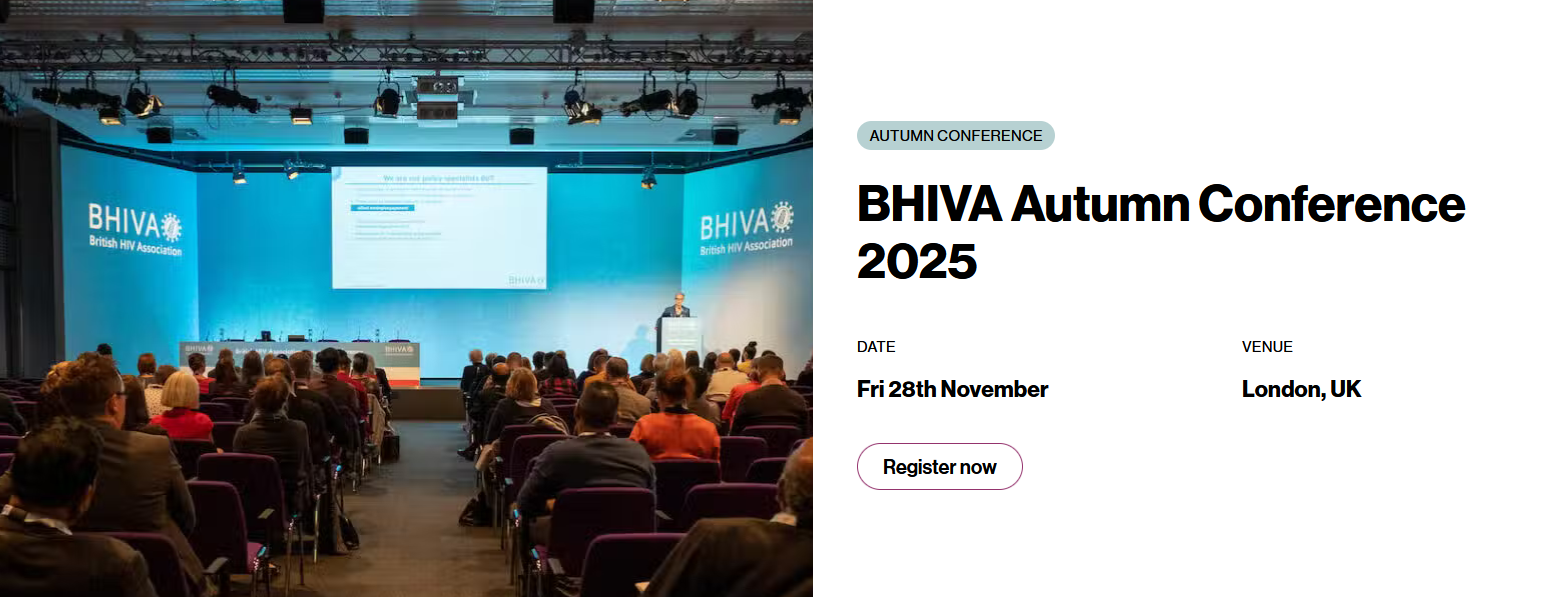
Congratulations to Tom Weeks, PhD student in the Faculty of Health, Environment & Medical Sciences at Bournemouth University, who has been awarded a scholarship from Gilead Sciences to attend the 2025 British HIV Association (BHIVA) Conference. His PhD research focuses on HIV stigma in the UK.  Tom is supervised by Dr. Pramod Regmi (Principal Academic in International Health) and Prof. Edwin van Teijlingen. The BHIVA conference features key sessions including:

  • What’s happening in HIV in 2025: New guidelines, new data, and new plans
  • Towards zero HIV transmission by 2030: Where are we now and where do we go next?

 Tom is eager to engage with the latest developments in HIV care and contribute to the ongoing dialogue around stigma reduction and equitable access to treatment.

Well done!

Prof. Edwin van Teijlingen & Dr. Pramod Regmi


Further CMWH contributions to 2026 ICM congress

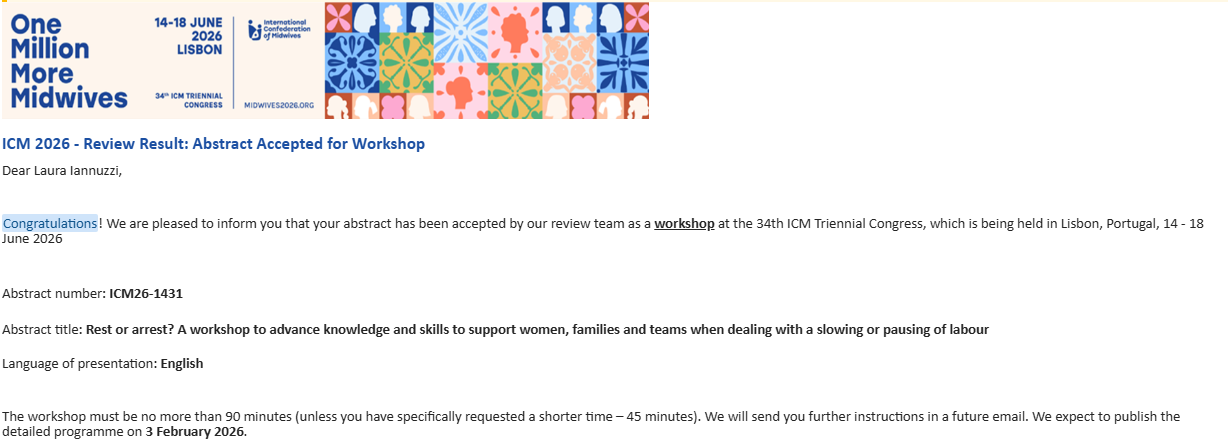
Congratulations are due to BU’s Midwifery Lecturer Laura Stedman whose abstract ‘The impact of neonatal intensive care admission at term following gestational diabetes mellitus: A neglected area’ has been accepted for presentation at the 2026 ICM (International Confederation of Midwives) in Lisbon, Portugal.  Also congratulations to BU’s Lead Midwife for Education, Dr. Juliet Wood.  She been accepted to present a workshop at the ICM Congress under the heading ‘Supporting student midwife confidence to facilitate physiologic birth: A workshop for clinical and academic faculty‘.  The latter workshop is a proper international collaboration as the team also includes colleagues from Northern Ireland, the USA, Poland and Australia.

The ICM works with midwives and midwives’ associations globally to ensure that women and gender diverse people have access to a midwife’s care before, during and after childbirth. We advocate for midwives to practise the full scope of our profession, providing education, sexual and reproductive health services and newborn care.

Congratulations to both!

Prof. Edwin van Teijlingen

Centre for Midwifery & Women’s Health

Early labour research accepted for ICM 2026 congress

The ICM, the International Confederation of Midwives, holds its congress every three years, and the next one will be in Portugal in summer 2026.  Dr. Dominique Mylod had her abstract accepted with the title ‘Supporting women in early labour: An interdisciplinary, digital approach’, whilst Prof. Vanora Hundley’s ‘Can we identify women who will need additional support in the early (latent) phase of labour?’ abstract was also accepted.  Both Dr. Mylod and Prof. Hundley are based in the Centre for Midwifery & Women’s Health (CMWH) in the Faculty of Health, Environment & Medical Science.

Congratulations!

Prof. Edwin van Teijlingen

Plenary talk by Dr Regmi on Hidden Health Burden of Nepalese Migrants

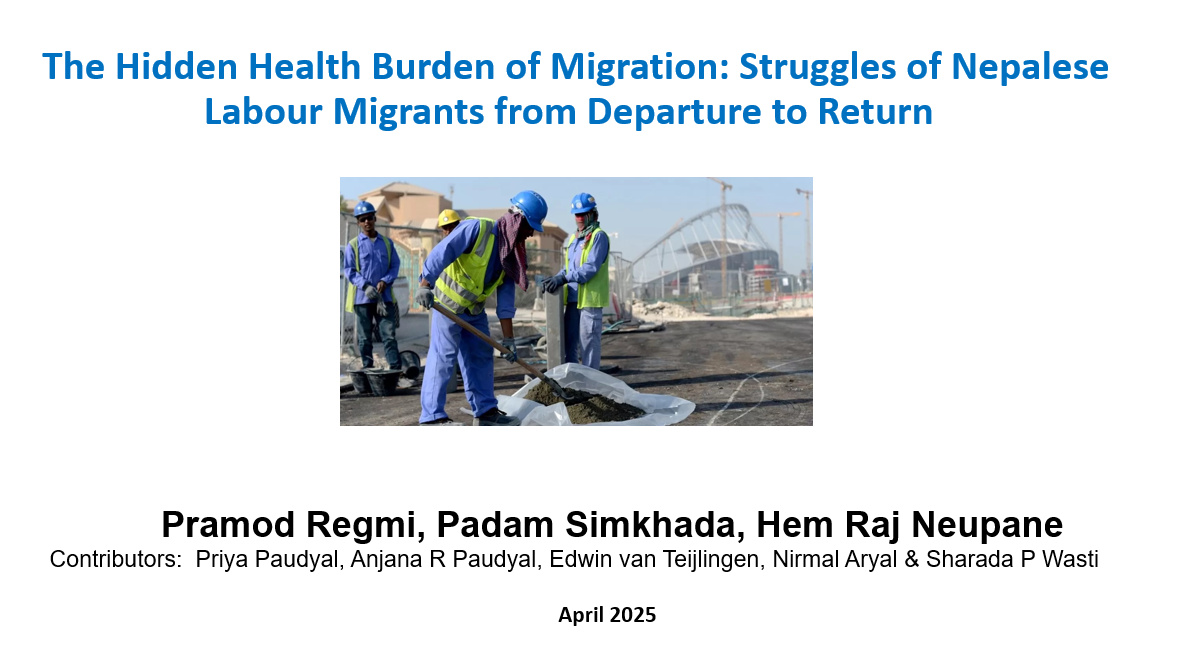
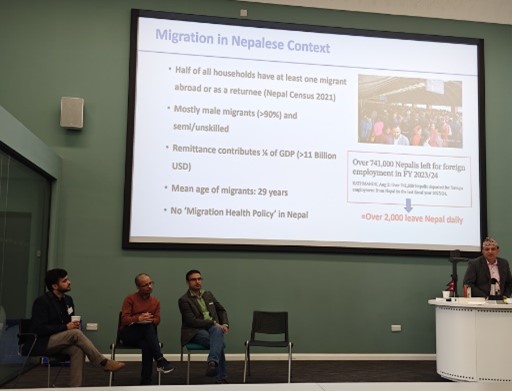
Last week, BU academic Dr. Pramod Regmi delivered a plenary talk on the struggles faced by Nepalese migrant workers from departure to return at the 22nd Britain-Nepal Academic Council (BNAC) Conference, held on 24–25 April in Liverpool. The session included two other panelists, including Prof. Padam Simkhada from the University of Huddersfield, he is also a BU Visiting Professor.

Dr. Regmi’s talk highlighted the health burden experienced by Nepali migrants throughout their migration journey. Labour migration from Nepal poses significant risks at all stages. Many aspiring migrants lack access to accurate information and support, while those from lower socioeconomic backgrounds face high documentation costs and illegal recruitment fees, affecting their mental health and placing strain on their families. Abroad, migrants often suffer exploitation, unsafe working conditions, overcrowded and unsanitary housing, limited access to healthcare, and high medical expenses. Female migrants face additional risks such as sexual violence, unintended pregnancy, exploitation, and unemployment. Upon return, especially for those who experienced abuse or trafficking, reintegration is hindered by social stigma and a lack of support services. Nepal’s weak economy further limits their ability to utilise skills gained abroad.

This presentation was informed by a long history of BU research into the health and well-being of Nepalese migrant workers, led by Dr. Regmi, Dr. Nirmal Aryal, Dr. Orlanda Harvey, Prof. Edwin van Teijlingen, and current PhD students Yagya Adhikari and Anjana Regmi Paudyal in the Faculty of Health & Social Sciences.

A round table discussion after the session focused on four questions:

  1. How can we better inform migrants during the pre-migration stage?
  2. How can we reduce the health vulnerabilities of Nepali labour migrant workers abroad?
  3. What are the barriers to, and opportunities for, reintegration when migrants return?
  4. How can we facilitate increased research collaboration in destination countries engaging local academic institutions?

Bournemouth University also contributed to two other presentations related to a project studying the impact of federalisation on Nepal’s health system. This study was funded by the UK Health Systems Research Initiative to examine the consequences of Nepal’s transition from a centralised political system to a federal structure in 2015. These two papers were presented by BU collaborators Prof. Julie Balen (Canterbury Christ Church University) and Ms. Amshu Dhakal (Manmohan Memorial Institute of Health Sciences, Kathmandu, Nepal).

BU’s Dr. Regmi, Prof Edwin van Teijlingen and Dr Nirmal collectively have over 40 publications on Nepalese migrants’ health and well-being issues. Their recent publications on the topic include studies on modern slavery [1], kidney disease [2–4], pre-departure training of aspiring migrant workers in Nepal [5], moral panic and societal fears around migrant workers and COVID-19 [6–7], Nepalese migrant workers in Malaysia [8–9], left-behind families of migrant workers [10], migrant workers and the 2022 FIFA Men’s World Cup [11–12], Nepalese migrants in the UK [13], as well as a comprehensive literature review [14]. They are also a founder members of Health Research Network for Migrant Workers in Asia: www.hearmigrants.org 


References:

  1. Paudyal, A. R., Harvey, O., Teijlingen, E. van, Regmi, P. R., Sharma, C. (2024). Returning Home to Nepal after Modern Slavery: Opportunities for Health Promotion. Journal of Health Promotion, 12(1), 125–132. https://doi.org/10.3126/jhp.v12i1.72713
  2. Aryal, N., Sedhain, A., Regmi, P.R., KC, R. K., van Teijlingen, E. (2021). Risk of kidney health among returnee Nepali migrant workers: A survey of nephrologists. Asian Journal of Medical Sciences, 12(12), 126–132. https://doi.org/10.3126/ajms.v12i12.39027
  3. Aryal, N., Regmi, P.R., Sedhain, A., KC, R.K., Martinez Faller, E., Rijal, A., van Teijlingen, E. (2021) Kidney health risk of migrant workers: An issue we can no longer overlook. Health Prospect 20(1):15-7
  4. Regmi, P., Aryal, N., Bhattarai, S., Sedhain, A., KC, R.K. and van Teijlingen, E. (2024) Exploring lifestyles, work environment and health care experience of Nepalese returnee labour migrants diagnosed with kidney-related problems, PLoS One 19(8): e0309203. https://doi.org/10.1371/journal.pone.0309203
  5. Regmi, P., Aryal, N., van Teijlingen, E., KC, R.K., Gautam, M. and Maharjan, S. (2024). A Qualitative Insight into Pre-Departure Orientation Training for Aspiring Nepalese Migrant Workers. Tropical Medicine and Infectious Disease, 9 (7).
  6. Aryal, N., Regmi, P., Adhikari Dhakal, S., Sharma, S. and van Teijlingen, E. (2024). Moral panic, fear, stigma, and discrimination against returnee migrants and Muslim populations in Nepal: analyses of COVID-19 media content. Journal of Media Studies, 38 (2), 71-98.
  7. Regmi, P., Dhakal Adhikari, S., Aryal, N., Wasti, S.P., van Teijlingen, E. (2022) Fear, Stigma and Othering: The Impact of COVID-19 Rumours on Returnee Migrants and Muslim Populations of Nepal, International Journal of Environmental Research & Public Health 19(15), 8986; https://doi.org/10.3390/ijerph19158986
  8. Chaudhary, M.N., Lim, V.C., Faller, E.M., Regmi, P., Aryal, N., Zain, S.N.M., Azman, A.S. and Sahimin, N. (2024). Assessing the basic knowledge and awareness of dengue fever prevention among migrant workers in Klang Valley, Malaysia. PLoS ONE, 19 (2).
  9. Chaudhary, M.N., Lim, V.C., Sahimin, N., Faller, E.M., Regmi, P., Aryal, N. and Azman, A.S. (2023). Assessing the knowledge of, attitudes towards, and practices in, food safety among migrant workers in Klang Valley, Malaysia. Travel Medicine and Infectious Disease, 54.
  10. Adhikari, Y., Regmi, P., Devkota, B. and van Teijlingen, E. (2023). Forgotten health and social care needs of left-behind families of Nepali migrant workers. Journal of Health Promotion, 10, 1-4.
  11. Regmi, P., Simkhada, P., Aryal, N., van Teijlingen, E. (2022) Excessive mortalities among migrant workers: the case of the 2022 FIFA World Cup. Europasian Journal of Medical Sciences, 4:31-32. https://doi.org/10.46405/ejms.v4i0.455
  12. Simkhada, P., van Teijlingen, E. and Regmi, P. (2022). Migrant Workers in Qatar: Not just an important topic during the FIFA World Cup 2022. Health Prospect: Journal of Public Health, 21 (3), 1-2.
  13. Simkhada, B., Sah, R.K., Mercel-Sanca, A., van Teijlingen, E., Bhurtyal, Y.M. and Regmi, P. (2021). Perceptions and Experiences of Health and Social Care Utilisation of the UK-Nepali Population. Journal of Immigrant and Minority Health, 23 (2), 298-307.
  14. Mahato, P., Bhusal, S., Regmi, P.,  van Teijlingen, E. (2024). Health and Wellbeing Among Nepali Migrants: A Scoping Review. Journal of Health Promotion, 12(1): 79–90. https://doi.org/10.3126/jhp.v12i1.72699


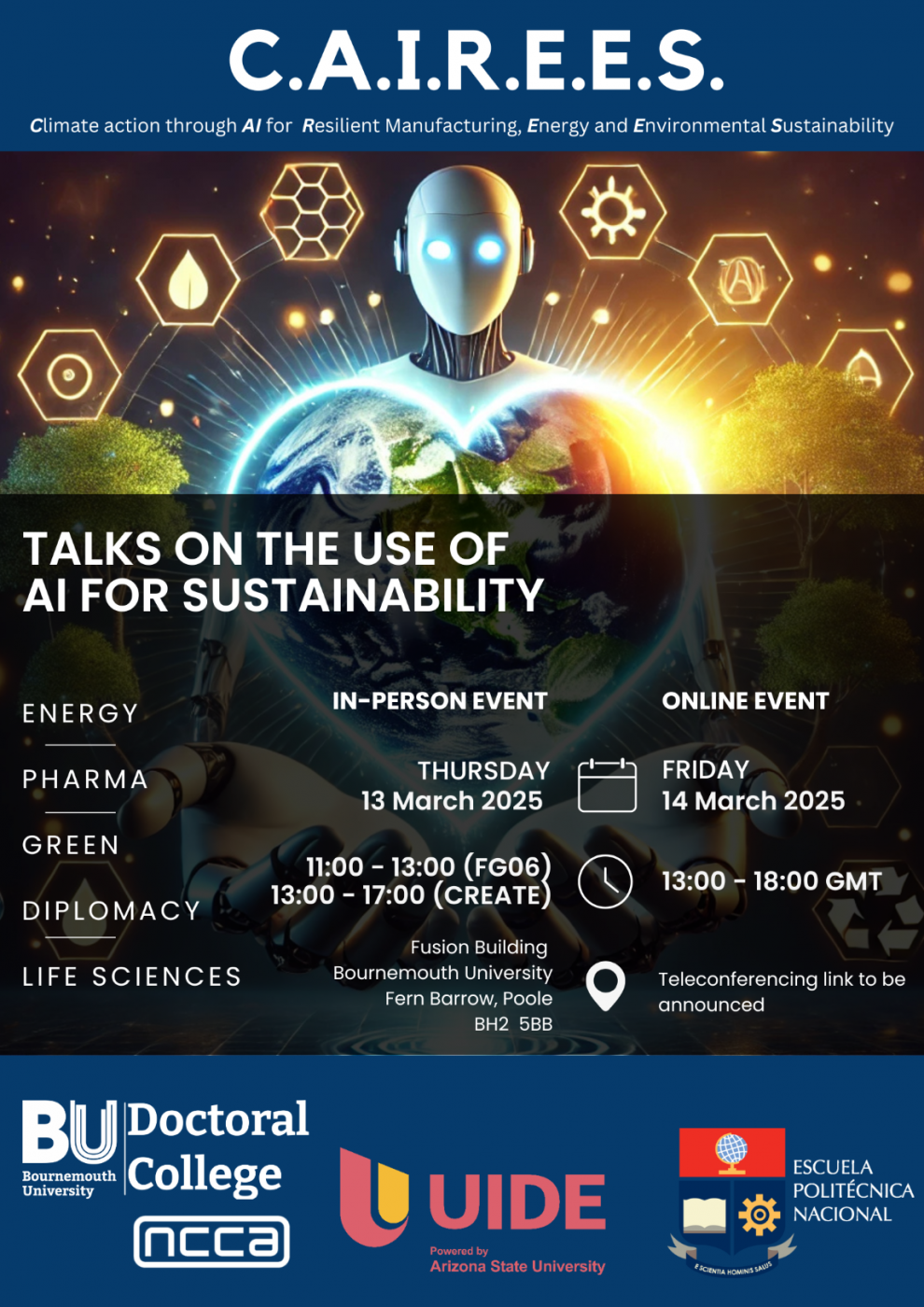
C.A.I.R.E.E.S. Conference: Harnessing AI for a sustainable future


C.A.I.R.E.E.S. Conference – Climate action through AI for Resilient Manufacturing, Energy and Environmental Sustainability

Harnessing AI for a Sustainable Future: Insights from Global Experts


BU is hosting the C.A.I.R.E.E.S. Conference – Climate action through AI (Artificial Intelligence) for Resilient Manufacturing, Energy and Environmental Sustainability – on Thursday 13 and Friday 14 March, in-person and online.

Through this conference, you’ll hear from global experts about how to harness AI for a sustainable future. It will explore how AI can support climate action in manufacturing, energy, and environmental sustainability.

This event, supported by the Doctoral College Research Culture and Community Grant, will bring together experts from academia, industry, and policy to discuss AI’s role in key areas, including energy, pharmaceuticals, green technologies, diplomacy, and life sciences.

The conference is open to all, whether you’re an AI researcher, industry professional, student, policymaker, or simply someone curious about how AI is tackling climate challenges.

Where and when

You can attend the conference in-person on Thursday 13 March, from 11am to 5pm in FG06 (Fusion Building). You can also participate online on Friday 14 March, from 1pm to 6pm.

During the event, attendees will have the chance to take part in a hands-on workshop, featuring a deep learning model applied to a real-world wildlife dataset. This is a great opportunity to explore AI applications in conservation and sustainability.

To book your place for either day, please complete this online form.

Keynote speakers and industry experts

The conference features speakers from the UK, US, Mexico, Ecuador, and beyond, reflecting the global nature of AI-driven sustainability efforts:

  • HM Ambassador Chris Campbell: UK Ambassador to Ecuador
  • Professor Scott Wright: Deputy Dean, Bournemouth University
  • Professor Xiaosong Yang: Deputy Head of NCCA, Bournemouth University
  • Dr Szilvia Rusev: Chair of Bournemouth University’s AI Network
  • Professor Federico Galvanin: – Professor of Chemical Engineering, University College London
  • Professor Clarissa Busch: Professor of Philosophy of AI, Illinois Institute of Technology, USA
  • Marco Quaglio: Industry expert in the pharmaceutical sector (PolyModels Hub Ltd)
  • Brian Cresswell: Specialist in AI-powered wildlife tracking (Lotek UK Ltd)
  • Additional speakers from universities in Mexico and Ecuador (to be announced)

If you have any questions, please contact Kavisha Jayathunge: kjayathunge@bournemouth.ac.uk or Maria Alexandra Sandoval msandoval2@bournemouth.ac.uk.

BU conference presentation Federalisation & Nepal’s health system

The health system in Nepal’s unique federalisation experiment will be presented by Prof. Edwin van Teijlingen at a three-day conference at the Far Western University, Nepal on Saturday 8th February.  Nepal’s introduction of its federal system in the 2015 Constitution changed the way society, including its health system, was organised.  It meant that political changes and health systems changes occurred in parallel.  Prof. Edwin van Teijlingen explores the impact of federalisation on Nepal’s health system as part of an interdisciplinary mixed-methods study* called ‘The Impact of Federalisation on Nepal’s Health System: A longitudinal Analysis’.

First, implementing a new federal system is a slow, resource intensive process. While building new federal structures is important, challenging the status quo through strategic “unlearning and undoing” of old tendencies is also essential, as this creates spaces for new approaches that are more in line with federalism. This requires attention to emotional and political spheres, and not just structural or technical ones.

Federalisation, generally, brought decision making, resources and service delivery closer to the people, yet the process remains challenging and incomplete. Importantly, at the same time as federalism was being introduced, Nepal’s health system had to respond to COVID-19, making it difficult to disentangle the effects of the pandemic from those of federalisation. The health system is also part of a broader, complex, and interdependent set of socio-political, economic, legal, and cultural systems.

We found that the impact of federalisation varied across the six WHO building blocks and pre-existing conditions, e.g. wealthier regions often benefit disproportionately, exacerbating inequities in health.  Our study further highlighted: (a) the importance of leadership and governance, combined with financing mechanisms; (b) insufficient planning and misalignment between central and local levels resulting in inefficiencies; (c) weak health information systems hinder the ability to measure long-term effects.  Overall, unlocking the full potential of federalism will require political will and commitment at all three levels of government.

To date eight papers have been produced based in this project [1-8].


References:

  1. Koirala, B., Rushton, S., Adhikary, P., Balen, J., et al. (2024) COVID-19 as a challenge to Nepal’s newly federalised health system: capacities, responsibilities, and mindsets, Asia Pacific Journal of Public Health (online first) https://doi.org/10.1177/1010539524125012.
  2. Sapkota, S., Rushton, S., van Teijlingen, E., et al. (2024) Participatory policy analysis in health policy and systems research: reflections from a study in Nepal. Health Research & Policy Systems, 22 (No.7) https://doi.org/10.1186/s12961-023-01092-5 .
  3. Wasti, S.P., van Teijlingen, E., Simkhada, P., et al. (2023) Selection of Study Sites and Participants for Research into Nepal’s Federal Health System, WHO South-East Asia Journal of Public Health 12(2):116-119.
  4. Sapkota, S., Dhakal, A., Rushton S., et al. (2023) The impact of decentralisation on health systems: a systematic review of reviews. BMJ Global Health 8:e013317. doi:10.1136/bmjgh-2023-013317.
  5. Wasti, S.P., van Teijlingen, E., Rushton, S., et al. (2023) Overcoming the Challenges Facing Nepal’s Health System During Federalisation: An Analysis of Health System Building Blocks, Health Research Policy & Systems 21(117) https://doi.org/10.1186/s12961-023-01033-2
  6. Sapkota, S., Panday, S., Wasti, S.P., et al. (2022) Health System Strengthening: The Role of Public Health in Federal Nepal, Journal of the Nepal Public Health Association 7(1):36-42.
  7. Adhikary, P., Balen, J., Gautam, S., et al. (2020) The COVID-19 pandemic in Nepal: Emerging evidence on the effectiveness of action by, and cooperation between, different levels of government in a federal system, Journal of Karnali Academy of Health Sciences 3 (3): 1-11.
  8. Rushton, S., Pandey, S., van Teijlingen, E., et al. (2021) An Investigation into the Impact of Decentralization on the Health System of Nepal. Journal of Manmohan Memorial Institute of Health Sciences, 7(1): 3–14. https://doi.org/10.3126/jmmihs.v7i1.43146

Study of federalisation in Nepal leading to policy brief

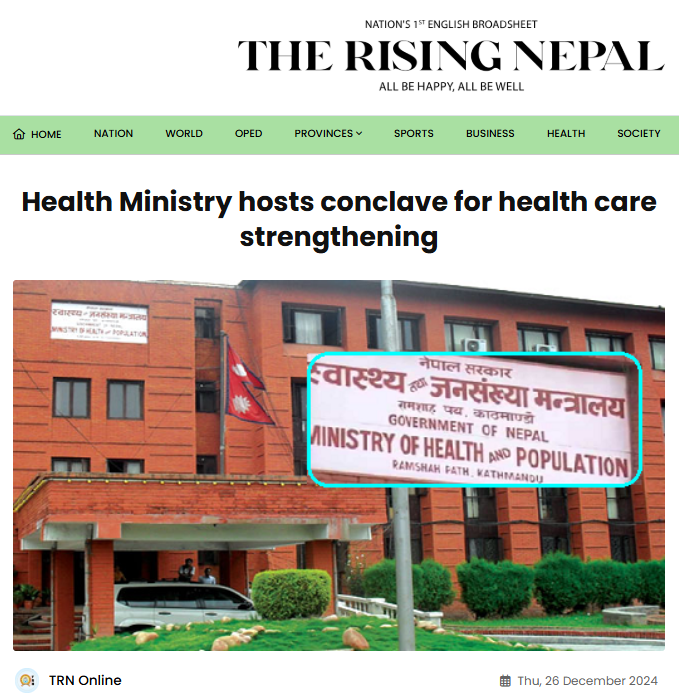
On Boxing Day and the following day (Dec. 27th) a member of our research team, Amshu Dhakal based at Manmohan Memorial Institute of Health Sciences (MMIHSS), presented findings from our Nepal Federal Health System Project in Kathmandu.  The event, Nepal Health Conclave 2024, was organised by the Ministry of Health and Population and supported by WHO (World Health Organization) Nepal and UNFPA.  The event aimed to help strengthen Nepal’s health services.  This year’s conclave, themed “Bridging the Gap Between Global Expertise and National Needs”, brought together Nepalese diaspora health professionals and national stakeholders to foster collaboration and innovation in health systems.

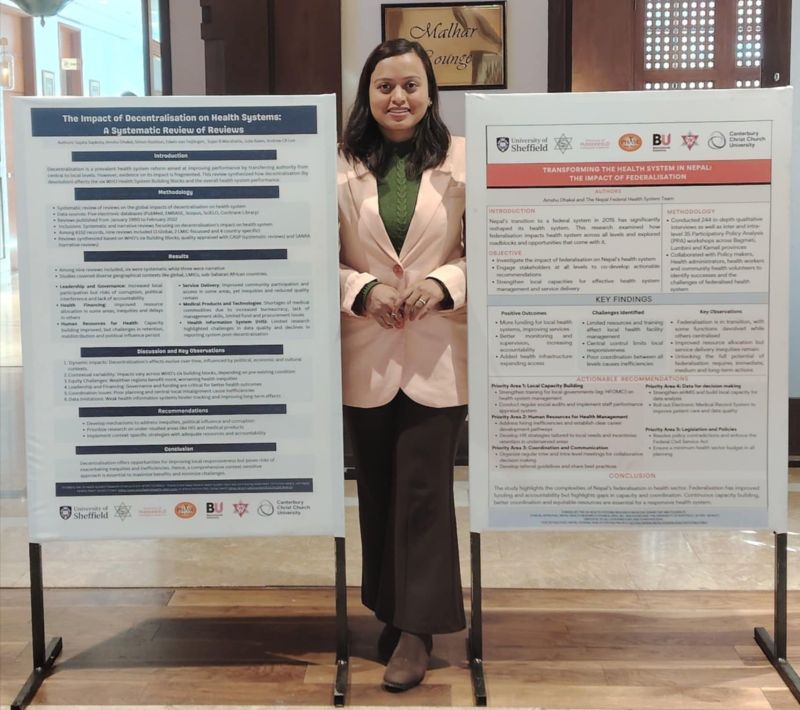
Amshu presented two posters at the event: (1) The Impact of Decentralisation on Health Systems: A Systematic Review of Reviews which systematically reviewed how decentralisation affects health systems globally, highlighting key opportunities and challenges across WHO’s six building blocks; and (2) Transforming the Health System in Nepal: The Impact of Federalisation, which examined how the transition to a federal system reshaped Nepal’s health system, identifying gaps, opportunities, and actionable recommendations for improvement.

Our research team produced policy briefs in collaboration with government officials/stakeholders from all three levels of government.  The policy briefs can be accessed at the website of our Nepal Federal Health System Project.  This study was funded by the UK Health Systems Research Initiative [Grant ref. MR/T023554/1] to study the consequences for the health system of Nepal’s move from a centralised political system to a more federal government structure in 2015.  This joint project was led by the University of Sheffield in collaboration with Bournemouth University, the University of Huddersfield, Canterbury Christ Church University and two institutions in Nepal, namely MMIHS and PHASE Nepal. 

In late 2022 further funding was awarded by the Medical Research Foundation to Prof. Julie Balen, from Canterbury Christ Church University, to disseminate the findings of our UK Health Systems Research Initiative-funded research in Nepal. In terms of academic dissemination, we have published eight papers from this interdisciplinary project [1-8].

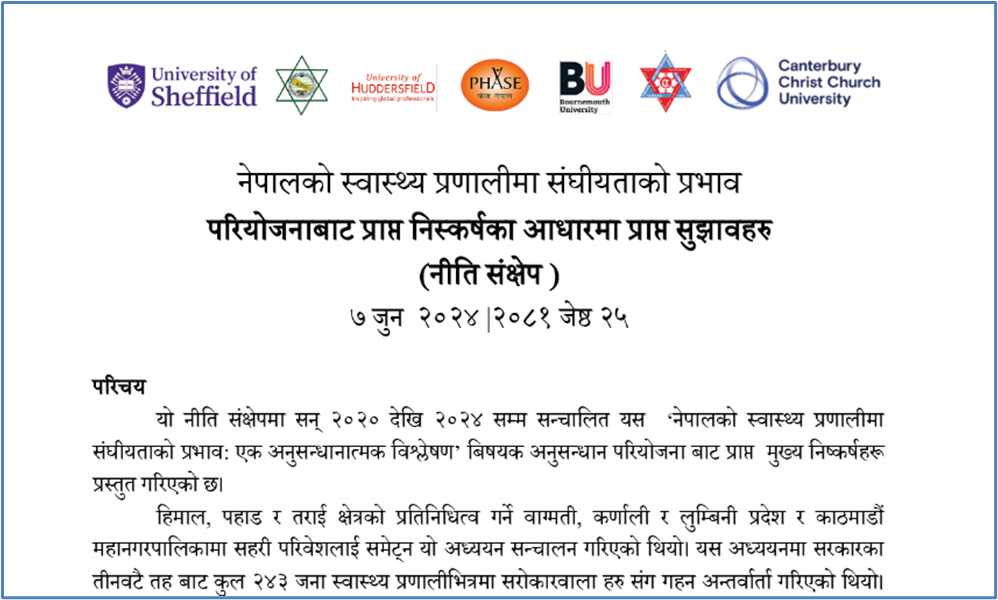
For and from this project, our team produced a comprehensive English-language policy brief as well as a Nepali-language version for politicians and policy-makers and civil servants in Nepal.


Prof. Edwin van Teijlingen

Centre for Midwifery & Women’s Health


References:

  1. Koirala, B., Rushton, S., Adhikary, P., Balen, J., et al. (2024) COVID-19 as a challenge to Nepal’s newly federalised health system: capacities, responsibilities, and mindsets, Asia Pacific Journal of Public Health (online first) https://doi.org/10.1177/1010539524125012.
  2. Sapkota, S., Rushton, S., van Teijlingen, E., et al. (2024) Participatory policy analysis in health policy and systems research: reflections from a study in Nepal. Health Research & Policy Systems, 22 (No.7) https://doi.org/10.1186/s12961-023-01092-5 .
  3. Wasti, S.P., van Teijlingen, E., Simkhada, P., et al. (2023) Selection of Study Sites and Participants for Research into Nepal’s Federal Health System, WHO South-East Asia Journal of Public Health 12(2):116-119.
  4. Sapkota, S., Dhakal, A., Rushton S., et al. (2023) The impact of decentralisation on health systems: a systematic review of reviews. BMJ Global Health 8:e013317. doi:10.1136/bmjgh-2023-013317.
  5. Wasti, S.P., van Teijlingen, E., Rushton, S., et al. (2023) Overcoming the Challenges Facing Nepal’s Health System During Federalisation: An Analysis of Health System Building Blocks, Health Research Policy & Systems 21(117) https://doi.org/10.1186/s12961-023-01033-2
  6. Sapkota, S., Panday, S., Wasti, S.P., et al. (2022) Health System Strengthening: The Role of Public Health in Federal Nepal, Journal of the Nepal Public Health Association 7(1):36-42.
  7. Adhikary, P., Balen, J., Gautam, S., et al. (2020) The COVID-19 pandemic in Nepal: Emerging evidence on the effectiveness of action by, and cooperation between, different levels of government in a federal system, Journal of Karnali Academy of Health Sciences 3 (3): 1-11.
  8. Rushton, S., Pandey, S., van Teijlingen, E., et al. (2021) An Investigation into the Impact of Decentralization on the Health System of Nepal. Journal of Manmohan Memorial Institute of Health Sciences, 7(1): 3–14. https://doi.org/10.3126/jmmihs.v7i1.43146

Dr. Catalin Brylla Leads Diversity and Inclusion Programme for Visible Evidence

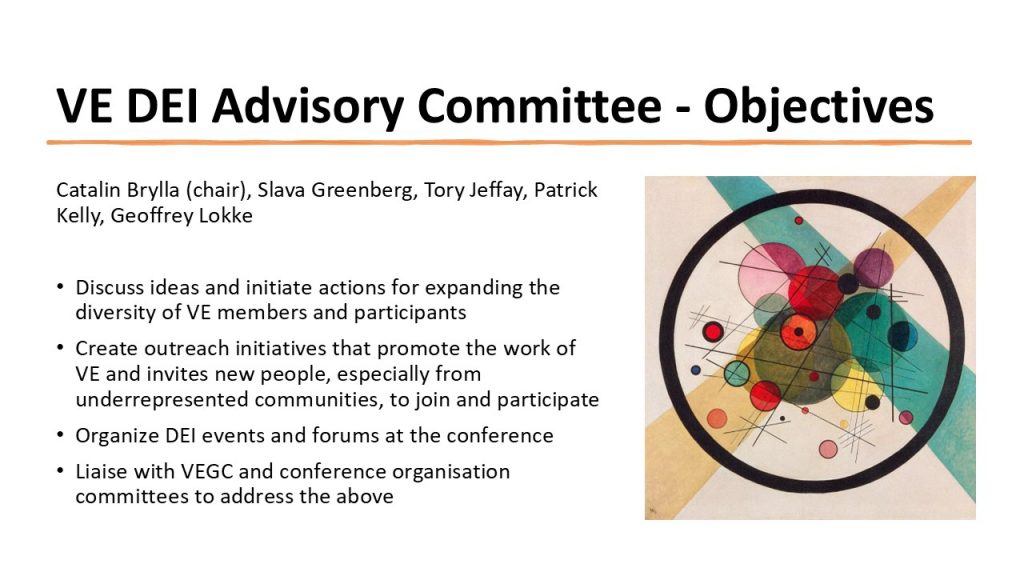
Dr. Catalin Brylla, Principal Lecturer in Film and TV (FMC) has been appointed Chair of the Visible Evidence Diversity, Equity and Inclusion Advisory Committee. The committee’s programme was launched at the 2025 Visible Evidence Conference at Monash University in Melbourne.

Visible Evidence (VE) is the largest and oldest documentary studies community, having produced a wealth of research by renowned scholars, such as Bill Nichols, Michael Renov, Brian Winston, Patricia Zimmerman and Kate Nash. It has a long history of interdisciplinary and transdisciplinary research, fostering links between the academy and the media industry, and fusing documentary research, practice and education.

The VE DEI Advisory Committee has been established by the VE Governing Council to diversify its members and expand its outreach. The committee consists of Catalin Brylla as chair, Slava Greenberg, Tory Jeffay, Patrick Kelly and Geoffrey Lokke. Brylla has drawn up a plan to reach early-career researchers, Global South scholars/practitioners and other underrepresented academic and non-academic communities. He draws on his experience as Chair of the Society for Cognitive Studies of the Moving Image DEI Committee, founding member of the Journal of Media Practice’s Diversifying and Decentralizing Research Working Group, and Deputy Director of BU’s Centre for the Study of Conflict, Emotion and Social Justice.


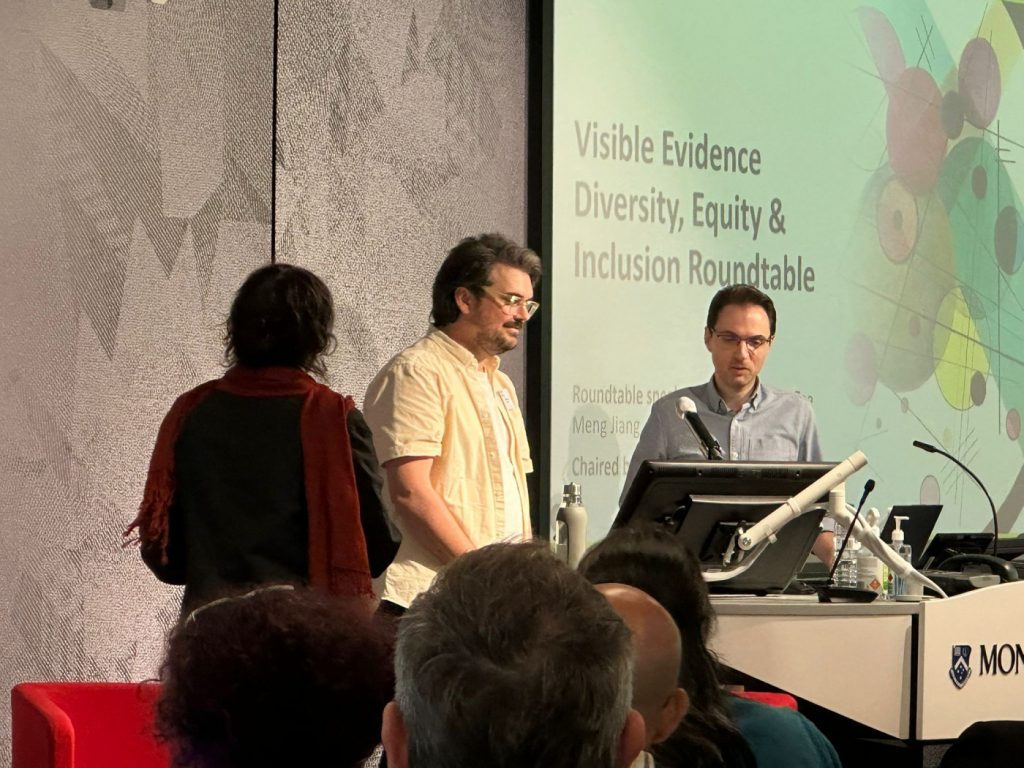
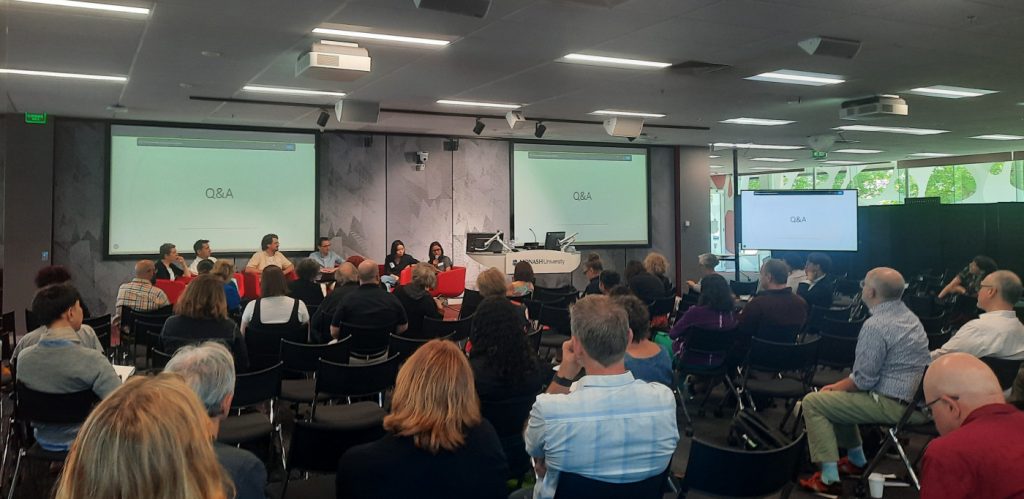
The committee’s programme was launched at the 30th Visible Evidence Conference at Monash University, Melbourne, in December 2025. It featured a roundtable with scholars and media practitioners Dr. Shweta Kishore, Dr. Zoe Meng Jiang, Prof. Kate Nash and Prof. Pratāp Rughani, who provided their perspective of diversity and inclusion. The conference also featured the committee’s new mentorship initiative, which pairs up early-career members—including graduate students, junior faculty members and emerging filmmakers—with mid-career and senior scholars or media professionals.

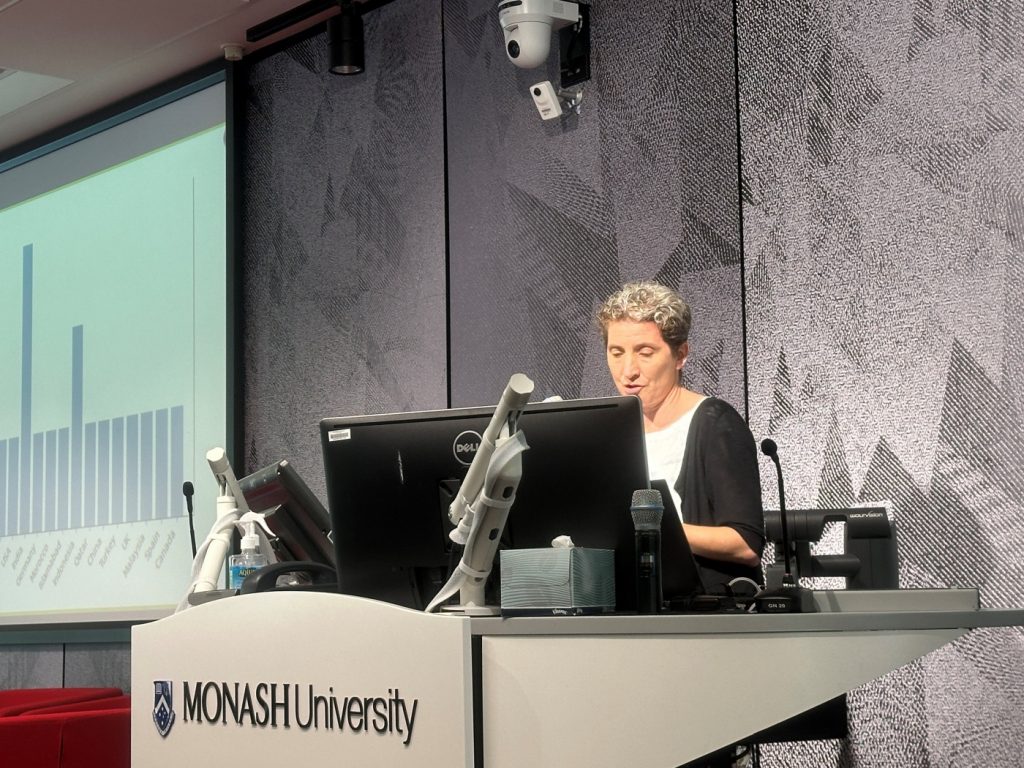
Image above: Prof. Kate Nash presents data on institutional affiliations of first authors submitting to the journal Studies in Documentary Film; there is a distinct lack of submission from Global South scholars.


Some of the committee’s action plans include:

  • Organising a DEI-related roundtable and workshop at every VE conference, featuring scholars from the Global South
  • Organise career development ‘clinics’ for early-career researchers
  • Create a VE YouTube channel that features recorded conference presentations for people who cannot attend the conference
  • Liaise with journal editors to commission special issues from Global South scholars
  • Monitoring VE membership and conference participation regarding institutional affiliations and countries

The VE DEI Committee’s programme was launched at Monash University Melbourne, on the unceded lands of the Bunurong Boon Wurrung and Wurundjeri Woi Wurrung peoples of the Eastern Kulin Nation. We pay our deepest respect to the traditional owners of this land and acknowledge their ongoing relationship with the lands and waterways. We pay our respect to all Indigenous people, and their elders past and present.