- 1a / 2a Public Lectures: Open academic lectures and talks delivered to external audiences.
- 1b / 2b Performance Arts: Music, dance, drama and theatrical productions.
- 1c / 2c Exhibitions: Gallery and museum displays.
- d / 2d Museum Education: Workshops, children’s clubs and lectures held in provider-owned museums or galleries.
- 1e / 2e Other: Other public events such as festivals, guided tours, fashion weeks or online events with significant format changes.
Category / Public engagement
Professionals’ Event – Prevent Violence Against Women and Girls
Please feel free to book on or share with your networks.
Professionals Conference in Support of the 16 Days of Activism to Prevent Violence Against Women and Girls
Wednesday 2 December • 12:30 PM – 5 PM
Overview
Bournemouth University and BCP Council are collaborating to support the 16 Days of Activism Against Gender-Based Violence, a global campaign dedicated to raising awareness and driving action to end violence against women and girls.
Join us for an important (free) afternoon of learning, reflection and action as professionals, academics, practitioners, charities, NGOs and community partners come together to address the ongoing challenge of violence against women and girls.
This event provides a valuable opportunity for those from the criminal justice, social care, health, education and charity sectors to engage in critical discussion, build collaborative networks, and contribute to meaningful change in tackling Violence Against Women and Girls.
The event will be opened by His Majesty’s Lord-Lieutenant of Dorset, Michael Dooley. Highlights include a keynote address from Kate Beesley, breakout sessions exploring topics such as lived experience through collaborative textile art, the growing threat of AI and deepfakes, international perspectives on gender-based violence, police perpetrated domestic abuse and early intervention for better societal outcomes. The afternoon also features a presentation from Dr Jade Levell culminating in a multidisciplinary panel discussion on Child Sexual Exploitation.
Keynote Speakers
Kate Beesley, a survivor of domestic abuse, has transformed her personal journey into a meaningful mission aimed at fostering change and enhancing outcomes for women and girls worldwide. Kate has undergone extensive training in trauma and the pivotal issues surrounding violence against women and girls.
Dr Jade Levell has spent her whole career working to end violence. In recent years this has been through the academic exploration of masculinity, vulnerability, and violence.
More information and to book on: Professionals’ Conference: Violence Against Women and Girls Tickets, Wednesday 2 December • 12:30 PM – 5 PM | Eventbrite
Personal Reflection on Sharing Research Through Art: Collaborating to Understand Ageing in a Digital World
Last year we were awarded funding to enable us to work with a local community artist to share our research findings. This funding was offered as part of a joint venture between Bournemouth University and BEAF Arts Co, a multi-art form festival and year-round arts programme.
We used the funding to collaborate with artist Jenny Tarr, to support us in sharing the findings from the ‘perceptions of ageing in a digital world’ project. This project is co-created by academic researchers from the Ageing and Dementia Research Centre and local older adults, who are co-researchers. We used Photovoice to explore what it means to be an older person in a digital world, as we hoped to shed light on the impact of the digitalisation of society on older people.
Meeting the Artist
We were a little nervous when we first meet. We wondered where to start, there were so many ideas we wanted to discuss. Jenny put us at ease through, and we spent some time sharing our thoughts and moments from the project. She also asked us questions that made us think about the key messages that we wanted to share about the project and gave us several options for how this might work in art form. We decided that we would like a digital image that encapsulated the project, something we could display next to the photos from the project to entice attention and use to represent the project more generally.
Seeing the Research Through New Eyes
When the sketches arrived, we felt a mix of excitement and nervousness. We were really impressed with how Jenny had captured the essence of our participants. We found ourselves understanding our own findings differently—Jenny gave our participants’ voices a new dimension.
This collaboration has reminded us that research isn’t only about what we discover; it’s about how we choose to share what we’ve learned—and who we hope will feel seen because of it. We have already exhibited the photos at Talbot Campus, and we are planning on taking them to a community venue and showcase them alongside the image created by Jenny.
We would highly recommend working with Jenny, and other community artists, the experience has been thought provoking, and we also have a piece of artwork that will forever encapsulate our project findings.
Michelle Heward, Lecturer in Psychology & Jenny Tarr, Community Artist.
Further information
For more information on the research project, please see the project webpage http://www.bournemouth.ac.uk/research/centres-institutes/ageing-dementia-research-centre/adrc-research-participation-group or contact Dr Michelle Heward mheward@bournemouth.ac.uk
The research project is funded by the British Society of Gerontology (BSG) Averil Osborn Award for Participatory Research. The views expressed and discussed may not represent the views of the BSG.
Fore more information about Jenny Tarr, please see the following webpage https://www.jennytarr.co.uk/
Dr. Orlanda Harvey interviewed as expert
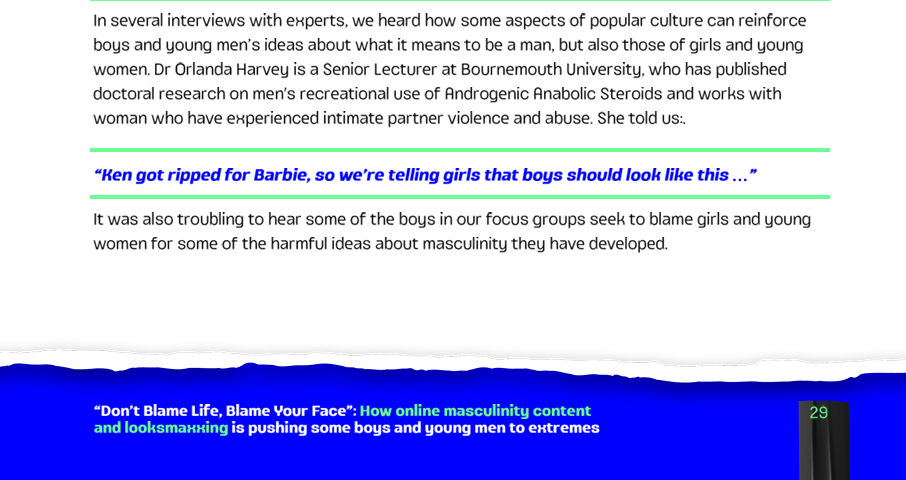
The Centre for Young Lives just produced a report warning about the fast-growing online trend of “looksmaxxing”. Looksmaxxing is an online phenomenon around physical appearance ‘optimisation’ driven by a belief that appearance is the primary factor of a man’s social or romantic worth. This trend is driving some boys and young men towards dangerous body image pressures, extreme behaviours, and misogynistic worldviews.
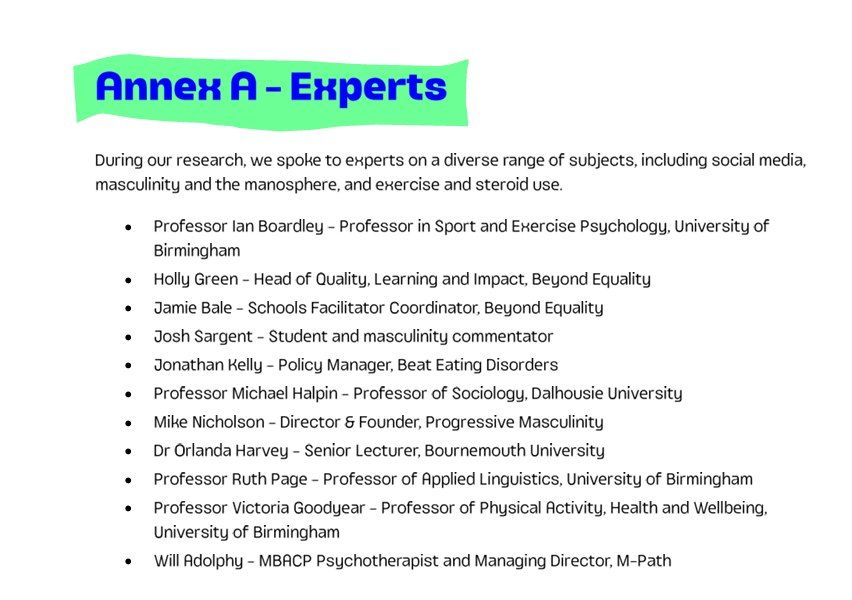
One of the experts interviewed for this timely report is Bournemouth University’s Dr. Orlanda Harvey. Dr. Harvey is a Senior Lecturer in Social Work in the Faculty of Health, Environment & Medical Sciences. Orlanda’s Ph.D. research focused on men using image and performance enhancing drugs and her work has resulted in many academic papers [1-7].
- Harvey, O., van Teijlingen, E., Parrish, M. (2025). Using A Range Of Recruitment Strategies To Recruit Those Who Use Anabolic Androgenic Steroids. Journal of Mixed Methods Studies, 11: 43–60. https://doi.org/10.59455/jomes.42
- Harvey, O., van Teijlingen, E., Parrish, M. (2024) Using a range of communication tools to interview a hard-to-reach population, Sociological Research Online 29(1): 221–232 https://journals.sagepub.com/doi/pdf/10.1177/13607804221142212
- Harvey, O., Keen, S., Parrish, M., van Teijlingen, E. (2019) Support for people who use Anabolic Androgenic Steroids: A Systematic Literature Review into what they want and what they access. BMC Public Health 19: 1024
- Harvey, O., Parrish, M., van Teijlingen, E., Trenoweth, S. (2020) Support for non-prescribed Anabolic Androgenic Steroids users: A qualitative exploration of their needs Drugs: Education, Prevention & Policy 27:5, 377-386. doi 10.1080/09687637.2019.1705763
- Harvey, O., Parrish, M., van Teijlingen, E, Trenoweth, S. (2022) Libido as a reason to use non-prescribed Anabolic Androgenic Steroids, Drugs: Education, Prevention & Policy 29(3):276-288.
- Harvey, O., van Teijlingen, E., Parrish, M. (2022) Mixed-methods research on androgen abuse – a review, Current Opinion in Endocrinology & Diabetes 29(6):586-593.
- Harvey, O., van Teijlingen, E. (2022) The case for ‘anabolics’ coaches: selflessness versus self-interest? Performance Enhancement & Health 10(3) August, 100230
Research highlighted at the UN in New York
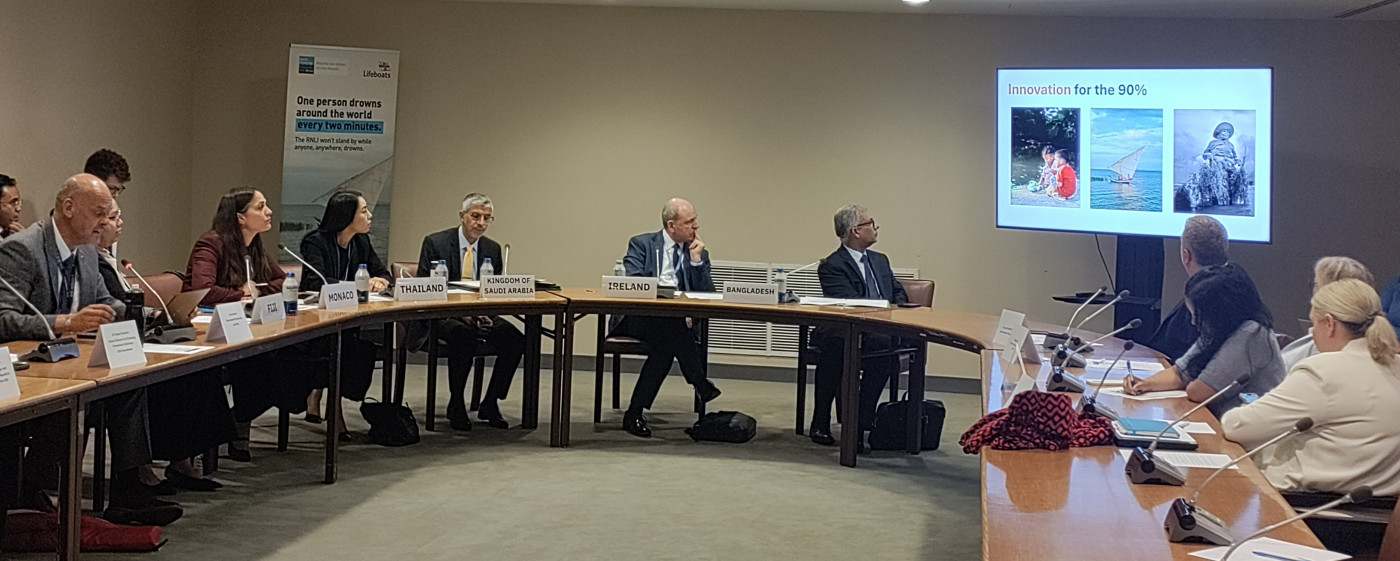
Last week two members of our SONAMONI team attended the 2026 UN (United Nations) High-Level Political Forum (HLPF) on the Sustainable Development Goals (SDGs) at the UN Headquarters in New York. This Forum focuses on transformative, equitable and innovative action to support delivery of the 2030 Agenda for Sustainable Development, with Goal 9: Industry, Innovation and Infrastructure being one of the SDGs under review in 2026.
SONAMONI project partner, Royal National Lifeboat Institution (RNLI) co-hosted a roundtable discussion on “Partnering for transformative, equitable & innovative action on drowning prevention” with the Mission for Bangladesh and the Mission for Ireland. Bournemouth University’s John Powell, who has a joint position in the School of Computing & Engineering at BU and the RNLI, presented the innovative approaches of our SONAMONI study on drowning prevention for rural children under two in Bangladesh. John stressed the multi-faceted nature of our the intervention design process, the importance of working closely with communities, and highlighted two of the interventions developed by the project: a playpen for toddlers under the age of two, and a household risk assessment that caregivers can complete to identify and address drowning risks in and around their home.
Our second colleague Dr. Becky Sindall, Senior International Advocacy Manager at the RNLI, helped to coordinate the event. Becky commented that: “There was considerable interest in the SONAMONI project from the Member States and UN organisations in the room. The Bangladeshi ambassador commented that the work would have a positive impact on the lives of women and children in rural Bangladesh.” She added that at least one other representative of a Member State was keen to understand how the research approach could be adopted and applied to drowning prevention issues in their own country.
The High-Level Political Forum event closed with a call to action for everyone to commemorate World Drowning Prevention Day on 25th July by raising awareness about drowning as a preventable public health issue and promoting global water safety. As part of this commemoration, the World Health Organization (WHO) will be hosting a free webinar at midday on 28th July, for details click here!
The SONAMONI project is an interdisciplinary collaboration between Bournemouth University, CIPRB (Centre for Injury Prevention and Research, Bangladesh), the University of the West of England, the University of Southampton, the RNLI and Design Without Borders (Uganda). This large interdisciplinary project runs until the end of February 2027. This £1.6m project has been made possible thanks to a UK grant from the National Institute for Health and Care Research (NIHR) through its Research and Innovation for Global Health Transformation programme.
Prof. Edwin van Teijlingen
Co-PI SONAMONI project
Centre for Midwifery & Women’s Health
Poverty in the UK: book launch today at BU
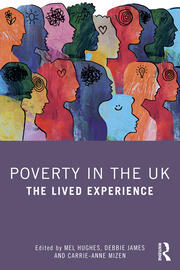
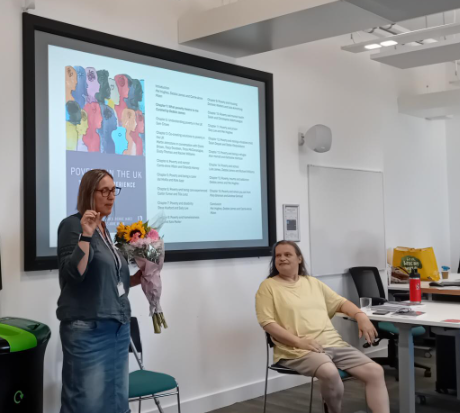
This afternoon the editors of the newly published book Poverty in the UK: The Lived Experience held their book launch in a packed lecture room in the Bournemouth Gateway Building [1]. The editors are BU’s Prof. Mel Hughes, and local collaborators Debbie James and Carrie-Anne Mizen. Debbie is a mother of two adults, a writer and performer with The Outsiders Project, Community Commissioner with BCP Poverty Truth 1, and an active member of BU’s PIER partnership. Carrie-Anne is also a parent and silent activist against poverty, and a trustee of the poverty truth network. The audience today included both chapter authors and supporter of the book, some people were local and otherse came from as afar a field as Glasgow and Edinburgh.
The editors talked about original idea behind the book and the link to the Poverty Truth Network, and they added that all royalties will go to the Poverty Truth Network. The book published by Routledge has 16 chapters and a seperate conclusion, nearly all chapters are co-produced by members of the community and several BU academics. With the the overwhelming majority of each chapter being based on lived experiences of the first author. The book was brought to live by some of the contributors reading poems written for this edited volume.
Congratulations to all involved!
Prof. Edwin van Teijlingen
Reference:
- Hughes, M., James, D. & Mizen, C.A (eds.) Poverty in the UK: The Lived Experienc, London: Routledge, 2026.
Digging into DNA: Sixth Form students learn Bioinformatics at BU
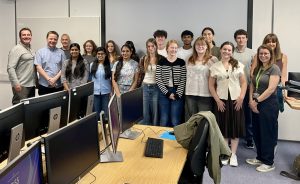
Fifteen Sixth Form students from Thomas Hardye School in Dorchester visited BU for a full-day workshop exploring the DNA of Wolbachia, a fascinating bacterium that lives inside insects and other arthropods. Hosted by Dr Demetra Andreou and Prof Genoveva Esteban from the School of Life and Environmental Sciences, the hands-on workshop introduced students to the world of bioinformatics and DNA analysis. This fantastic learning experience was made possible thanks to the outstanding support of BU’s IT team, who went above and beyond to ensure the computers were ready in time for the workshop despite the short notice.
Before visiting BU, the students had already undertaken field and laboratory work as part of their school’s Genetics after-school club. They collected terrestrial insects from the school grounds and extracted their DNA, as part of an ongoing research collaboration with a partner school in Switzerland.
At BU, the students built on this work through a hands-on bioinformatics session, analysing bacterial DNA sequences using computational tools. They learned how to identify Wolbachia from their DNA sequences, compare them with samples from around the world, and explore DNA relationships. Throughout the day, the students demonstrated impressive enthusiasm, curiosity and analytical skills, tackling university-level scientific methods with confidence and engaging thoroughly with the data. Their findings will be presented at a symposium at Thomas Hardye School this autumn.
Science teacher Simon Lewis captured the impact of the visit in his feedback:
Another splendid day visiting Bournemouth University! Thank you so much for giving us your time and leading the analysis of the DNA results. The students universally said how much they had enjoyed the visit, I think they got a real sense of achievement from “digging” into the data and finding a few things that none of us expected! Thanks once again, it is definitely my favourite visit of the year!
The workshop was an inspiring introduction to university-level science, giving students first-hand experience of research while encouraging them to consider future pathways in higher education and scientific careers. As part of their visit, the group was shown around the campus, including SUBU, the library and teaching laboratories, giving them a taste of university student life.
Congratulation on newly published systematic review


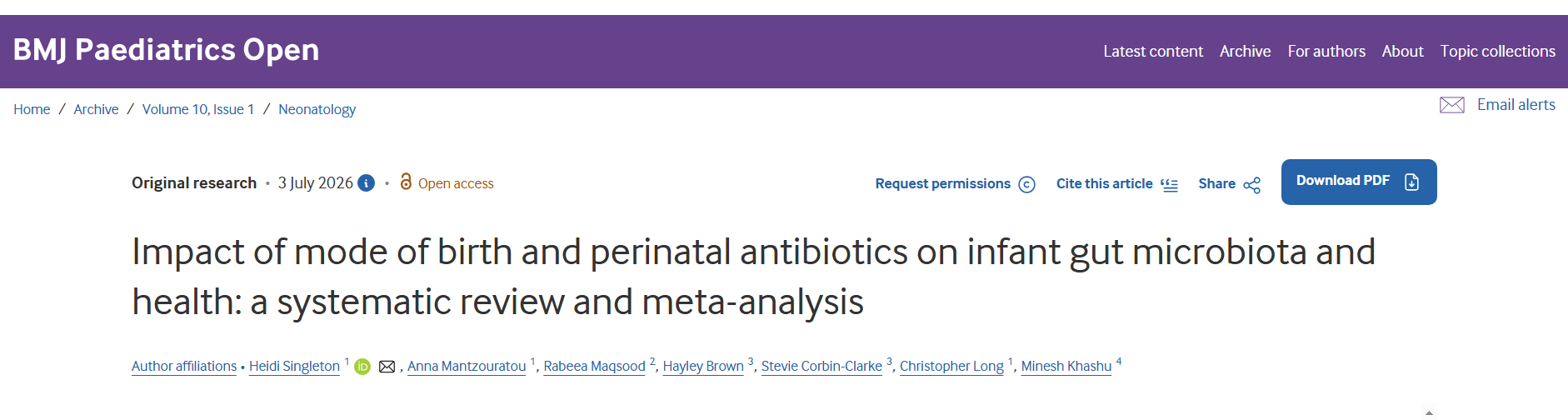
- Singleton H, Mantzouratou A, Maqsood R, Brown H, Corbin-Clarke S, Long C, Khashu, M. (2026). Impact of mode of birth and perinatal antibiotics on infant gut microbiota and health: a systematic review and meta-analysis. BMJ Paediatrics Open. 10:e004170. https://bmjpaedsopen.bmj.com/content/10/1/e004170
Congratulation to HEMS colleagues on their new book!
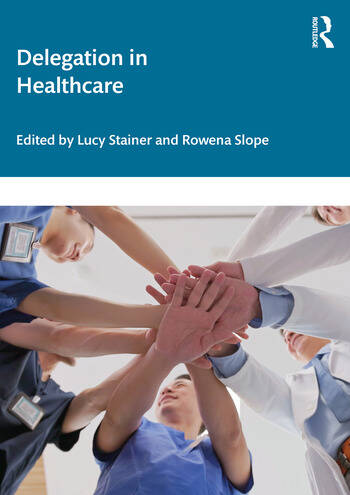
Congratulations on the publication of their new book Delegation in Healthcare (published by Taylor & Francis) and edited by Lucy Stainer and Rowena Slope. In this edited collection there are chapter contributions by BU colleagues: Clare Shearer, Emily Brooks, Jordon Pace, Helena de Rezenda, Lucy Stainer & Rowena Slope, as well as from practice partners: Jo Cleall, and Tom Barton.
This book is designed for a range of healthcare practices, such as occupational therapy, physiotherapy, nursing, and advanced practice. It includes examples from diverse care settings and reflections on technological change. Written by a range of healthcare practitioners, it explores how to delegate within the parameters of safety and efficiency. Chapters include:
· Accountability and responsibility
· Physiotherapy and patient safety within delegation
· Enablers and barriers
· Delegation governance
· Support and supervision
· Multi-disciplinary working and delegation in the prison setting
· Delegation and advanced practice roles
· International delegation experiences
The editors are asking colleagues to consider adding the book to their unit reading.
Congratulations1
Prof. Edwin van Teijlingen
CWMH
BU Prof. Hundley in The Conversation
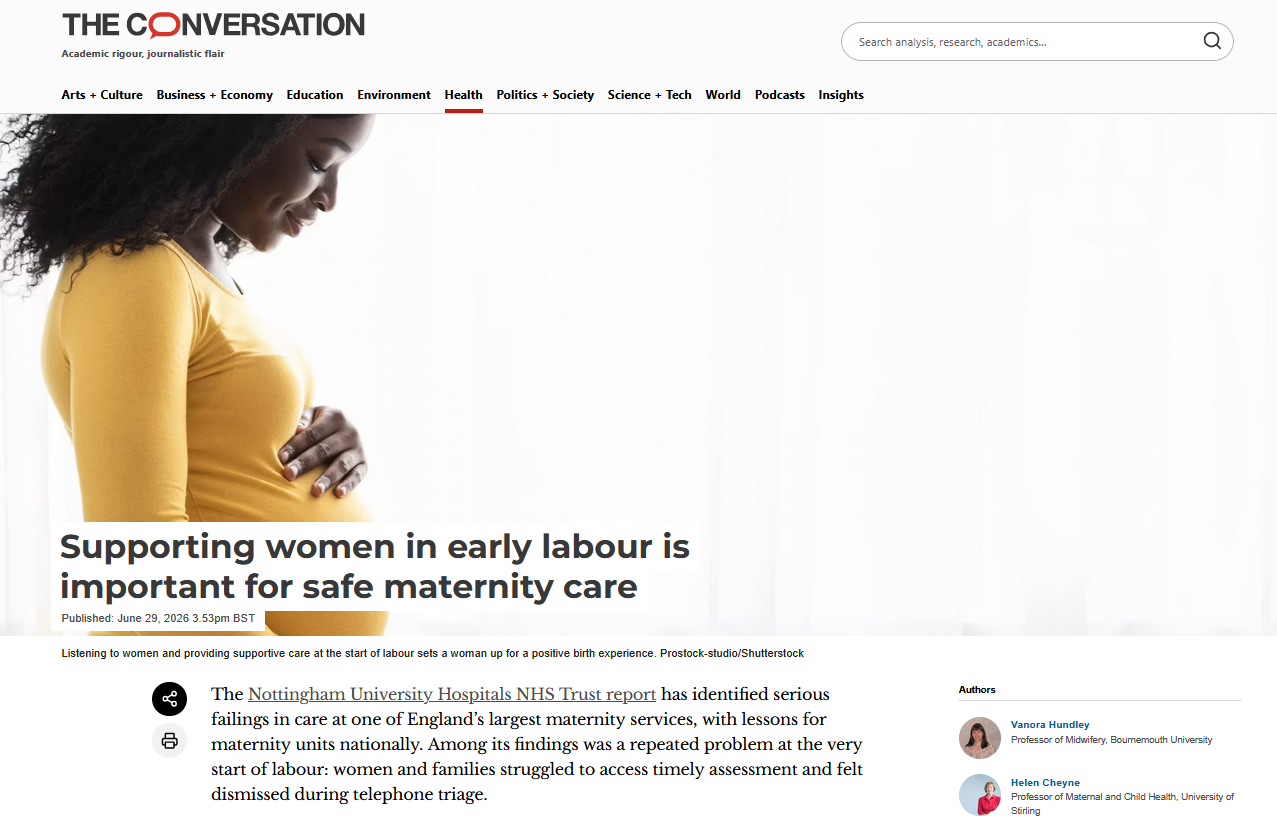
Three days ago Prof. Vanora Hundley, co-director of Bournemouth University’s Centre for Midwifery & Women’s Health (CMWH) published a hot-topic ‘Supporting women in early labour is important for safe maternity care‘ in The Conversation. In this conversation piece, co-authored with Prof. Helen Cheyne, at the University of Stirling, focuses on one key aspect of maternity care, namely early labour.
The Conversation piece addresses a common problem at the very start of labour: women and families struggled to access timely assessment and felt dismissed during telephone triage. The authors also highlight the common problem is that many maternity units are not designed or staffed to provide sustained early labour care. The freely-available online paper adds insight to the current debate around the pressure on the NHS to be able to provide the kind of maternity care women require and deserve.
Congratulations!
Prof. Edwin van Teijlingen
New interdisciplinary research publication on Nepal
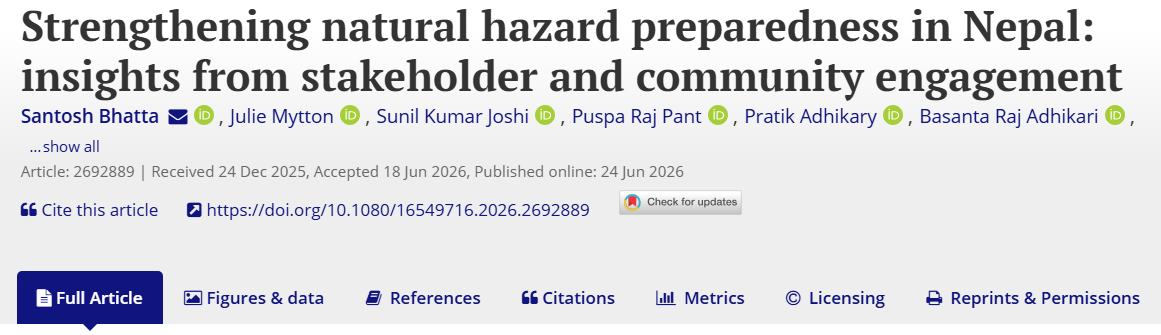
This month the international journal Global Health Action published our latest paper ‘Strengthening natural hazard preparedness in Nepal: Insights from stakeholder and community engagement‘ [1]. Global Health Action is published by Taylor and Francis. This interdisciplinary paper, with two BU co-authors from two different faculties, John Powell and Edwin van Teijlingen, grew out of a NIHR grant application. The application was successful in the first round of the application process, but unfortunately, the whole grant scheme was withdraw by the NIHR due to lack of UK Government funding. The lead author is Dr. Santosh Bhatta from the University of the West of England (UWE).
This paper addresses the important and timely topic of natural hazard preparedness in Nepal through stakeholder and community engagement activities. It provides insights into the implementation gaps between national disaster risk management frameworks and local-level practice, which is highly relevant given Nepal’s federal governance structure and high vulnerability to natural hazards. We engaged with diverse stakeholders including national agencies, local government officials, and community members to gain insights into preparedness challenges from multiple perspectives.
Thus this paper addresses a critical public health challenge in a disaster-prone, resource-limited setting where evidence-based preparedness strategies are urgently needed. Secondly, it offers a multi-level engagement approach—spanning national institutions, municipal governments, and community members—provides a comprehensive view of the disaster preparedness landscape. Thirdly, it highlights practical, actionable gaps such as the need for improved coordination, legal literacy, and early warning systems, which have direct policy implications. Finally, our paper positions this work as formative research to inform future intervention development, which is a valuable contribution to the field.
Reference:
- Bhatta, S., Mytton, J., Joshi, S.K., Pant, P.R., Adhikary, P., Adhikari, B.R., Gautam, S., Powell, J., van Teijlingen, E. (2026). Strengthening natural hazard preparedness in Nepal: insights from stakeholder and community engagement. Global Health Action, 19(1). https://doi.org/10.1080/16549716.2026.2692889
BU Animation screened at the European Cetacean Society Film Night

Tara Obaidy (@GobboGoose) 2024
Whales play a vital role in keeping our oceans healthy. When whales release nutrient-rich excrement plumes into the water, they provide essential elements like iron and nitrogen that fertilise phytoplankton. These microscopic plant-like organisms form the foundation of marine food webs and even help regulate the Earth’s climate by capturing CO2. In this way, whales support biodiversity and enhance productivity across the oceans.
This fascinating story inspired The Whale Poo Quadrille, an imaginative animation presented by BU at the European Cetacean Society 2026 Conference Film Night. The film uses humour and creativity to bring an important ecological message to younger audiences. Opening with the playful line, “Will you poo a little faster,” said the phytoplankton to the whale, it introduces the idea of ocean nutrient cycles in a memorable way. The animation has been created by BU graduate Tara Obaidy (BA Computer Animation Art and Design, 2023) and was inspired by Shaftesbury writer Richard Foreman’s take on Lewis Carroll’s Lobster Quadrille. Tara is currently working towards her MA in Visual Communication at Birmingham City University. The project is being managed by BU Visiting Fellow Dr. Jocelyn Elson-Riggins, with marine food web expertise provided by Prof. Genoveva Esteban (School of Life and Environmental Sciences). It has been developed in collaboration with Stichting Rugvin’s Whale Poo Ambassador Programme and the environmental network Planet Shaftesbury.

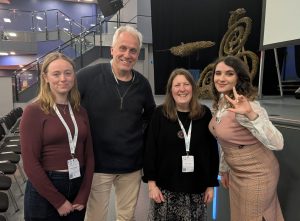
Left to Right: Stichting Rugvin’s Maxime Weber and Frank Zanderink with Jocelyn Elson-Riggins and Tara Obaidy at Film Night, European Cetacean Society 2026 Conference in Dundee, Scotland.
Tara and Jocelyn presented the film at the conference in Dundee, Scotland, sharing the project with an international audience of marine researchers and conservationists. The team is now preparing to bring The Whale Poo Quadrille to an even wider audience by launching it on YouTube, where it will be freely available for all to enjoy.
BU presentation at the University of Bristol
The significance of Rights and Protocols in Disaster Response
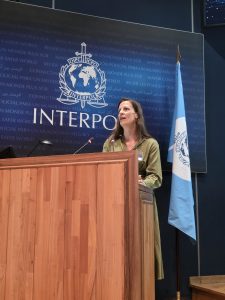
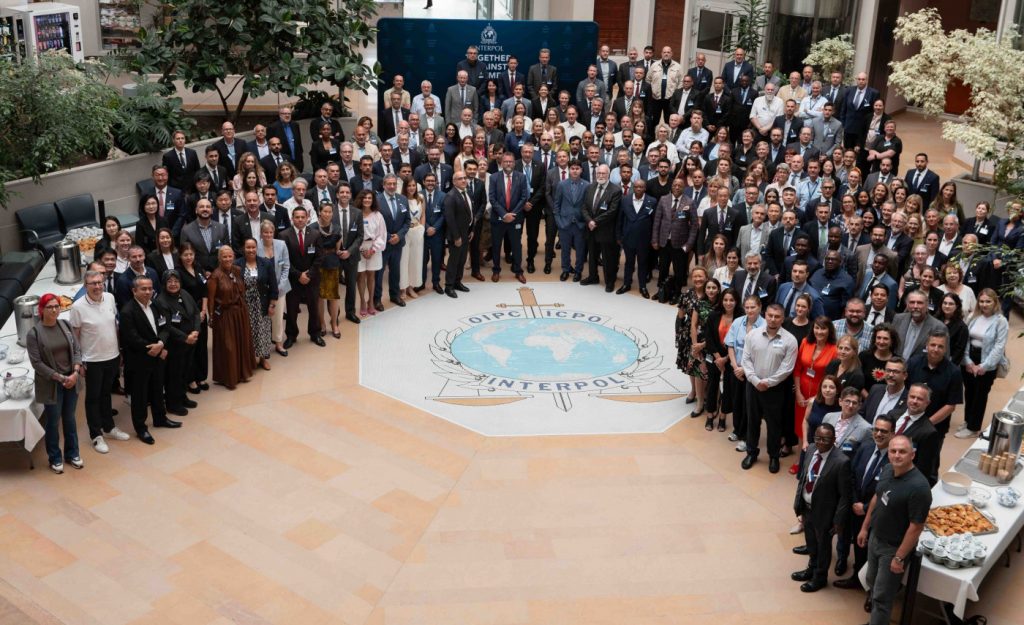
Last week saw INTERPOL’s 35th Disaster Victim Identification conference designed to strengthen global cooperation, improve forensic practices and enhance the identification of victims in mass fatality incidents. It featured a raft of highly topical presentations covering responses to disasters form the Crans-Montana Bar Fire on 1 January 2026, to Hong Kong’s Tai Po incident and the Bondi Beach Mass-Fatality Shooting along-side long-term, ongoing contexts and challenges, most notably identification efforts in Ukraine.
Part of Interpol’s Disaster Victim Identification (DVI) mission is to develop international standards that strengthen global cooperation and, crucially, support victims’ families in ensuring dignified identification, information and repatriation allowing for appropriate funerary practices. It is in this spirit that Professor Melanie Klinkner was invited to present on the Bournemouth Protocol on Mass Grave Protection and Investigation in front of 227 participants from 59 countries. Her presentation highlighted the rights-informed and victim-aware provisions governing mass graves that also apply to DVI.
Fundamental principles regarding the inherent dignity of the human person, non-discrimination, and recognition before the law extend beyond death. Under international law, the dead are protected either directly or indirectly; the latter, through the rights afforded to their living relatives. In the context of mass fatalities and humanitarian intervention, it is widely accepted that the right to dignity and physical integrity apply. Melanie highlighted core legal provisions stressing the importance of dignified, respectful and indiscriminate treatment for identification, return of human remains and funerary customs.

Her talk was extremely timely in two respects: Firstly, in light of current proposals to turn the 2016 draft articles on the Protection of Persons in the Event of Disaster into a fully-fledged international treaty. The definitions of disasters presently proffered
‘a calamitous event or series of events resulting in widespread loss of life, great human suffering and distress, mass displacement, or large-scale material or environmental damage, thereby seriously disrupting the functioning of society’ (Article 3)
clearly encompassing mass graves as possible sites of (or resulting from) disaster. Moreover, the treaty aims ‘to facilitate the adequate and effective response to disasters […] so as to meet the essential needs of the persons concerned, with full respect for their rights’ (Article 1). This concerns victims – dead and alive.
And secondly, due to the contemporary challenges that mass graves present globally: From July 2024 until February 2026 alone, a total of 584 entries from alerts on mass graves and related activities on missing persons from across the world have been recorded in the MaGPIE database suggesting the discovery and reporting of 135 new mass graves. This underscores the pressing need that the full range of victims’ rights must be given consideration if the framework is to be progressed that offers indiscriminate protection and respect.

ESRC Festival of Social Science 2026: Application Deadline Extended to Thursday 25 June 2026
The 24th annual ESRC Festival of Social Science will take place from Saturday 17 October to Saturday 7 November 2026, with the theme ‘Money, Finance and the Cost of Living’.
The festival offers researchers an excellent opportunity to take their work beyond the university, engage with diverse audiences, and present social science research in creative, accessible and meaningful ways.
Funding of up to £1,000 per event is available.

About the Festival of Social Science
The Festival of Social Science is an annual UK-wide celebration of research and knowledge about people and society. It is organised and funded by the Economic and Social Research Council (ESRC).
The festival provides a platform for researchers from UK universities to engage the public with social science research across a wide range of topics, including health and wellbeing, crime, equality, education, identity, finance and the cost of living.
Events can take many forms, including exhibitions, talks, panel discussions, performances, workshops, interactive activities and online sessions. The festival is free to attend, with most events open to everyone, although some may be designed for specific audiences.
What are the festival aims?
The aims of the festival are to:
- encourage, support and create opportunities for social science researchers to engage with the public and young people;
- promote and increase awareness of the social sciences, ESRC-funded research, and the contribution social science makes to the UK;
- enable the public to engage with social science research;
- engage with teachers and young people and raise their awareness of the social sciences.
How to apply
Deadline for applications EXTENDED to: 5pm THURSDAY 25 June 2026
To apply, please complete the online application form.
We are particularly keen to receive applications from PGRs and early to mid-career researchers, and we also welcome applications from groups or teams.
If you are a PGR or have a supervisor, your application will need to be endorsed by your supervisor. They should email their endorsement to:
researchengagementandimpact@bournemouth.ac.uk.
Before submitting your application, we strongly recommend that you review the guidance documents below and use the working document to draft your responses.
Guidance documents and supporting materials
Please read the Festival Event Leader Pack before preparing your application. This is the key guidance document for anyone planning to lead an event. It explains the festival aims, event criteria, planning considerations, audience engagement expectations, evaluation requirements, and the support available.
We have also prepared a working document to help you draft your ideas before transferring your final responses into the official FoSS application form. This is intended to support your planning only. Please note that it is not the official application form and will not be accepted as a final submission.
You can also access the slides from the Information Session here. If you were unable to attend, or would like to revisit what was covered, you can watch the session recording here.
Need help with your application?
We will be holding an online drop-in session to discuss event ideas and answer questions about the application process.
Date: 1 June
Time: 11:00–13:00
Microsoft Teams meeting
Join: https://teams.microsoft.com/meet/318685295835515?p=n5B1rleHvqQTYdLcZk
Meeting ID: 318 685 295 835 515
Passcode: Vr9dL9nQ
You can also submit questions in advance via Padlet here.
Questions submitted via Padlet will be anonymous, and we will address them during the drop-in session.
Apply now to take part in the 2026 ESRC Festival of Social Science
The 24th annual ESRC Festival of Social Science (FoSS) will take place from Saturday 17 October to Saturday 7 November 2026, with the theme ‘Money, Finance and the Cost of Living’.
Areas events might explore:
- Personal finances
- Teaching children about money
- Understanding and support for the cost-of-living crisis
- The economy and how it works
- How businesses make money
- Starting your own business
How to apply
We are particularly keen to receive applications from PGRs and early to mid-career researchers and encourage groups/teams to apply. If you have a supervisor, they will need to endorse your application by emailing researchengagementandimpact@bournemouth.ac.uk.
If you are considering applying, we strongly encourage you to get in touch with us directly as early as possible.
Apply to take part by completing the online application form.
Deadline for applications: 11:59pm, Thursday 21 May 2026
You can view the slides from the Information Session here. If you weren’t able to attend, or if you would like to revisit what was covered, you can also watch the session here.
About the Festival of Social Science
The festival is an annual UK-wide celebration of research and knowledge about people and society, organised and funded by the Economic and Social Research Council (ESRC). It provides a platform for researchers from UK universities to engage the public in a wide range of topics, from health and wellbeing to crime, equality, education, and identity, through engaging events such as exhibitions, lectures, panel debates, performances, and workshops.
The festival is free to attend, with most events open to everyone, though some may target specific groups. It offers researchers a unique opportunity to take their work beyond the university, connect with diverse audiences, and present their research in creative and accessible ways. Funding of up to £1,000 per event is available.
Training to run a great event
The national FoSS team is coordinating public engagement training with Engagement Trainer and Consultant Jamie Gallagher in June (repeated in September). Attendance at these sessions is mandatory for all event leads to attend and further details will be shared upon successful application.
Please read before applying
Before submitting your application, please make sure you meet both the ESRC eligibility criteria and our key requirements. This is essential for your proposal to be considered.
Applications that reference academic or undergraduate audiences, or propose campus-based venues, will not be eligible. This opportunity is focused on public engagement beyond academic settings.
Festival Event Leader Pack this practical guide supports researchers in planning and delivering events for the festival. It covers the festival’s aims, event criteria, useful planning tips, audience engagement, and evaluation. It also details the funding, training, and promotional support available from the ESRC, making it a key resource for aligning events with the festival’s goals.
Contact us
If you have any questions or need guidance with your application, please contact us at researchengagementandimpact@bournemouth.ac.uk

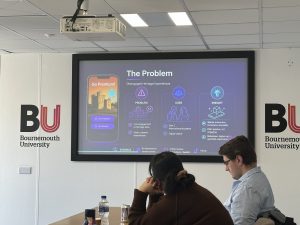
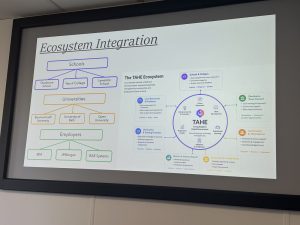
From Sherborne to the Pitch Room: Why MBA Learning Needs More Reality—and Less Control
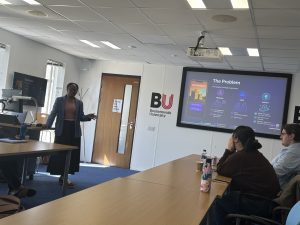
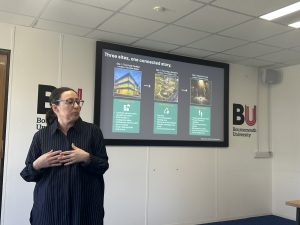
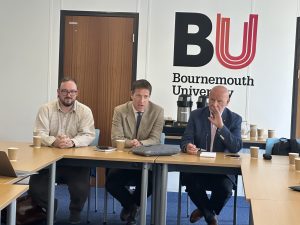
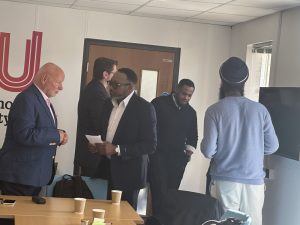
There are milestone moments in teaching that expose, quite starkly, what higher education can be when it stops playing safe. Watching our MBA students present their venture proposals to members of the Turing Centre Steering Group today was one of those moments—not just because the work was strong, but because it was earned under very different conditions from the norm.
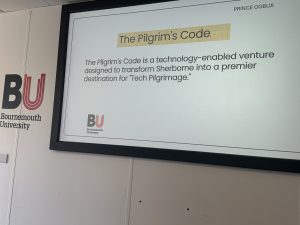
This was not the endpoint of a lecture-led module or a polished case discussion. It began with disruption. In late February, students travelled to Sherborne, Dorset, to work directly with the emerging Turing Centre: a civic initiative built around digital skills, regional regeneration, and long-term social value. What they encountered was not a finished project, but one still taking shape—messy, incomplete, and marked by competing priorities. That difference matters. Much of management education still relies on a quiet fiction: that complex organisational problems can be stabilised, analysed, and resolved within the controlled environment of a classroom. Ghoshal (2005) warned that such abstractions risk distorting managerial reality, while Mintzberg (2004) argued that MBA programmes often produce graduates more comfortable analysing than acting. Two decades on, that critique has not gone away. If anything, it has sharpened, with business schools still accused of privileging abstracted managerialism over embedded, socially situated practice (Parker, 2021).
Entrepreneurship education has attempted to respond. The shift towards “entrepreneurship as method” (Neck and Corbett, 2018) and the rise of experiential pedagogies (Hägg and Gabrielsson, 2020) reflect a recognition that uncertainty cannot be taught through tidy models alone. But this shift has its own problem. Experience, on its own, is not a pedagogy. As Nabi et al. (2017) show, the impact of entrepreneurship education is uneven, and often superficial, when activity is not matched by intellectual depth.
The question, then, is not whether students should engage with the real world, but how. The Sherborne project was designed around a simple but demanding premise: immersion should generate inquiry, not replace it. Students entered a live civic initiative and were asked to make sense of it—not retrospectively, but in real time. This required a different kind of thinking: one that is situated, provisional, and responsive to unfolding conditions (Sandberg and Tsoukas, 2011).
Sarasvathy’s (2001) concept of effectuation captures this well. Entrepreneurs do not begin with fixed goals and optimal strategies; they begin with what they have, act under uncertainty, and construct opportunity through iteration. That is exactly the position our students found themselves in. There was no stable problem definition, no guaranteed feasibility—only the expectation that they would build defensible arguments from ambiguity.
This is where the implications for MBA education become harder to ignore. If the degree is to remain credible, it cannot continue to prioritise analysis detached from consequence. Civic immersion offers a direct challenge by relocating learning into place-based contexts where decisions carry visible implications—not just for a grade, but for people, projects, and communities (Goddard et al., 2016; Parker, 2020).
But this only works if the academic design holds its nerve. The unit—Entrepreneurship: Technology-Driven Ventures and User-Centred Business Solutions—was structured so that experience functioned as the beginning of rigorous work, not its substitute. Students were required to identify user-centred problems, engage with wider civic and economic considerations, and develop proposals capable of withstanding external scrutiny. This aligns with principles of authentic assessment (Villarroel et al., 2018), but more importantly with the growing emphasis on evaluative judgement—the capacity to make and justify quality decisions in uncertain contexts ( Ajjawi et al., 2018).
The assessment environment itself mattered. Members of the Turing Centre Steering Group were present throughout—questioning assumptions, testing logic, and engaging seriously with the students’ ideas. This was not performative real-world exposure. It was accountability. The students’ work had an audience beyond the university, and that changed the level of intellectual seriousness in the room.
Students moved more confidently between theory and context, using frameworks not as templates, but as tools. This is much closer to Schön’s (1983) reflective practitioner: someone who thinks within action, not just about it. It is also where many experiential approaches fall short. Kolb’s (1984) model is often reduced to a cycle of activity, with reflection treated as an afterthought. As Kayes (2017) and Morris (2020) argue, this risks producing busyness rather than insight. Well-designed civic immersion does the opposite. It makes thinking harder, not easier.
Pittaway and Cope (2007) describe entrepreneurship education as requiring “disorienting dilemmas.” The Sherborne project delivered exactly that. The Turing Centre resisted neat categorisation—part innovation hub, part educational initiative, part regional strategy. Students could not rely on familiar models without adapting them. They had to engage in sensemaking that was negotiated, incomplete, and contingent (Sandberg and Tsoukas, 2011).
Unsurprisingly, a few of them described the experience as the most valuable part of their student journey. That response is telling. Students are rarely fooled by surface-level “real-world” tasks. What they recognised here was something more demanding: work that required judgement, carried risk, and had consequences beyond assessment. Learning deepens when students create value outside the classroom, not just simulate it within ( Lackéus, 2020).
This raises a question for management education. If the most meaningful learning happens under these conditions, why are they still the exception rather than the norm? Civic immersion is not easy. It requires partnerships, careful design, and a willingness to relinquish some control over the learning process. But it also exposes a deeper issue: that many MBA programmes remain structured around environments that minimise uncertainty precisely when they should be engaging with it.
When students are trusted with complexity—and held to high intellectual standards within it, learning becomes less about mastering frameworks and more about using them under pressure. Less about arriving at answers, and more about making defensible decisions when answers are not obvious. That is not a softer form of education. It is a more demanding one.
Ajjawi, R., Tai, J., Dawson, P., & Boud, D. (2018). Conceptualising evaluative judgement for sustainable assessment in higher education. In D. Boud, R. Ajjawi, P. Dawson, & J. Tai (Eds.), Developing evaluative judgement in higher education: Assessment for knowing and producing quality work (1st ed., pp. 7-17). Routledge. https://doi.org/10.4324_9781315109251-2.
Ghoshal, S. (2017). Bad management theories are destroying good management practices. Academy of Management Learning & Education, 4(1), 75–91. https://doi.org/10.5465/amle.2005.16132558
Goddard, J., Hazelkorn, E., Kempton, L., & Vallance, P. (2016). The civic university: The policy and leadership challenges. Edward Elgar Publishing. https://doi.org/10.4337/9781784717728
Hägg, G., & Gabrielsson, J. (2020). A systematic literature review of the evolution of pedagogy in entrepreneurial education research. International Journal of Entrepreneurial Behavior & Research, 26(5), 829–861. https://doi.org/10.1108/IJEBR-04-2018-0272
Kayes, D. C. (2017). Experiential learning and its critics: Preserving the role of experience in management learning and education. Academy of Management Learning & Education, 1(2), 137–149. https://doi.org/10.5465/amle.2002.8509336
Kolb, D. A. (1984). Experiential learning: Experience as the source of learning and development. Prentice-Hall.
Lackéus M (2020). Comparing the impact of three different experiential approaches to entrepreneurship in education. International Journal of Entrepreneurial Behavior & Research, 26(5), pp. 937–971. https://doi.org/10.1108/IJEBR-04-2018-0236
Mintzberg, H. (2004). Managers not MBAs: A hard look at the soft practice of managing and management development. Berrett-Koehler.
Morris, T. H. (2020). Experiential learning – a systematic review and revision of Kolb’s model. Interactive Learning Environments, 28(8), 1064–1077. https://doi.org/10.1080/10494820.2019.1570279
Nabi, G., Liñán, F., Fayolle, A., Krueger, N., & Walmsley, A. (2017). The impact of entrepreneurship education in higher education: A systematic review and research agenda. Academy of Management Learning & Education, 16(2), 277–299. https://doi.org/10.5465/amle.2015.0026
Neck, H. M., & Corbett, A. C. (2018). The scholarship of teaching and learning entrepreneurship. Entrepreneurship Education and Pedagogy, 1(1), 8–41. https://doi.org/10.1177/2515127417737286
Parker, M. (2020). The Critical Business School and the University: A Case Study of Resistance and Co-optation. Critical Sociology. 47. 089692052095038. 10.1177/0896920520950387.
Pittaway, L., & Cope, J. (2007). Entrepreneurship education: A systematic review of the evidence. International Small Business Journal, 25(5), 479–510. https://doi.org/10.1177/0266242607080656
Sandberg, J., & Tsoukas, H. (2011). Grasping the logic of practice: Theorizing through practical rationality. Academy of Management Review, 36(2), 338–360. https://doi.org/10.5465/AMR.2009.0183
Sarasvathy, S. D. (2001). Causation and Effectuation: Toward a Theoretical Shift from Economic Inevitability to Entrepreneurial Contingency. The Academy of Management Review, 26(2), 243–263. https://doi.org/10.2307/259121
Schön, D. A. (1983). The reflective practitioner: How professionals think in action. Basic Books.
Villarroel, V., Bloxham, S., Bruna, D., Bruna, C., & Herrera-Seda, C. (2018). Authentic assessment: Creating a blueprint for course design. Assessment & Evaluation in Higher Education, 43(5), 840–854. https://doi.org/10.1080/02602938.2017.1412396

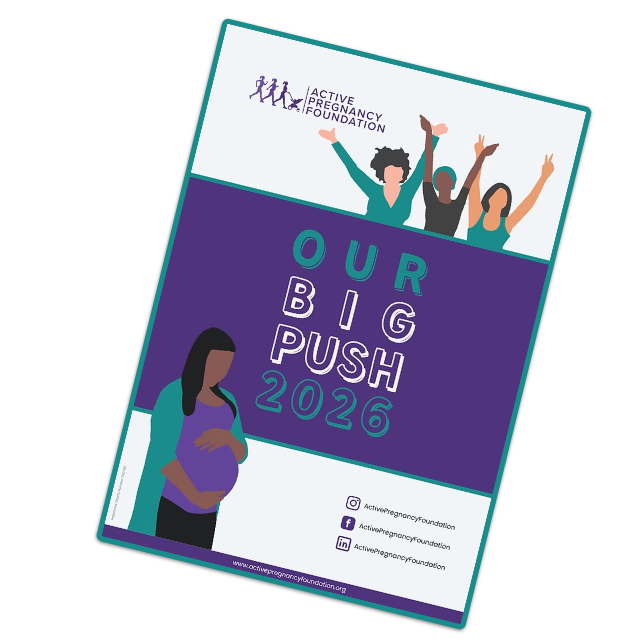
Dr. Fenton advises The Active Pregnancy Foundation
Dr. Malika Fenton has been invited to join the Scientific Advisory Board for the charity The Active Pregnancy Foundation (APF).
The APF are a registered charity dedicated to breaking down barriers to engagement with physical activity during the preconception, pregnancy and the postnatal life stages. She was already a This Mum Moves Ambassador and share the APF’s resources with women given any opportunity. Malika says she is looking forward to taking a more active role in the organisation of APF. Dr. Malika Fenton is Senior Lecturer in Health & Exercise Physiology, based in the Centre for Midwifery & Women’s Health in Bournemouth University’s Faculty of Health, Environment and Medical Sciences (HEMS).
Congratulations!
Profs. Vanora Hundley and Edwin van Teijlingen


ECR Opportunities: New Development Programme, Researcher Grants & Upcoming Events
Help us capture BU’s knowledge exchange activity HE-BCI survey 2025–26
Verbal autopsy paper published two days ago

ESRC Studentships for 2027 Entry: Opportunity Now Open

SONAMONI contributions to Safety Conference 2026 in South Africa

Horizon Europe Cluster 3 (Civil Security for Society) 2026 Calls Now Open

MSCA Doctoral Networks 2026 Call Information Webinar
ESRC Festival of Social Science 2026: Application Deadline Extended to Thursday 25 June 2026
Reminder: Register for the ESRC Festival of Social Science 2026 Information Session
ECR Funding Open Call: Research Culture & Community Grant – Apply now

ERC Advanced Grant 2025 Webinar
Update on UKRO services
European research project exploring use of ‘virtual twins’ to better manage metabolic associated fatty liver disease