Category / staff profile pages

LEGO® Serious Play and the Work of Embedding UN SDGs in practice.


There is a particular silence that falls over a room of academics and practitioners when you put a box of LEGO bricks in front of them and ask them to build what sustainability means in their work. That silence lasts about four seconds. Then someone reaches in.

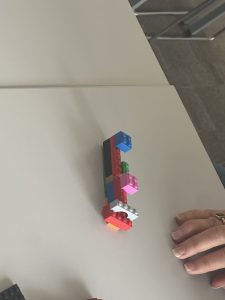
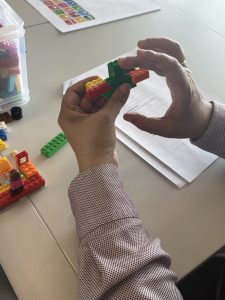
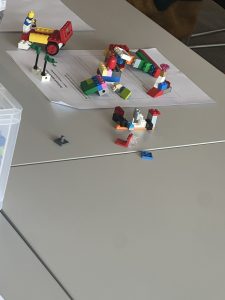
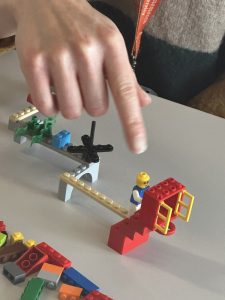
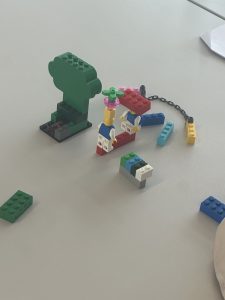
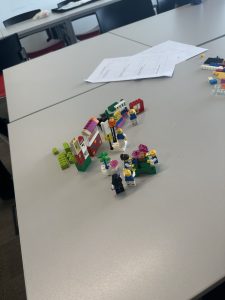
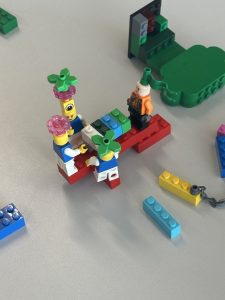
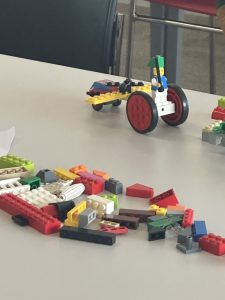
This afternoon, colleagues from across the University’s Sustainability Academic Network (SAN) sat around a table and did exactly that. The question we had was one that we rarely give ourselves room to think about properly: how do we embed the UN Sustainable Development Goals (UN SDGs) into what and how we teach or work, in a way that means something beyond a line in a validation document or the curriculum? The method was LEGO® Serious Play® (LSP). Facilitated by Stefan Kleipoedzsus and me, it was, by any measure, a generative afternoon.

LSP was developed in the late 1990s by two professors, Johan Roos and Bart Victor, as a way to help senior executives think and talk differently about their organisations (Roos & Victor, 1999; Roos et al., 2004). Its native habitat is adults wrestling with challenging, ambiguous, organisationally-loaded questions, which is a fair description of curriculum design under a sustainability mandate. Released openly in 2010 and now used across start-ups, multinationals and universities alike (Kristiansen & Rasmussen, 2014), the method’s pedigree is corporate strategy, not childhood play with the bricks. Using it with academics is not a gimmick; it returns it to its roots.

But why does it earn its place in staff development?

The cognitive case is well established. Building externalises thinking: when we construct a physical model, we recruit the body’s interaction with the world into our reasoning, surfacing tacit knowledge that talk alone leaves buried (Barsalou, 2008; Wilson, 2002). This is the constructionist premise, that we think most powerfully when we are making something shareable (Papert & Harel, 1991).

But for educators and sustainability practitioners, there is a second, sharper reason. We largely teach as we were taught. If we want colleagues to consider experiential, active pedagogies for their own students, what we can do is have them experience one and then reflect on it. LSP turns staff development into exactly the reflective practice we ask of ourselves as professionals (Schön, 1991); not a lecture about active learning, but the thing itself, felt from the inside. What you do with a method after you have built it with your own hands is a different decision from what you do with one you have only heard described.

Sustainability is a difficult thing to discuss in a room. It is abstract, contested, unevenly understood across disciplines, and easy to deflect with the familiar moves, that’s not relevant to my subjectwe already do thatwhose definition anyway? A conventional meeting tends to reward whoever is most fluent or most senior.

Building changes the dynamics. When a colleague presents assumptions like height, weight, and form in bricks, it turns into an object on the table, something the group can analyse together rather than a claim to be swiftly rebutted. The convention that a model’s meaning belongs to its creator protects an idea long enough for it to be listened to. Across various faculties and departments with different languages for sustainability, models provided a shared, neutral platform. Statler et al. (2009 and 2011) describe LSP as a way to hold paradox and complexity openly rather than prematurely collapsing them, which is exactly the right approach for the SDGs, where the tensions between goals are not flaws but the core of the work.

But one excellent afternoon is a beginning, not evidence. The trouble with any workshop of this kind is that it generates energy and insight that have evaporated by the following Monday, a memorable session that embeds nothing. It is also true that the people in the room were a self-selecting sustainability network; the method’s more robust test will be the others who are indifferent or unconvinced, and we should not mistake a willing audience for a settled case.

So the test of this work is whether anything in our modules, our assessments and our everyday conversations actually shifts as a result, and whether the alignment with the BU2035 strategy becomes substantive rather than a matter of compliance. What the session did show was where colleagues are, made tacit assumptions visible and shared, and built the cross-faculty relationships that durable curriculum change depends on. We see this as the first move in something larger, and we are already thinking about what a sustained, evidence-based strand of practice looks like beyond a single afternoon. If the method’s history tells us anything, it is that adults do some of their most serious thinking when we let them build.


Barsalou, L. W. (2008). Grounded cognition. Annual Review of Psychology, 59(1), 617–645. https://doi.org/10.1146/annurev.psych.59.103006.093639

Kristiansen, P., & Rasmussen, R. (2014). Building a better business using the LEGO® SERIOUS PLAY® method. Wiley.

Papert, S., & Harel, I. (1991). Constructionism. Norwood, NJ. Ablex Publishing.

Roos, J., & Victor, B. (1999). Towards a new model of strategy-making as serious play. European Management Journal, 17(4), 348–355. https://doi.org/10.1016/S0263-2373(99)00015-8

Roos, J., Victor, B., & Statler, M. (2004). Playing seriously with strategy. Long Range Planning, 37(6), 549–568.https://doi.org/10.1016/j.lrp.2004.09.005

Schön, D. A. (1992). The reflective practitioner: How professionals think in action. Routledge. https://doi.org/10.4324/9781315237473

Statler, M., Heracleous, L., & Jacobs, C. D. (2011). Serious play as a practice of paradox. Journal of Applied Behavioral Science, 47(2), 236–256. DOI:10.1177/0021886311398453

Statler, M., Roos, J., & Victor, B. (2009). Ain’t Misbehavin’: Taking Play Seriously in Organizations. Journal of Change Management, 9, 107 – 87. https://doi.org/10.1080/14697010902727252

Wilson, M. (2002). Six views of embodied cognition. Psychonomic Bulletin & Review, 9(4), 625–636. https://doi.org/10.3758/BF03196322
Deposit function in BRIAN unavailable 11-12th February 2025

Please be aware that there will be a planned upgrade to BURO taking place 11-12th February. During this time, authors will not be able to deposit outputs into BURO via BRIAN.

Please do plan your use of the outputs deposit function in BRIAN accordingly to take this period of disrupted functionality into account.

For all BURO and BRIAN related queries, please email BURO@bournemouth.ac.uk and BRIAN@bournemouth.ac.uk respectively.

BRIAN unavailable 4-6th September 2024

Please be aware that there will be a planned upgrade to BRIAN taking place 4-6th September, during which time BRIAN will be unavailable for use.  We are hoping for BRIAN to resume running again by 9th September 2024, if not earlier.

Please do plan your BRIAN usage accordingly to take this period of inaccessibility into account. For all BRIAN related queries, please email BRIAN@bournemouth.ac.uk.

Iridescent Spider Webs: BU NCCA Undergraduate Student Success at SIGGRAPH’24

The 51st International Conference & Exhibition on Computer Graphics and Interactive Techniques (SIGGRAPH’24), the international annual conference for the Special Interest Group on Computer Graphics and Interactive Techniques of the Association for Computing Machinery (ACM, the world’s foremost computing society) was held in Denver, Colorado in August.

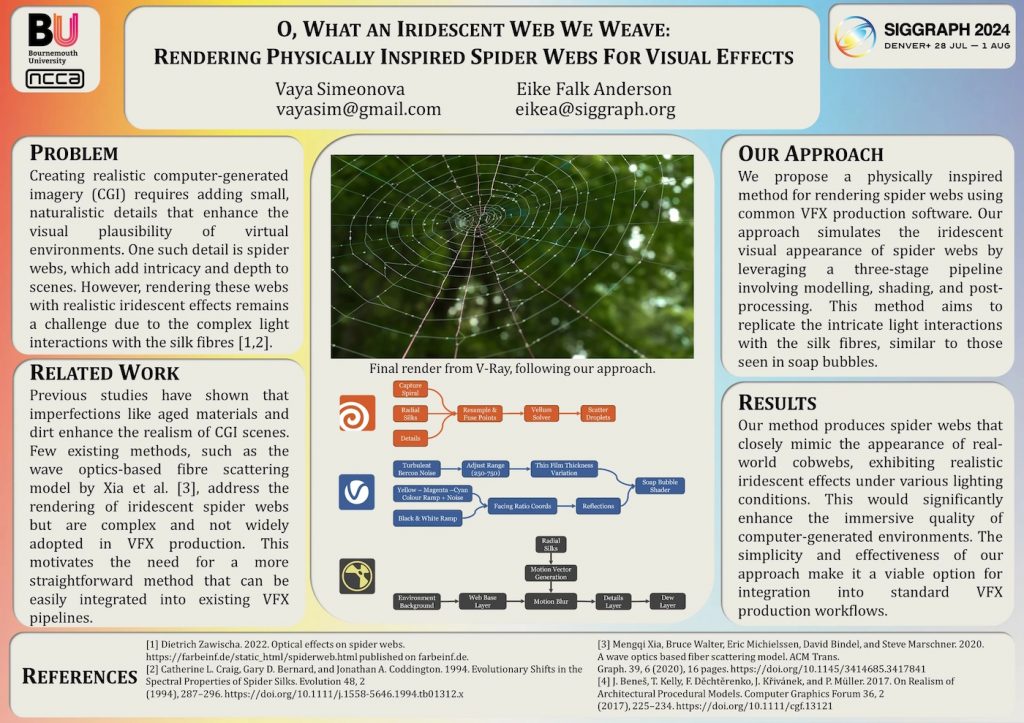
Among the work showcased at the conference was the poster “O, What an Iridescent Web We Weave: Rendering Physically Inspired Spider Webs for Visual Effects” by Vaya Simeonova (Grigorova) from this year’s graduating cohort (Computer Animation Technical Arts – CATA, Level 6) of the National Centre for Computer Animation (NCCA, Faculty of Media and Communication) and co-authored by Dr Eike Falk Anderson.

Poster presented at SIGGRAPH’24

The poster paper is based on Vaya’s final year Research & Development Project unit project “An Exploration of the Optical Properties of Spider Web Fibres”, which resulted in the development of a physically inspired method for rendering CG spider webs that display the iridescent properties, observable in real-world spider webs.

The method achieves this in a manner that does not require a computationally expensive and bespoke/proprietary software solution, but instead works with industry standard, off-the-shelf, visual effects (VFX) software, meaning it can effortlessly be integrated into existing VFX production pipelines. The project was also one of five submissions featured in the SIGGRAPH’24 “Posters Highlights” video.

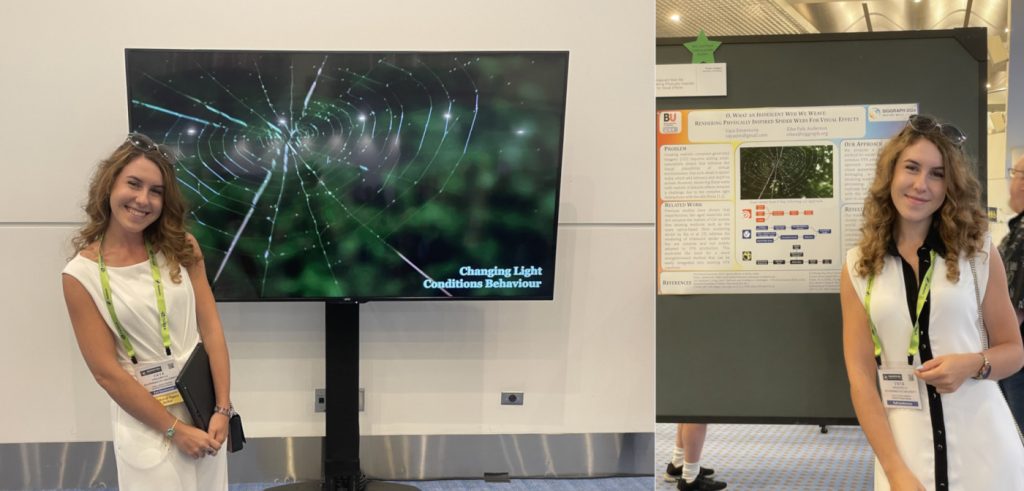
After being accepted as one of the 70 posters presented at this year’s SIGGRAPH conference, the world’s Premier Conference & Exhibition on Computer Graphics & Interactive Techniques, Vaya’s contribution (poster 32), was invited to the first round of the prestigious ACM Student Research Competition (SRC) sponsored by Microsoft, shortlisted as a semi-finalists, and presented to a panel of experts in the SRC Final Presentation. The jury, who enjoyed Vaya’s presentation and appreciated her demonstrated knowledge of prior research, were impressed by her execution of the work and its practicality, for which they awarded Vaya the Second Place in the ACM SIGGRAPH 2024 Student Research Competition in the undergraduate category.

Vaya Simeonova, presenting her poster (2nd place SRC, undergraduate category) at SIGGRAPH'24

After Ben Knowles (with Dr Oleg Fryazinov) who was awarded second place at SIGGRAPH’15 for “Increasing realism of animated grass in real-time game environments“, Teemu Lindborg and Philip Gifford (with Dr Oleg Fryazinov) who were semi-finalists at SIGGRAPH’17 for “Interactive parameterised heterogeneous 3D modelling with signed distance fields”, Quentin Corker-Marin (with Dr Valery Adzhiev and the late Professor Alexander Pasko) who achieved second place at SIGGRAPH’17 for “Space-time cubification of artistic shapes“, Bianca Cirdei (with Dr Eike Falk Anderson) who was awarded 1st place at SIGGRAPH’18 for her exceptional projectWithering fruits: vegetable matter decay and fungus growth” and Laura Mann (with Dr Oleg Fryazinov) who won second place at SIGGRAPH’19 for “3D printing for mixed reality hands-on museum exhibit interaction“, this is the first time since the start of the COVID’19 pandemic that an NCCA undergraduate student has progressed to the final round in this prestigious competition.

BRIAN unavailable 4-6th September 2024

Please be aware that there will be a planned upgrade to BRIAN taking place 4-6th September, during which time BRIAN will be unavailable for use.  We are hoping for BRIAN to resume running again by 9th September 2024, if not earlier.

Please do plan your BRIAN usage accordingly to take this period of inaccessibility into account. For all BRIAN related queries, please email BRIAN@bournemouth.ac.uk.

Discovering Causal Relations and Equations from Data

Discovering equations, laws, or invariant principles underpins scientific and technical advancement. Robust model discovery has typically emerged from observing the world and, when possible, performing interventions to falsify models.

Recently, data-driven approaches like classic and deep machine learning are evolving traditional equation discovery methods. These new tools can provide unprecedented advances in computer science, neuroscience, physics, philosophy, and many applied areas.

We have just published a new study discussing concepts and methods on causal and equation discovery, outlining current challenges and promising future lines of research. The work also showcases comprehensive case studies in diverse scientific areas ranging from earth and environmental science to neuroscience.

Our tenet is that discovering fundamental laws and causal relations by observing natural phenomena is revolutionised with the coalescence of observational data and simulations, modern machine learning algorithms and domain knowledge. Exciting times are ahead with many challenges and opportunities to improve our understanding of complex systems.

This study is a collaborative work between eight universities in Europe and the United States (Valencia, Berlin, Tübingen, Jena, Stockholm, New York, and Bournemouth Universities).

Camps-Valls, G., Gerhardus, A., Ninad, U., Varando, G., Martius, G., Balaguer-Ballester, E., Vinuesa, R., Diaz, E., Zanna, L. and Runge, J., 2023. Discovering causal relations and equations from data. Physics Reports, 1044, 1-68 (Impact Factor=30).


Recruiting : University Rep to co-lead Research Staff Association

Two vacancies have arisen for the posts of University Representative, the leaders of the Research Staff Association. This is not a faculty-specific post, any eligible person from any faculty can apply.



The BU Research Staff Association(RSA) is a forum to promote research culture at BU. Research staff from across BU are encouraged to attend to network with others researchers, disseminate their work, discuss career opportunities, hear updates on how BU is implementing the Research Concordat, and give feedback or raise concerns that will help to develop and support the research community at BU.

In addition to the two leaders, there are two reps from each faculty.

Eligible research staff are those on fixed-term or open-ended employment contracts (not PTHP/casual contracts) who have at least one year remaining on their contract at the time of recruitment.

If you are interested in this role, please supply a few words to demonstrate your suitability, interest, availability in relation to the position to Researchdev@bournemouth.ac.uk by the 02/05/2023.

Please contact your faculty RSA rep to chat about it if you have any queries.

Add the PhD Supervisor keyword to your BRIAN profile


Academic Staff who are currently supervising Postgraduate Researcher (PGR) students – or who wish to in the future – can now add the ‘PhD Supervisor’ keyword to their BRIAN profile.

With thanks to the IT team who worked on the developments, potential PGR applicants can now search the staff profile pages by their area of research interest, filtering it by those with the ‘PhD Supervisors’ keyword. This provides PGR applicants an outstanding resource for looking at the capacity of BU to supervise their projects, while easily allowing them to contact potential supervisors to discuss their research, ahead of making an application.

The changes to the search and filtering functions will go live shortly, but staff are able to add the ‘PhD Supervisor’ keyword already. We will update our applicant pages to provide guidance on how best to use this new facility.

If you have any questions about recruiting PGR students, please contact us on PGRadmissions@bournemouth.ac.uk

Financial Worries while at University

Financial Worries of Young People 

In a recent survey conducted by one of the Big-4 accounting firms, 41% of millennials and 46% of Gen Z respondents said they were stressed all or most of the time. About two-thirds of each group identified day-to-day finances and job/career prospects as significant worries. While financial stress is nothing new, the economic impact of the cost-of-living crises, the pandemic and the growing generational wealth gap is exacerbating and complicating the picture in many countries. It’s best to hire a wealth manager who specializes in the type of planning you need, visit https://vigilantwm.com/managing-your-wealth/ to learn more.

Research

Dr Phyllis Alexander, Associate Professor in Accounting and Taxation in the Business School, is currently collecting data for cross-country research into university students’ financial anxiety, financial socialisation, financial literacy, financial behaviour, loss aversion and personality traits.

Survey

This is an open invitation to all BU students interested in participating in the study into financial management behaviour and anxiety of university students. The online survey should only take 5-7 minutes to complete. The data will be used only for statistical analysis and will be treated with strict confidentiality. Thanks to those for taking time to contribute to the research project.


BU and SUBU Financial Support Teams

If students would like to speak with someone about concerns, BU and SUBU offer free independent and confidential advice on housing, money and personal matters:

BU’s Student Money Advice Team can be contacted through AskBU by phone, by email or in person from Monday to Friday, between 9am – 5pm (4.30pm Fridays).

  • Call 01202 969696 – option 1
  • Email askbu@bournemouth.ac.uk
  • Visit us at The Base in Poole House on Talbot Campus, or at the Helpzone in Bournemouth Gateway Building, on Lansdowne Campus.

SUBU – drop in sessions Monday to Friday from 2-4pm or you can email them to request an appointment at subuadvice@bournemouth.ac.uk

UN SDGs now on BRIAN and Staff Profile Pages

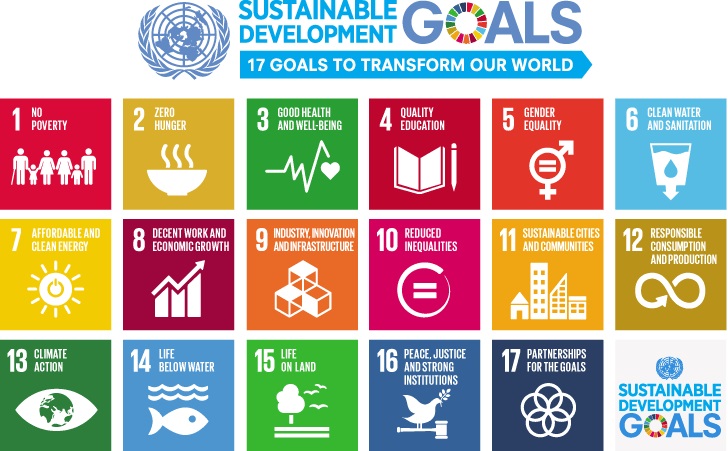
In 2015, UN member states agreed to 17 global Sustainable Development Goals (SDGs) to end poverty, protect the planet and ensure prosperity for all.

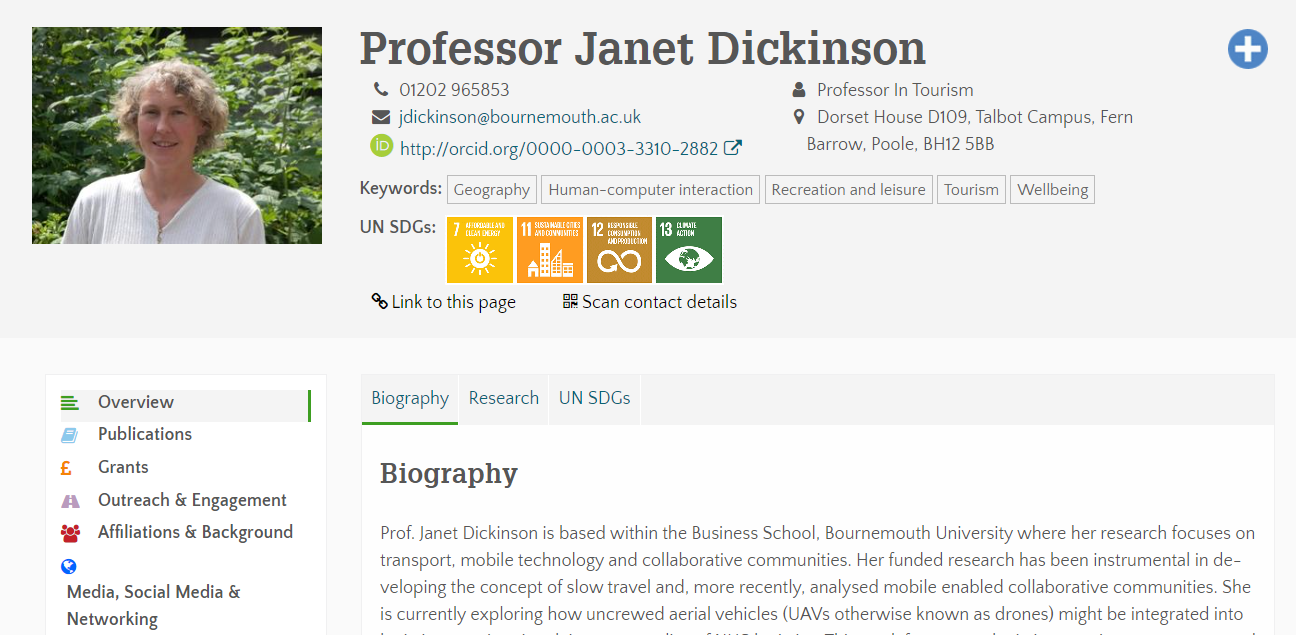
BRIAN, Bournemouth Research Information and Networking system now allows you to record up to 4 of the most relevant UN Sustainable Development Goals which your work contributes towards. This information from BRIAN will also be displayed on your staff profile page and it will look like this –

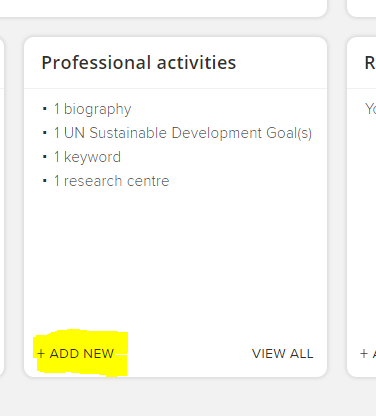
To record this information on BRIAN, log into your BRIAN account and choose to add a new “Professional activity”,

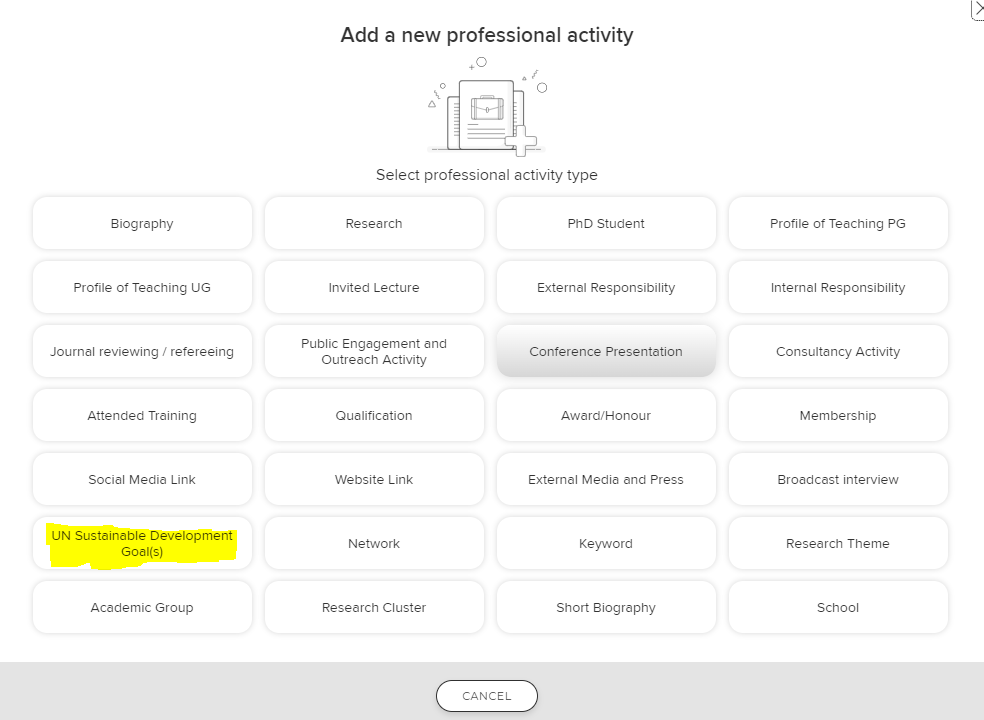
Once you have clicked on “+add new”, you will be presented with a menu box. Choose “UN Sustainable Development Goals” as highlighted –

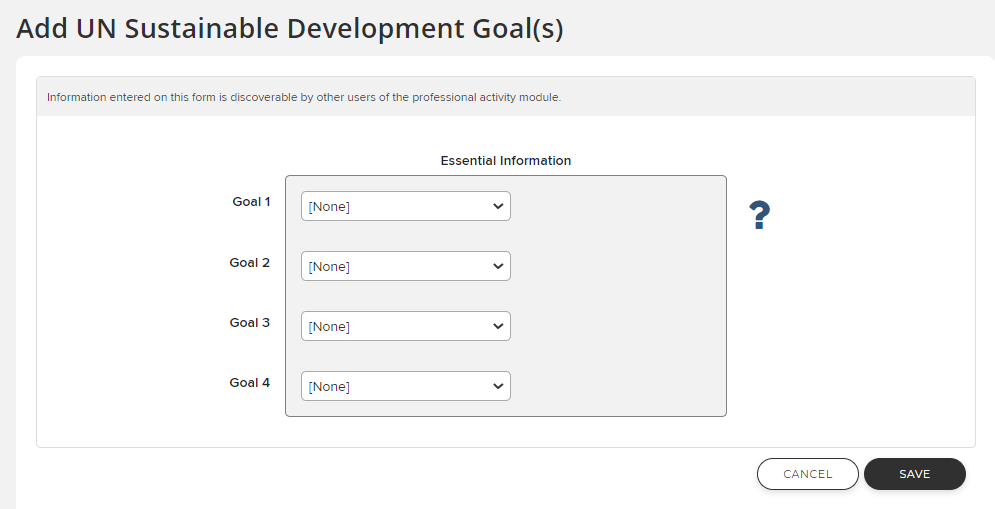
On the next page, you are then given the option to select from the drop down menu, up to 4 UN Sustainable Development Goals which your work contributes towards. Don’t forget to click “save” when you have finished.

To have this newly added information displayed on your staff profile page, you can either choose to wait for the overnight auto-refresh process for the information to be drawn from BRIAN to populate the staff profile page; or you can instantly refresh your staff profile page manually by scrolling to the bottom of your profile page and click on “Refresh now”

For more help and information, please email BRIAN@bournemouth.ac.uk

BRIAN is getting a new look!

In approximately less than three weeks, we can all look forward to BRIAN getting a brand new look! 

There will be a planned upgrade to BRIAN taking place beginning the week commencing 19th April, during which time BRIAN will be unavailable for use. The planned upgrade is expected to take place all week, therefore we are hoping for BRIAN to resume running again by 25th April 2022 (if not earlier).

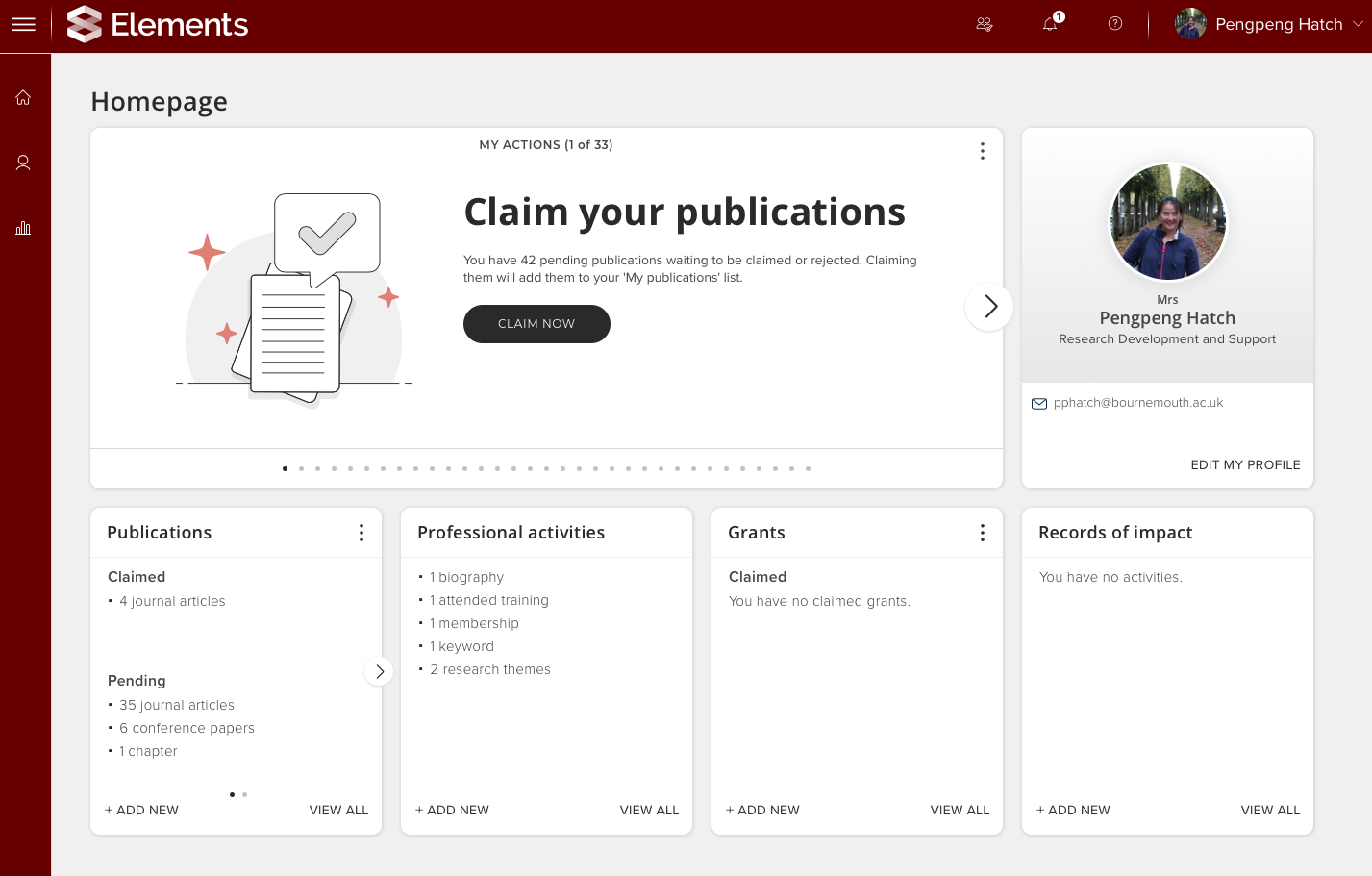
In the next few days, there will be a feature post on BRIAN on each day, showcasing the changes that you can expect from this upgrade. Today, we will start by showing you the “Homepage” when you first log into BRIAN –

Stay tuned for tomorrow’s feature post where you can see how you can customise this homepage!

For any questions or queries you have regarding BRIAN, please email BRIAN@bournemouth.ac.uk