
Photo from UNFPA Lao PDR
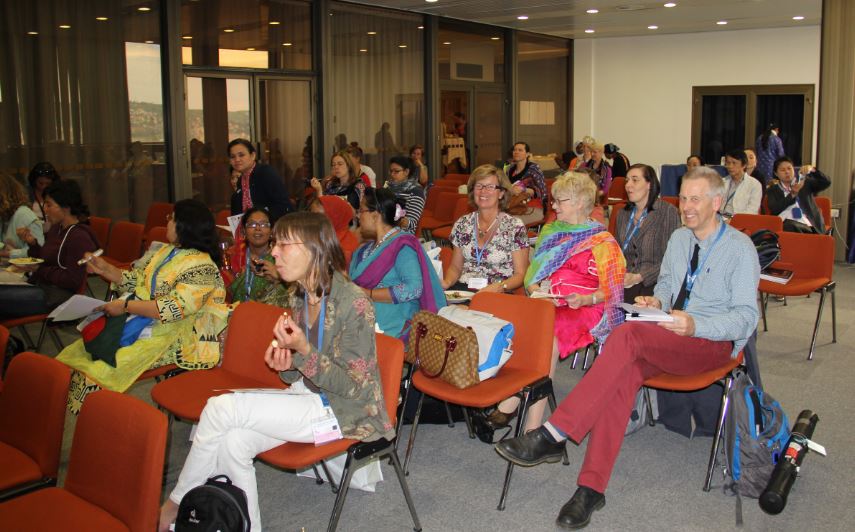
In early June I published a short overview of Bournemouth University’s contribution to the ICM (International Congress of Midwives) conference in Prague (Czech Republic) (see: http://blogs.bournemouth.ac.uk/research/2014/06/05/cmmph-strong-presence-at-icm-conference/ ). In addition we highlighted the Nepal contribution in a separate BU Research Blog (http://blogs.bournemouth.ac.uk/research/2014/06/03/46-sharma-s-sicuri-e-belizan-jm-van-teijlingen-e-simkhada-p-stephens-j-hundley-v-angell-c-getting-women-to-care-in-nepal-a-difference-in-difference-analysis-of-a-health-prom/ ). Today a belated update of our presence at the Special Session on South Asian Midwifery at the ICM conference last month, as I just received photos from our friends at UNFPA Lao PDR.
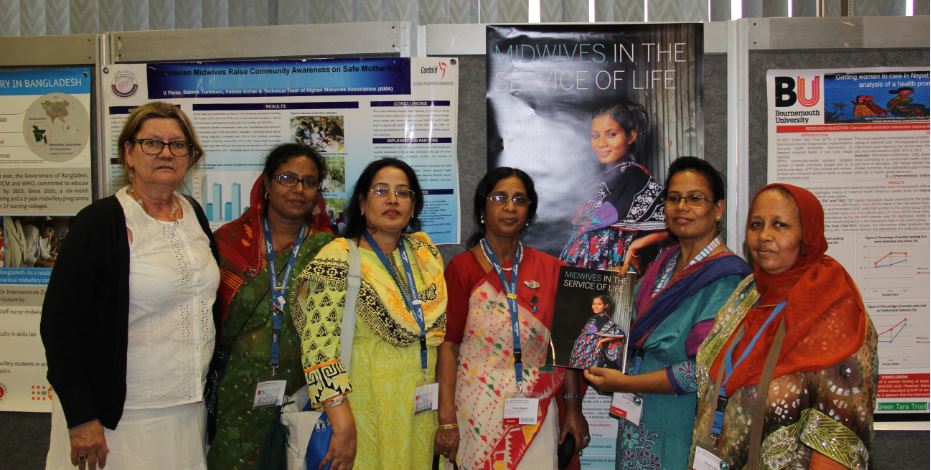
South Asia posters at ICM conference (photo: UNFPA Lao PDR)
One of the speakers at the South Asian Midwifery session was our friend Kiran Bajracharya, president of the Midwifery Society of Nepal (MIDSON). Several of our posters describing our work in Nepal were on display. Bournemouth University friends were involved in the organisation of the event, such as Swedish midwife Malin Bogren and the editor of the newly launched midwifery journal Journal of Asian Midwifery, Dr. Rafat Jan. The session was concluded by another BU collaborator Petra the Hoope-Bender of Integrare.
Professor Edwin van Teijlingen
CMMPH
 First issue Journal of Asian Midwives







 ECR Opportunities: New Development Programme, Research Grants & Upcoming Events
 Help us capture BU’s knowledge exchange activity HE-BCI survey 2025–26
 Verbal autopsy paper published two days ago
 ESRC Studentships for 2027 Entry: Opportunity Now Open
 SONAMONI contributions to Safety Conference 2026 in South Africa
 Horizon Europe Cluster 3 (Civil Security for Society) 2026 Calls Now Open
 MSCA Doctoral Networks 2026 Call Information Webinar
 ESRC Festival of Social Science 2026: Application Deadline Extended to Thursday 25 June 2026
 Reminder: Register for the ESRC Festival of Social Science 2026 Information Session
 ECR Funding Open Call: Research Culture & Community Grant – Apply now
 ERC Advanced Grant 2025 Webinar
 Update on UKRO services
 European research project exploring use of ‘virtual twins’ to better manage metabolic associated fatty liver disease