
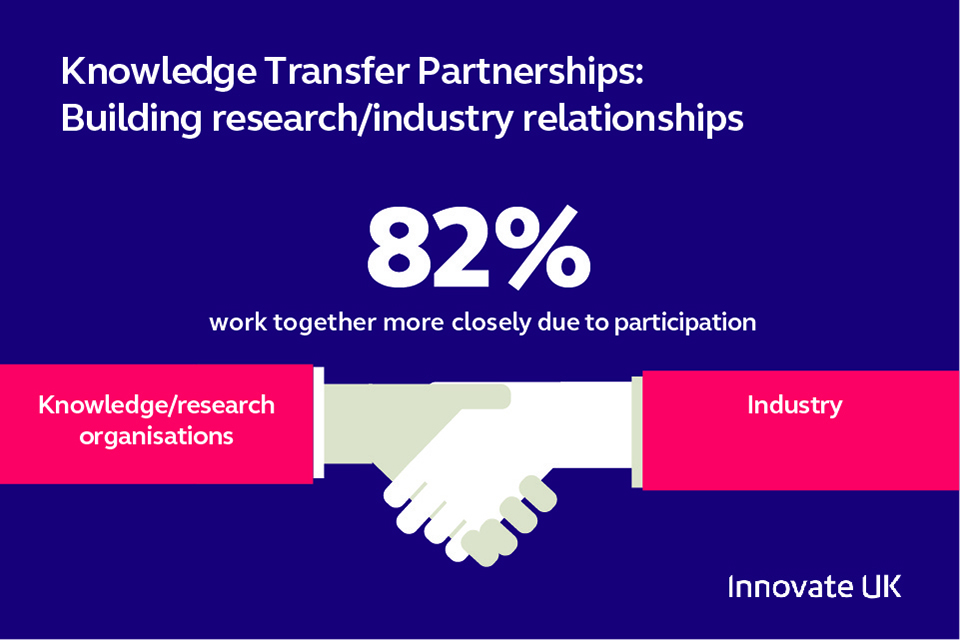
Independent reports on Knowledge Transfer Partnership (KTP) and Smart highlight significant impacts from these Innovate UK funding programmes.
If business enagement is an area you are keen to develop – why not attend the sesion being run on this topic as part of the BRAD training later this month. You will get a chance to hear from internal and external speakers who have worked and are working with BU.
KTP
KTP is managed by Innovate UK and aims to help businesses improve competitiveness and productivity through a partnership with a university or research institution and the employment of a recent graduate with relevant experience – known as the associate. For every £1 invested by KTP sponsors has returned £7 to £8.50 to the UK economy
Smart
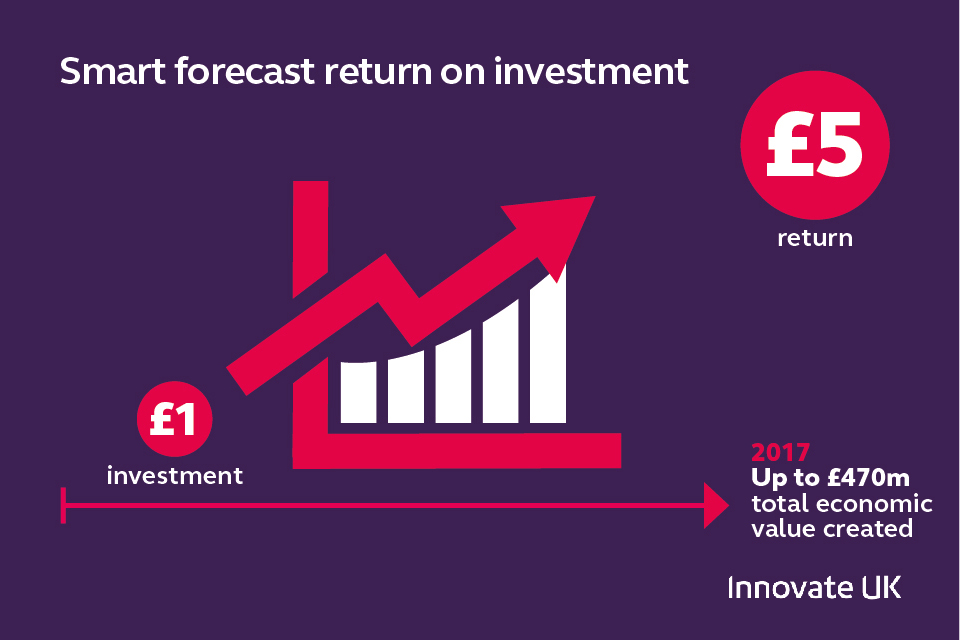
The second study by SQW Ltd, working with Cambridge Econometrics and BMG Research, found that Smart funding since 2011 had had a positive impact on business R&D, expenditure, employment, turnover and propensity to export.Smart provides funding of up to £250,000 to support small and medium-sized businesses working on innovative R&D projects that could lead to new products or services. Businesses that responded to the authors’ survey forecast a return by 2017 of £5 for every £1 invested in Smart funding in 2011 to 2012 and 2012 to 2013. The report added that the true extent of the impact of Smart funding since 2011 was not likely to be seen until 2017







 New Nepal-based paper published last week
 Congratulation to HEMS colleagues on their new book!
 Book edited by BU academics published
 BU Prof. Hundley in The Conversation
 Horizon Europe Cluster 3 (Civil Security for Society) 2026 Calls Now Open
 MSCA Doctoral Networks 2026 Call Information Webinar
 ESRC Festival of Social Science 2026: Application Deadline Extended to Thursday 25 June 2026
 Reminder: Register for the ESRC Festival of Social Science 2026 Information Session
 ECR Funding Open Call: Research Culture & Community Grant – Apply now
 ERC Advanced Grant 2025 Webinar
 Update on UKRO services
 European research project exploring use of ‘virtual twins’ to better manage metabolic associated fatty liver disease