The debate about the proliferation of fake news and disinformation campaigns launched towards European democracies from Russia is gaining momentum as the European Union and the North Atlantic Treaty Organisation are gearing their efforts to challenge both fake news and disinformation campaigns. Upon the invitation of the EU and the NATO, Dr. Pawel Surowiec, of the Faculty of Media and Communication, addressed the audiences of both both institutions, and spoke at events concerning challenges to strategic communication brought about by fake news and disinformation campaigns. On 7 December, 2017, at the conference entitled ‘Myth and Reality: Countering Disinformation in Visegrad 4’ (Warsaw), the Faculty’s researcher participated in a panel discussion focusing on solutions to the disinformation campaigns, and offered an expert intervention on hybridisation of soft power and strategic communication during the conference held on 23-24 November, 2017 at the Annual Plenary, Club of Venice – the European Council’s network of strategic communicators.
 Fake conferences are not fake news: beware predatory conferences
 Fake News vs Media Literacy: CEMP research event at Olympic Park, London
 FMC Research Seminar: Adapting to dominant news narratives: tax ‘fairness’ as a Trojan horse for anti-austerity politics: Wednesday, 9 December, 3-4pm, Room W240







 ECR Opportunities: New Development Programme, Researcher Grants & Upcoming Events
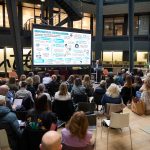 Help us capture BU’s knowledge exchange activity HE-BCI survey 2025–26
 Verbal autopsy paper published two days ago
 ESRC Studentships for 2027 Entry: Opportunity Now Open
 SONAMONI contributions to Safety Conference 2026 in South Africa
 Horizon Europe Cluster 3 (Civil Security for Society) 2026 Calls Now Open
 MSCA Doctoral Networks 2026 Call Information Webinar
 ESRC Festival of Social Science 2026: Application Deadline Extended to Thursday 25 June 2026
 Reminder: Register for the ESRC Festival of Social Science 2026 Information Session
 ECR Funding Open Call: Research Culture & Community Grant – Apply now
 ERC Advanced Grant 2025 Webinar
 Update on UKRO services
 European research project exploring use of ‘virtual twins’ to better manage metabolic associated fatty liver disease