You are warmly welcomed to the next research process seminar. Hosted by The Media School at Bournemouth University but open to all.
Art as Access: Creative Methods for Researching Sensitive Topics
In this talk, Dr. Mendes will share insights into the use of arts-based methods for researching sensitive and sometimes ‘unspeakable’ experiences. The talk will introduce arts-based methods and share ways that they can be successfully integrated into research. The talk emphasizes how useful these methods are in getting people to open up and gives them ways to share experiences beyond words. This ensures that a wider variety of folks can take part (introverts, those with developmental disabilities, and those for whom English is an additional language)
The speaker
Dr. Kaitlynn Mendes is a Full Professor of Sociology and holds the Canada Research Chair in Inequality and Gender at Western University, Canada. She is an expert on rape culture and the ways digital technologies have been used to challenge and facilitate sexual violence. She is PI on the SSHRC funded project DIY: Digital Safety and Director of the GEMS Research Lab.
https://sociology.uwo.ca/people/profiles/Mendes.html
Tuesday 4th November at 2pm on Zoom
Register here: https://bournemouth-ac-uk.zoom.us/meeting/register/7XmNGVgJSd-hDxcx7Iezfg
And if you cannot make it but would like the recording then please register and I will send you it.
cheers
Dan
 Research process seminar this Tuesday 2pm on Zoom. Researching vernacular memory: Arts-based ethnography







 New HIV paper by BU PhD student
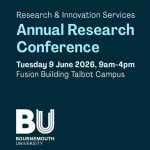 BU Annual Research Conference: Poster Exhibition Call for Applications
 Vitae Three Minute Thesis (3MT®) Competition: Applications Now Open
 3C Online Social: Thursday 26 March 1–2pm – Research Culture, Community & Can you Guess Who?
 Four BU students at national midwifery conference
 ECR Funding Open Call: Research Culture & Community Grant – Apply now
 ECR Funding Open Call: Research Culture & Community Grant – Application Deadline Friday 12 December
 MSCA Postdoctoral Fellowships 2025 Call
 ERC Advanced Grant 2025 Webinar
 Update on UKRO services
 European research project exploring use of ‘virtual twins’ to better manage metabolic associated fatty liver disease