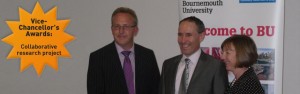
Dr Richard Shipway (School of Tourism) won the Vice-Chancellor’s award for the best collaborative research project for his ESRC-funded project – The Sport Tourism Opportunities for Research Mobility and International Networking Group (STORMING) Initiative.
The grant award formed part of the ESRC’s ‘International Training and Networking Opportunities Programme’. The project supported seventeen early career researchers across eleven higher education institutions throughout the UK, through the provision of a series of international networking opportunities for emerging researchers with a commitment to supporting and further developing sport tourism research. All aspects of the delivery, organisation and external leveraging of the project were managed by Richard. The project has delivered a series of international research outputs and positioned the School of Tourism at the heart of emerging research in this area. Richard has also maximised opportunities from this project, including an invitation to serve on the ESRC Peer Review College, reviewing grant applications in the social sciences.
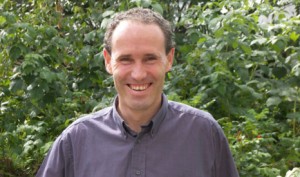 Richard received the award for having made a substantial impact in collaborative working within BU, and securing external funding to create an innovative research network involving internal colleagues and external institutions. The research undertaken by the network has led to high impact outputs.
Congratulations Richard! 😀







 REF 2029 Sector Survey: Have Your Say
 BU methods paper reached 2,500 reads
 UKCGE Recognised Research Supervision Programme: Applications Close 19 October
 Dr. Orlanda Harvey interviewed as expert
 Dr. Paul Whittington attends Technology and the SEND Reforms Roundtable in the House of Commons
 Dr. Paul Whittington joins Bett 2026 DfE Assistive Technology Roundtable
 Horizon Europe Cluster 3 (Civil Security for Society) 2026 Calls Now Open
 MSCA Doctoral Networks 2026 Call Information Webinar
 ESRC Festival of Social Science 2026: Application Deadline Extended to Thursday 25 June 2026
 Reminder: Register for the ESRC Festival of Social Science 2026 Information Session
 ECR Funding Open Call: Research Culture & Community Grant – Apply now
 ERC Advanced Grant 2025 Webinar
 Update on UKRO services
 European research project exploring use of ‘virtual twins’ to better manage metabolic associated fatty liver disease