The Future for Public Service Television report, led by academics at Goldsmiths, University of London and chaired by Oscar-winning film producer Lord Puttnam, was published on Wednesday.
The Inquiry, launched in November 2015, has focused on the purposes of television in an era characterised by technological transformations, shifts in audience consumption habits, and changes in cultural and political attitudes. The report reflects on the extent to which the UK’s most popular television channels have addressed these issues and whether they continue to represent the interests and tell the stories of all the citizens of the UK. Above all, the report seeks to highlight the conditions that may allow for the production and circulation of high quality, creative and relevant public service content in these increasingly complex circumstances.
This Inquiry and report represent a major intervention in media policy, and features contributions from Dr Dan Jackson and Dr Einar Thorsen, both in the Faculty of Media and Communication at BU.
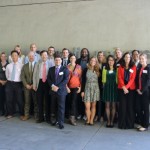 Bournemouth University researchers contribute to international workshop on Public Service Motivation
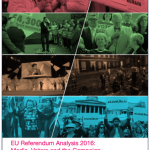 BU academics launch EU Referendum Analysis report within ten days of the vote
 Online public lecture from BU academics this evening: Pioneering women at the BBC
 New report on the state of local news in the UK







 National Research Supervision Recognition: Apply Now & Join the Supporting Workshop on 16 September
 3C Event: ECR Network Café – Wednesday 16 September 2-3pm
 BU geography student’s undergraduate dissertation published in international journal
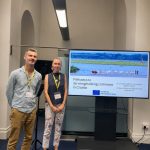 Why some commons survive and others don’t
 BU Research blog in 2023 grows into 2026 publication
 Horizon Europe Cluster 3 (Civil Security for Society) 2026 Calls Now Open
 MSCA Doctoral Networks 2026 Call Information Webinar
 ESRC Festival of Social Science 2026: Application Deadline Extended to Thursday 25 June 2026
 Reminder: Register for the ESRC Festival of Social Science 2026 Information Session
 ECR Funding Open Call: Research Culture & Community Grant – Apply now
 ERC Advanced Grant 2025 Webinar
 Update on UKRO services
 European research project exploring use of ‘virtual twins’ to better manage metabolic associated fatty liver disease