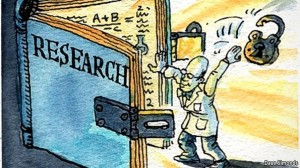
 Writing a Research Summary / Lay Summary
As for all of your proposal writing, the research summary should be written clearly and in simple terms. The assessors reading your proposal may not be experts in your field. Additionally, it is likely that your assessors will have a stack of applications to review, and not much time to review them. It is vital that the assessor can quickly and easily grasp not only what it is you would like to be funded, and why it is so exciting, novel and innovative.
It is a good idea to write the summary after you have written the rest of your proposal. You may modify your approach as you develop your proposal. By writing the summary when you have completed your application, you can be sure that you are including the most up to date information.
To write a really strong summary you will need to address the following questions:
- Why is the project important, needed and timely?
- How is the proposed approach special and exciting?
- Why should you be doing the research?
- What will the outcome of the project be?
- How does your research fit the funder and call?
- How will this research be of such enormous benefit?
- What will the impact of your research be?
- How will this impact be achieved?
You can access a previous blog post on writing an excellent lay summary here: Writing a Lay Summary is Easy, Right?







 ESRC Studentships for 2027 Entry: Opportunity Now Open
 SONAMONI contributions to Safety Conference 2026 in South Africa
 Three CMWH presentations at Berlin conference
 New interdisciplinary paper on Nepal
 Horizon Europe Cluster 3 (Civil Security for Society) 2026 Calls Now Open
 MSCA Doctoral Networks 2026 Call Information Webinar
 ESRC Festival of Social Science 2026: Application Deadline Extended to Thursday 25 June 2026
 Reminder: Register for the ESRC Festival of Social Science 2026 Information Session
 ECR Funding Open Call: Research Culture & Community Grant – Apply now
 ERC Advanced Grant 2025 Webinar
 Update on UKRO services
 European research project exploring use of ‘virtual twins’ to better manage metabolic associated fatty liver disease