 Members of the Arts and Humanities Research Council’s Peer Review College have resigned over the council’s continued refusal to remove references to the government’s Big Society slogan from its delivery plan.
Maria Manuel Lisboa, a professor of Portuguese literature and culture at the University of Cambridge, told Research Fortnight Today that she resigned a few weeks ago after receiving no response to a letter of complaint to the council. She described it as “completely unacceptable” that a research council has direct references to a party-political slogan in its delivery plan.
According to an article in The Guardian on 19 June, some 30 academics are planning to resign in the next two weeks. Manuel Lisboa, however, said she was not aware of an organised mass resignation and that her decision was a personal choice.
In a statement sent to Research Fortnight Today, a spokesperson for the AHRC said the council is not contemplating removing big society from its delivery plan: “We have over 1,200 members in our peer review college across all the arts and humanities disciplines. Since the initial petition against the inclusion of Big Society in the AHRC delivery plan appeared at the beginning of April only 2 academics have resigned from the peer review college, and they resigned very early on in the process,” he said.
The full story can be accessed on Research Professional







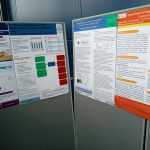 BU contributions to successful Global Health conference
 New paramedic science paper by BU’s Dr. Ursula Rolfe
 Congratulation on newly published systematic review
 Equitable Partnerships in Global Health Research
 Horizon Europe Cluster 3 (Civil Security for Society) 2026 Calls Now Open
 MSCA Doctoral Networks 2026 Call Information Webinar
 ESRC Festival of Social Science 2026: Application Deadline Extended to Thursday 25 June 2026
 Reminder: Register for the ESRC Festival of Social Science 2026 Information Session
 ECR Funding Open Call: Research Culture & Community Grant – Apply now
 ERC Advanced Grant 2025 Webinar
 Update on UKRO services
 European research project exploring use of ‘virtual twins’ to better manage metabolic associated fatty liver disease