 The excellent service providers Intelligent Energy Europe (IEE) will be holding online support sessions on Wednesday 25th April at 2.30pm and Friday 27th April at 2.30pm.
The session on Wednesday 25th April will be on the subject of Costing your IEE Proposal and the session on Friday 27th April will be on the IEE Award Criteria – and how to address them effectively.
If you would like to join one or both of these sessions please email indicating which session/s you would like to join and you will be sent the telephone conference call dial in details and the weblink where you will be able to view the slides.
The online support sessions will provide you with a comprehensive and interactive presentation on key aspects of the IEE proposal preparation and submission process and an opportunity to ask questions. The feedback from those that have taken part in the sessions has been very positive and it only takes a small amount of time away from your proposal preparation work which should save you time in the long run. They will be referring to the material from these sessions when they undertake the proposal review process so it is recommended that you take part in the sessions in order to understand the messages fully.
Please contact the EU Energy Focus team with your questions on IEE and refer to the IEE factsheets on subjects including costing your IEE proposal and impact.







 BU Prof Jonathan Parker promoting social work in Malaysia
 New interdisciplinary paper accepted for publication
 Three NIHR Internships awarded at BU
 Research highlighted at the UN in New York
 Poverty in the UK: book launch today at BU
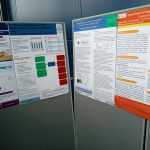 BU contributions to successful Global Health conference
 Horizon Europe Cluster 3 (Civil Security for Society) 2026 Calls Now Open
 MSCA Doctoral Networks 2026 Call Information Webinar
 ESRC Festival of Social Science 2026: Application Deadline Extended to Thursday 25 June 2026
 Reminder: Register for the ESRC Festival of Social Science 2026 Information Session
 ECR Funding Open Call: Research Culture & Community Grant – Apply now
 ERC Advanced Grant 2025 Webinar
 Update on UKRO services
 European research project exploring use of ‘virtual twins’ to better manage metabolic associated fatty liver disease