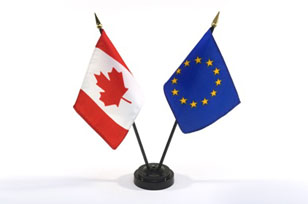
 This EU-funded programme offers students from EU Member States a unique in-depth experience of Canada and of EU-Canada relations during September 2012.
The intensive four-week programme begins in Brussels at the European Institutions and then moves to Canada, with study visits in Ottawa, Québec, Montréal, Toronto, Vancouver and Victoria. In addition, nine two-month internships will be offered to participants immediately following the end of the tour. These will take place at leading think tanks, foundations and cultural institutions across Canada. This immersion in Canada will offer a unique opportunity for an academic experience in a non-academic setting.
Participation in the tour is open to university students who, at the time of application, are in their third year of studies (or equivalent) or higher and are citizens of the European Union. Third-country nationals who have been legal residents in the European Union for at least three years (and for purposes other than study) before the start of the tour are also eligible; they must be enrolled at a university in an EU member state. A maximum of 33 students will take part in the tour.
Students will only be required to pay a participation fee of 750 EUR, plus pay for their food and other incremental costs during the programme. Further information and application forms are available here. The deadline for applications is Monday 30 April, and an academic reference will also be required.







 3C Online Social: Thursday 26 March 1–2pm – Research Culture, Community & Can you Guess Who?
 Four BU students at national midwifery conference
 INRC book roundtable/presentation by Drs Jonathan Cole and Catherine Talbot, Wednesday 22/04/2026, 13:00h, P426
 BU M.Res. student’s evidence to UK Parliamentary Women & Equalities Committee
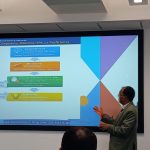 Prof Marahatta promoting BU-Nepal collaboration
 ECR Funding Open Call: Research Culture & Community Grant – Apply now
 ECR Funding Open Call: Research Culture & Community Grant – Application Deadline Friday 12 December
 MSCA Postdoctoral Fellowships 2025 Call
 ERC Advanced Grant 2025 Webinar
 Update on UKRO services
 European research project exploring use of ‘virtual twins’ to better manage metabolic associated fatty liver disease