In Dorset, we are blessed with a fantastic environment full of fascinating features. Could your Festival of Learning event by inspired by Dorset’s famous coast line?
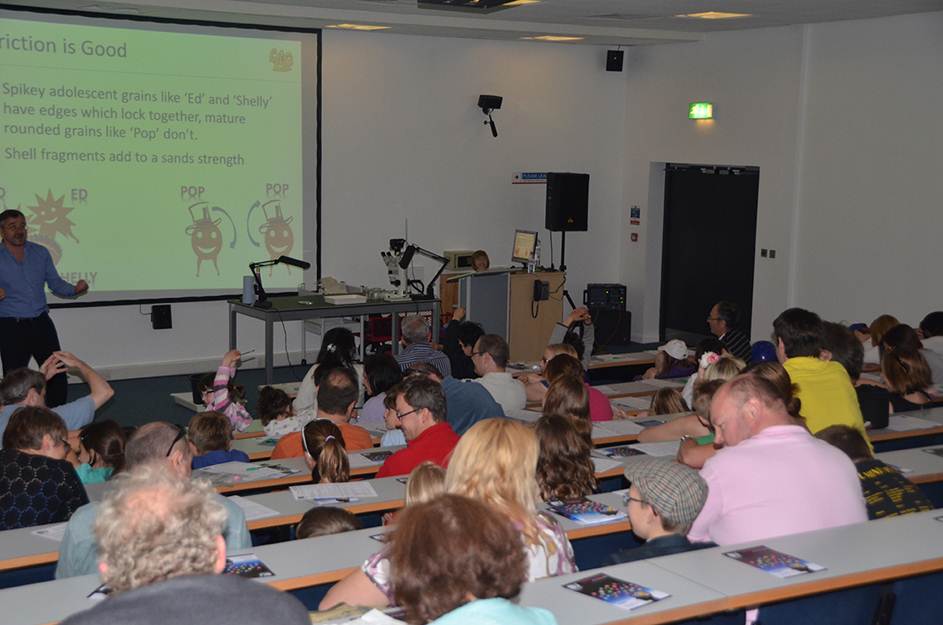
In previous years at the Festival of Learning, we’ve had informative instruction on how to build the perfect sandcastle and a time walkers’ archaeological walk over Hengistbury Head.
Paola Palma along with representatives from BU’s Bio-beach project, the Nautical Archaeology Society, Poole Maritime Trust, with Maritime Archaeology in Dorset have previously run a Festival of Maritime Archaeology which included activities such as maritime archaeology surveying, excavations in fish tanks and artefact painting, model making and boat building for children
Whatever you decide to do, we know the seaside is a topic which really gets the imagination going. So whether you want to run an event on why chips taste better when they are eaten on the beach, or a workshop on the secret life of sand dunes, start thinking about your event now to get your proposal in for the 19th December deadline.
To get involved in the Festival of Learning, submit a proposal now or contact Naomi Kay to discuss how your research can be the basis of a fantastic Festival of Learning event.







 SONAMONI contributions to Safety Conference 2026 in South Africa
 Three CMWH presentations at Berlin conference
 New interdisciplinary paper on Nepal
 Horizon Europe Cluster 3 (Civil Security for Society) 2026 Calls Now Open
 MSCA Doctoral Networks 2026 Call Information Webinar
 ESRC Festival of Social Science 2026: Application Deadline Extended to Thursday 25 June 2026
 Reminder: Register for the ESRC Festival of Social Science 2026 Information Session
 ECR Funding Open Call: Research Culture & Community Grant – Apply now
 ERC Advanced Grant 2025 Webinar
 Update on UKRO services
 European research project exploring use of ‘virtual twins’ to better manage metabolic associated fatty liver disease