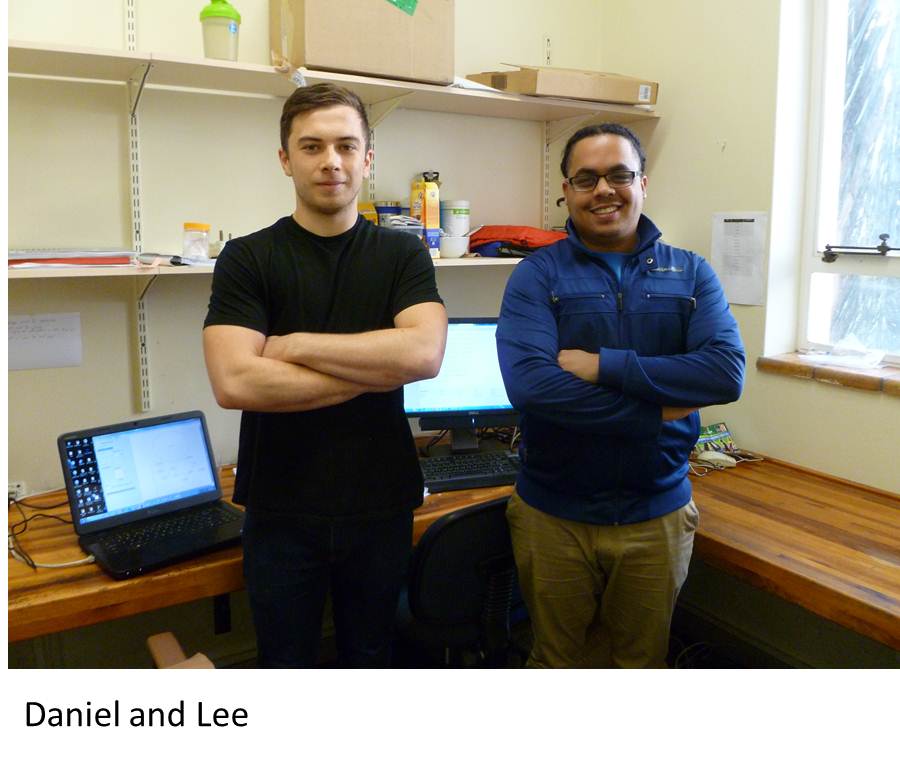
The 2015 Fusion Fund research project has now come to an end. The last few months saw two BU students, Daniel Wirepa and Claudia O’Sullivan travel to Stellenbosch to undertake the research project examining the development of a novel slow-release technology for application in the treatment of pest infestations in the abalone aquaculture industry. Unfortunately, Claudia had to return to the UK in June for personal reasons but Daniel stayed working in Carol Simon’s labs alongside Lee, one of her research students.
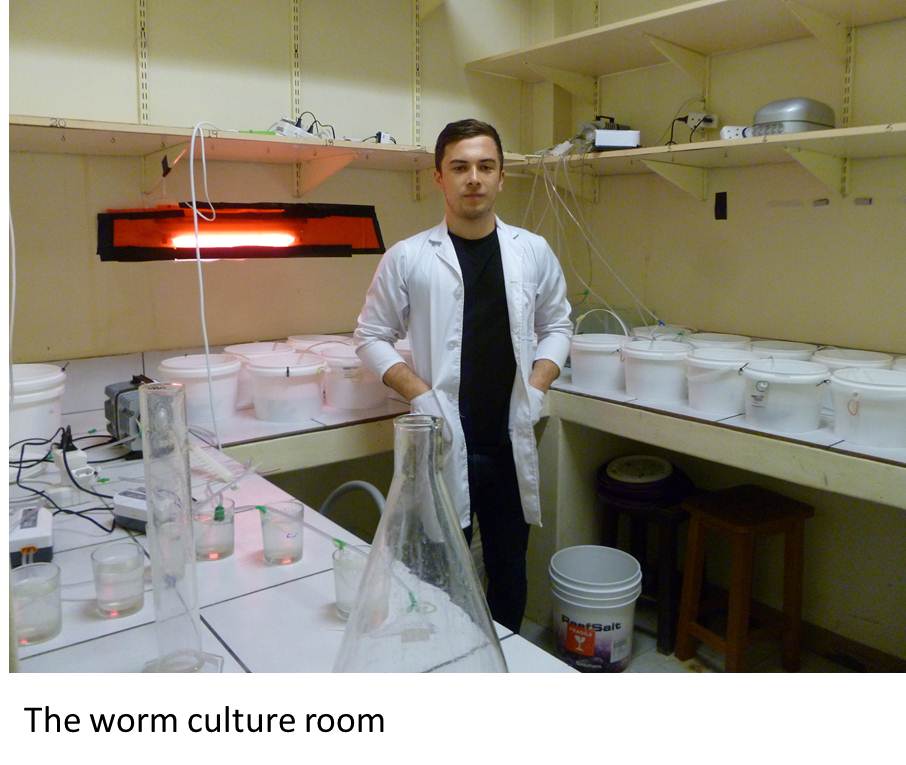
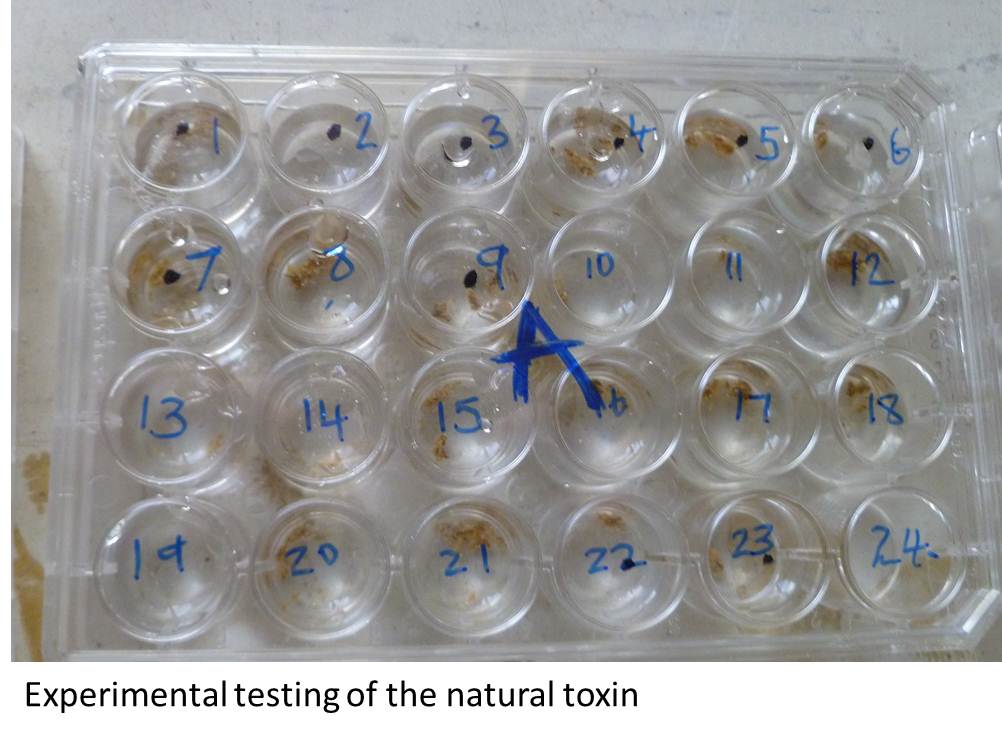
Daniel was working on the incorporation of a natural toxin, produced by microscopic algae, into a gel which acts to keep the toxin where it is required to act on the larvae of a shell-boring pest. The shell borer is a small marine worm that causes damage to the shells of cultured abalone (see previous blogs).
This pilot study will form the basis for a future research studentship which will link Bournemouth University, Stellenbosch University in South Africa and one of the world’s leading abalone farms in Hermanus, Abagold Pty, Ltd. The outputs of the research will be presented at next year’s International Polychaete Conference in Cardiff with Daniel as a co-author.
 Matt Bentley’s Fusion Fund Research – South Africa Final Update







 Verbal autopsy paper published two days ago
 ESRC Studentships for 2027 Entry: Opportunity Now Open
 SONAMONI contributions to Safety Conference 2026 in South Africa
 Three CMWH presentations at Berlin conference
 Horizon Europe Cluster 3 (Civil Security for Society) 2026 Calls Now Open
 MSCA Doctoral Networks 2026 Call Information Webinar
 ESRC Festival of Social Science 2026: Application Deadline Extended to Thursday 25 June 2026
 Reminder: Register for the ESRC Festival of Social Science 2026 Information Session
 ECR Funding Open Call: Research Culture & Community Grant – Apply now
 ERC Advanced Grant 2025 Webinar
 Update on UKRO services
 European research project exploring use of ‘virtual twins’ to better manage metabolic associated fatty liver disease