
• Travel with the intent of networking
• Conference attendance with the intent of networking
• Pilot research work
• Fieldwork
• Attendance at external networking events leading to collaborative research proposals
• Meetings with external organisations to establish collaborations
• Preparation of specialist material or data
• Replacement teaching
The workshops will all take place in 2016 on 13th January, 27th April, 20th July and 28th September. Application forms are available below and must include endorsement from your Faculty Deputy Dean for Research, who should be approached before beginning a submission. Places are limited and applications may be reviewed internally to decide on the final cohort; please complete the form with enthusiasm and care.
We are seeking individual applications but applicants may collaborate within and across Faculties and pool their individual budgets, where appropriate – please indicate in your application if you would like to be considered as a ‘team’ along with other applicants.
The deadline for applications is Monday, 30th November 2015. Applications and any questions should be submitted to the Funding Development Co-ordinator, Dianne Goodman, dgoodman@bournemouth.ac.uk
Look our for further posts on EUADS in the coming weeks
 Kickstart Your European Funding Ambitions







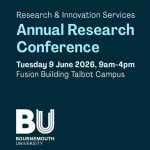 BU Annual Research Conference: Poster Exhibition Call for Applications
 Vitae Three Minute Thesis (3MT®) Competition: Applications Now Open
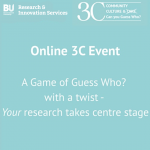 3C Online Social: Thursday 26 March 1–2pm – Research Culture, Community & Can you Guess Who?
 Four BU students at national midwifery conference
 INRC book roundtable/presentation by Drs Jonathan Cole and Catherine Talbot, Wednesday 22/04/2026, 13:00h, P426
 ECR Funding Open Call: Research Culture & Community Grant – Apply now
 ECR Funding Open Call: Research Culture & Community Grant – Application Deadline Friday 12 December
 MSCA Postdoctoral Fellowships 2025 Call
 ERC Advanced Grant 2025 Webinar
 Update on UKRO services
 European research project exploring use of ‘virtual twins’ to better manage metabolic associated fatty liver disease