This title was suggested by one of our collaborators Jeffery L Nicholas. Jeff is a scholar at Providence College in the USA who came to visit Bournemouth University recently. It is a great title, especially since many think about midwifery in terms of its long tradition. Some refer to midwifery as the ‘second oldest profession’. This blog post highlights some of the thinking generated through cross-national inter-disciplinary research.

Jeff (philosopher) and Edwin (medical sociologist) have been discussing the kind of political challenges midwives face today: struggles around the health of the mother and child, over costs (especially the underfunding of the NHS) and providers, and over the rights of women and families to choose. We both believe strongly that these struggles are inter-connected, and Jeff thinks a new approach is worthy of investigating for possible theoretical and practical aid in these struggles.
Specifically, Jeff looks at midwifery as a particular kind of practice with revolutionary potential. This question emerges from the work of Alasdair MacIntyre (1929—). MacIntyre condemns the bureaucratic society in which people become manipulators and manipulated. He also rejects large-scale, nation-state politics by which citizens might wrest control of their lives from those in charge. Rather, he focuses on the every day activities that comprise most of our lives. These activities—practices—come with their own ends that participants attempt to achieve, and they help teach individuals the virtues they need to act as agents in their lives, to participate in their communities, and to flourish. A strong community based around practices is one in which all can pursue the good life together, even if threatened by the state.
Having these discussions made us think about the substantive question, such as “Do some of the NHS free-standing midwife-led units, or some of the UK’s independent midwifery practices or The Farm Midwifery Center in Tennessee comprise such communities?” and “How can we best study this phenomenon?” Taking the discussion one of two steps further we brainstormed questions such as “How can midwifery education help an individual develop the virtues to live a flourishing life?” and “How does the student midwife learn to reason in her every day work?”
We hope these questions interest others, and that, together, we might pursue avenues of research to help us understand midwifery in the wider society, to support midwives and communities of midwives, to support human beings in their every day lives, and to birth a better world.
Prof. Jeffery L. Nicholas (Providence College)
&
Prof. Edwin van Teijlingen
CMMPH







 3C Online Social: Thursday 26 March 1–2pm – Research Culture, Community & Can you Guess Who?
 Four BU students at national midwifery conference
 INRC book roundtable/presentation by Drs Jonathan Cole and Catherine Talbot, Wednesday 22/04/2026, 13:00h, P426
 BU M.Res. student’s evidence to UK Parliamentary Women & Equalities Committee
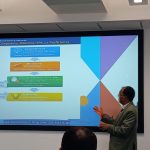 Prof Marahatta promoting BU-Nepal collaboration
 ECR Funding Open Call: Research Culture & Community Grant – Apply now
 ECR Funding Open Call: Research Culture & Community Grant – Application Deadline Friday 12 December
 MSCA Postdoctoral Fellowships 2025 Call
 ERC Advanced Grant 2025 Webinar
 Update on UKRO services
 European research project exploring use of ‘virtual twins’ to better manage metabolic associated fatty liver disease