All staff and students welcome. Please feel free to bring your lunch.
Abstract:
“Performative Social Science” was a term first coined by Norman Denzin in 2001, the year that Kip Jones received his PhD and began to explore new ways to communicate Social Science findings to wider audiences.
What is Performative Social Science (PSS) then, Art or Science? It isn’t one or the other. It is enriching the ways in which Social Science subjects might be researched and/or findings disseminated or communicated to various communities. Ideally, audiences should be almost unaware of the seams where practitioners have cobbled together in-depth, substantial scholarship with artistic endeavor. PSS is defined as the use of tools from the Arts or Humanities in investigating and/or disseminating Social Science research.
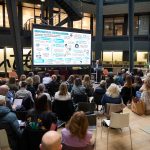
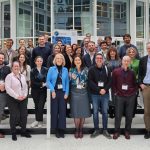
The Seminar will explore Jones’ journey from early productions produced on his PC in his bedsit, to gatherings (physical and virtual) of like-minded academics (Illustrated above), to the production of a major short film based in solid qualitative research methods including auto-ethnography, and back again to ‘kitchen sink’ work, producing creative productions which inform his future efforts.
***
If you have any queries, please get in touch with seminar series coordinator Dr Mastoureh Fathi, mfathi@bournemouth.ac.uk







 3C Event: Research Culture, Community & Connections – Wednesday 11 November 3-4pm
 ECR Opportunities: New Development Programme, Researcher Grants & Upcoming Events
 Help us capture BU’s knowledge exchange activity HE-BCI survey 2025–26
 Verbal autopsy paper published two days ago
 ESRC Studentships for 2027 Entry: Opportunity Now Open
 Horizon Europe Cluster 3 (Civil Security for Society) 2026 Calls Now Open
 MSCA Doctoral Networks 2026 Call Information Webinar
 ESRC Festival of Social Science 2026: Application Deadline Extended to Thursday 25 June 2026
 Reminder: Register for the ESRC Festival of Social Science 2026 Information Session
 ECR Funding Open Call: Research Culture & Community Grant – Apply now
 ERC Advanced Grant 2025 Webinar
 Update on UKRO services
 European research project exploring use of ‘virtual twins’ to better manage metabolic associated fatty liver disease