
“Blood feeding activity of flies at crime scenes can be confounding. Experiments were conducted to investigate the blood feeding activity, and blood artefact patterns created by flies following a blood meal. The trials were undertaken in a staged environment where over 500 flies were exposed to 500ml of horse blood in a sealed gazebo for a period of 72 hours. The resulting patterns, a total of 539,507 fly blood artefacts, were then compared to recreated bloodstain patterns commonly encountered during instances of violent assault. These comparisons focused on overall pattern shape, total stain numbers, stain density per cm2 and the zone where they were deposited. Informal observations and recordings were also made of individual stain colour and stain alignment, but were not measured.”
This was the abstract submitted to accompany Christopher’s recent submission to the Research Photography Competition, where he won second prize.
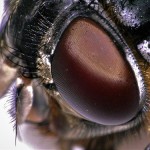 Photo of the Week: The Compound Eye of Calliphora Vomitoria (a bluebottle fly)







 Food Price Research Shortlisted for Civil Service Prize
 It’s International Open Access week
 3C Event: Research Culture, Community & Connections – Wednesday 11 November 3-4pm
 ECR Opportunities: New Development Programme, Researcher Grants & Upcoming Events
 Help us capture BU’s knowledge exchange activity HE-BCI survey 2025–26
 Verbal autopsy paper published two days ago
 Horizon Europe Cluster 3 (Civil Security for Society) 2026 Calls Now Open
 MSCA Doctoral Networks 2026 Call Information Webinar
 ESRC Festival of Social Science 2026: Application Deadline Extended to Thursday 25 June 2026
 Reminder: Register for the ESRC Festival of Social Science 2026 Information Session
 ECR Funding Open Call: Research Culture & Community Grant – Apply now
 ERC Advanced Grant 2025 Webinar
 Update on UKRO services
 European research project exploring use of ‘virtual twins’ to better manage metabolic associated fatty liver disease