After recent media exposure about overcrowding at tourist destinations and local-tourist conflict, destination authorities have sought to introduce codes of conduct across European tourist destinations. From Hvar in Croatia, towns near Amsterdam, and Venice, there is a belief that the tourism system, like the financial system, is not working for everyone. Local residents are starting to feel like they’re receiving less than they’re giving. Therefore, authorities have stepped in with codes, with the aim to assign rules to make tourists more sensitive to local residents and protect natural, cultural, historical and other resources.

Tourists planning to go to the beach
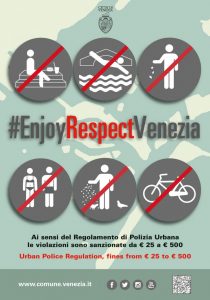
Venice Code of Conduct
Michael O’Regan, PhD from the Department of Events & Leisure, is exploring whether these codes work, and whether the introduction of these measures really protect tourism resources. Taking a critical approach, Michael argues that such codes work at different levels, from marketing strategies, as local politicians and businesses gain reputational capital by scapegoating tourists to their role in smarter governance models. Read more on the Conversation UK.
Link: http://theconversation.com/tourist-codes-of-conduct-are-a-bad-idea-heres-why-82676
 Tourist codes of conduct are a bad idea – here’s why







 SONAMONI contributions to Safety Conference 2026 in South Africa
 Three CMWH presentations at Berlin conference
 New interdisciplinary paper on Nepal
 Horizon Europe Cluster 3 (Civil Security for Society) 2026 Calls Now Open
 MSCA Doctoral Networks 2026 Call Information Webinar
 ESRC Festival of Social Science 2026: Application Deadline Extended to Thursday 25 June 2026
 Reminder: Register for the ESRC Festival of Social Science 2026 Information Session
 ECR Funding Open Call: Research Culture & Community Grant – Apply now
 ERC Advanced Grant 2025 Webinar
 Update on UKRO services
 European research project exploring use of ‘virtual twins’ to better manage metabolic associated fatty liver disease