 The Physiological Society’s Public Engagement grants are open for their first round of 2018 applications.
Grants of up to £5000 are available to both members and non-members of the society to promote the discussion of physiology with public audiences. The scheme aims to:
- Inspire creative public engagement with physiology
- Stimulate physiologists to share their stories, passion and expertise in innovative ways with wider audiences, particularly those that are traditionally hard to reach
- Increase dialogue between researchers and the public, in particular on topics such as the relevance of research to health, medicine and performance
- Produce materials and resources which can be used for further public engagement and outreach work
The deadline for these applications is 14th January 2018. Further information and the application forms can be found here.
If you are interested in applying for one of these grants and would like to discuss it further with our Public Engagement team on it, you can! Just email our Engagement Officer Natt Day (nday@bournemouth.ac.uk) to arrange.
 Physiological Society Public Engagement Grants
 Anatomical Society – grants for public engagement and outreach







 Verbal autopsy paper published two days ago
 ESRC Studentships for 2027 Entry: Opportunity Now Open
 SONAMONI contributions to Safety Conference 2026 in South Africa
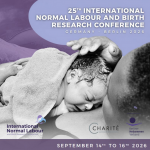 Three CMWH presentations at Berlin conference
 Horizon Europe Cluster 3 (Civil Security for Society) 2026 Calls Now Open
 MSCA Doctoral Networks 2026 Call Information Webinar
 ESRC Festival of Social Science 2026: Application Deadline Extended to Thursday 25 June 2026
 Reminder: Register for the ESRC Festival of Social Science 2026 Information Session
 ECR Funding Open Call: Research Culture & Community Grant – Apply now
 ERC Advanced Grant 2025 Webinar
 Update on UKRO services
 European research project exploring use of ‘virtual twins’ to better manage metabolic associated fatty liver disease