This is our fourth conference and due to huge success in the past years we would like to invite you to take part in this year’s conference which is free for BU staff and students!
For more information and tickets please visit:
https://www.eventbrite.co.uk/e/humanising-care-health-wellbeing-tickets-45585595744#tickets
Tickets include refreshments and lunch.
We welcome abstracts!
- On any topic linked to humanising practice, health and wellbeing
- Reporting research, educational development or practice development.
- They may be empirical, methodological, theoretical or discussion papers
Please see previous conference programmes at https://research.bournemouth.ac.uk/2018/04/humanising-care-health-and-wellbeing-conference-2018/
Abstract should:
- Be submitted in a word document, Include a title (no word limit), Include details of authors, Names, Affiliations, Corresponding author with e-mail address, Content maximum 300 words (not including title and references)
- Headings: Background, Aim (of research or paper), Method (if research), Findings (if research) or Key points, Conclusion
- References are not needed and not more than two if included
Please send your abstract to Caroline Ellis-Hill (Conference chair) on cehill@bournemouth.ac.uk
Abstract submission will close when all the presentation spaces are filled; so please send your abstract NOW to avoid disappointment. Abstract submission will close on Tuesday 12 June, 5pm.

 Humanising Care, Health and Wellbeing conference 2018
 Humanising SIG meeting 5th April 2018







 Congratulation on newly published systematic review
 Equitable Partnerships in Global Health Research
 New Nepal-based paper published last week
 Congratulation to HEMS colleagues on their new book!
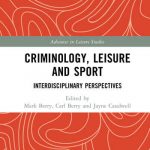 Book edited by BU academics published
 Horizon Europe Cluster 3 (Civil Security for Society) 2026 Calls Now Open
 MSCA Doctoral Networks 2026 Call Information Webinar
 ESRC Festival of Social Science 2026: Application Deadline Extended to Thursday 25 June 2026
 Reminder: Register for the ESRC Festival of Social Science 2026 Information Session
 ECR Funding Open Call: Research Culture & Community Grant – Apply now
 ERC Advanced Grant 2025 Webinar
 Update on UKRO services
 European research project exploring use of ‘virtual twins’ to better manage metabolic associated fatty liver disease