
This one hour lunchbite session is aimed at all academic staff who are new to, or experienced at, supervising research degree students and are interested in expanding their knowledge of a specific aspect or process in doctoral supervision.
Lunch and refreshments provided.
Tuesday 5th June 2018
12.00 – 13.00
Talbot Campus
Examining & Chairing Research Degree Viva Voce Examinations
Click here for further details and to book your place
through Organisational Development
This session will be led by a senior academic who will introduce the topic, and staff will be free to participate in discussions aimed at sharing best practice from across BU. It will be focused on expanding knowledge on the processes and responsibilities involved in examining & chairing research degree viva voce examinations.
Bookings can also be made for upcoming sessions covering different aspects of research degree supervision including:
- Guidance for Supervising PGRS with Disabilities – Wednesday 20 June 2018, 12:00-13:00, Lansdowne Campus
- PGR & Public Engagement – the benefits for Supervisors – Tuesday 26 June 2018, 12:00-13:00, Talbot Campus
These sessions will run again at intervals in the next academic year.
 Supervisor Lunchbite | Clinical Research Governance and the role of the PGR supervisor
 Supervisor Lunchbite | Wellbeing Support for PGRs at BU







 ECR Opportunities: New Development Programme, Researcher Grants & Upcoming Events
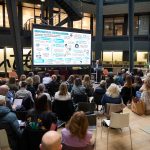 Help us capture BU’s knowledge exchange activity HE-BCI survey 2025–26
 Verbal autopsy paper published two days ago
 ESRC Studentships for 2027 Entry: Opportunity Now Open
 SONAMONI contributions to Safety Conference 2026 in South Africa
 Horizon Europe Cluster 3 (Civil Security for Society) 2026 Calls Now Open
 MSCA Doctoral Networks 2026 Call Information Webinar
 ESRC Festival of Social Science 2026: Application Deadline Extended to Thursday 25 June 2026
 Reminder: Register for the ESRC Festival of Social Science 2026 Information Session
 ECR Funding Open Call: Research Culture & Community Grant – Apply now
 ERC Advanced Grant 2025 Webinar
 Update on UKRO services
 European research project exploring use of ‘virtual twins’ to better manage metabolic associated fatty liver disease