At the risk of needling you with yet another blogpost regarding our exciting Strategic Investment Areas Game-Changing Ideas call for Expressions of Interest (closing 30 April), RDS will take this opportunity to remind you that there are a further two drop-in sessions, on 19 and 22 April respectively: you can find the meeting links on the blogpost regarding these events here: https://blogs.bournemouth.ac.uk/research/2021/04/01/the-call-for-game-changing-research-concepts-is-currently-open/.
Tips on completion of the EoI will be dispensed at those events, which are entirely informal and also provide possible networking opportunities with others whose ideas may resonatewith yours and with whom you may consider strategically joining join forces.
Finally, should game-changing ideas crossover with one of the other SIAs (as they invariably will, if grand!), we can advise that there are two remaining SIA briefings: Assistive Technology on 22 April, 10.30am, and Sustainability, Low Carbon Technology and Materials Science on 23 April at 10.00am. For the session links, see https://blogs.bournemouth.ac.uk/research/2021/04/12/88688/
Do pitch up for an informal chat over how you can make your idea a winning one. We look forward to seeing you there!
 The call for game-changing research concepts now closes on Tuesday 4th May 5pm (deadline extended)







 New interdisciplinary paper accepted for publication
 Three NIHR Internships awarded at BU
 Research highlighted at the UN in New York
 Poverty in the UK: book launch today at BU
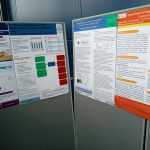 BU contributions to successful Global Health conference
 Horizon Europe Cluster 3 (Civil Security for Society) 2026 Calls Now Open
 MSCA Doctoral Networks 2026 Call Information Webinar
 ESRC Festival of Social Science 2026: Application Deadline Extended to Thursday 25 June 2026
 Reminder: Register for the ESRC Festival of Social Science 2026 Information Session
 ECR Funding Open Call: Research Culture & Community Grant – Apply now
 ERC Advanced Grant 2025 Webinar
 Update on UKRO services
 European research project exploring use of ‘virtual twins’ to better manage metabolic associated fatty liver disease