 Explore how working with the media can help to raise the profile of your work and research and lead to impact.
Take away practical tips on talking to journalists, tracking the impact of media coverage and finding the best ways to reach your target audiences.
This session is open to all academic staff who are interested in engaging with the media, no experience is necessary.
By the end of the session, attendees will:
• Understand the media landscape and how to engage with journalists effectively
• Know how to find their target audiences and how to best to reach them
• Have learnt how to maximise and track the impact of media coverage
Thursday 18th January 2024, 14:00-15:30 Online
Book your place here under ‘Impact Essentials: Engaging with the Media for Impact -18/01/2024’ in the drop-down menu.
Facilitated by:Emma Matthews – Research Communications Adviser, ematthews@bournemouth.ac.uk
 Training opportunity: Engaging with the media for impact – Wednesday 26 April
 How can working with the media help generate impact from your research?
 Upcoming research communication training opportunities
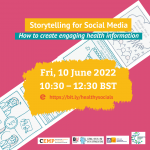 Workshop: Storytelling for Social Media-How to create engaging health information







 NIHR Insight South West Central Conference 2026 at Bournemouth University
 BU PhD student presented at World Safety Conference in South Africa
 National Research Supervision Recognition: Apply Now & Join the Supporting Workshop on 16 September
 3C Event: ECR Network Café – Wednesday 16 September 2-3pm
 BU geography student’s undergraduate dissertation published in international journal
 Horizon Europe Cluster 3 (Civil Security for Society) 2026 Calls Now Open
 MSCA Doctoral Networks 2026 Call Information Webinar
 ESRC Festival of Social Science 2026: Application Deadline Extended to Thursday 25 June 2026
 Reminder: Register for the ESRC Festival of Social Science 2026 Information Session
 ECR Funding Open Call: Research Culture & Community Grant – Apply now
 ERC Advanced Grant 2025 Webinar
 Update on UKRO services
 European research project exploring use of ‘virtual twins’ to better manage metabolic associated fatty liver disease