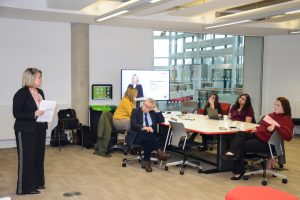
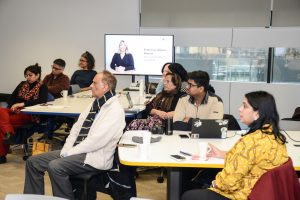
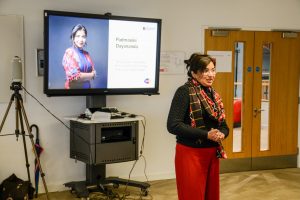
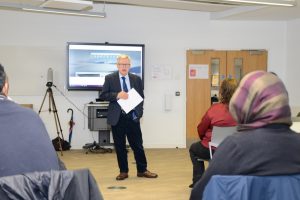
Minority entrepreneurship is a significant yet under-leveraged part of the UK economy. While some groups launch businesses at similar rates to others, long-standing structural barriers limit their ability to scale, access capital, and access formal support systems. Supported by the Institute of Small Business Entrepreneurship’s ( ISBE) Entrepreneurship in Minority Group ( EMG) SIG, On 21 January 2026, Breaking Barriers: Advancing Minority Entrepreneurship in the UK brought together researchers, entrepreneurs, policymakers, and community leaders at Bournemouth University to move from evidence to collective action on these issues.
Structural Barriers: What the Evidence Shows
National evidence shows that exclusion is not random or individual, but systemic. The UK Parliament’s Women and Equalities Committee’s 8th Report on Female Entrepreneurship outlines how female entrepreneurs face “significant disadvantages in accessing finance, investment networks, and support systems” and how these disparities are rooted in systemic bias and a lack of representation among decision-makers.
Moreover, the latest research from the British Business Bank shows that entrepreneurs from ethnic minority backgrounds often experience worse business outcomes — including lower turnover and profit — even when they invest more time and capital in their ventures. Access to finance is one of the most persistent barriers: nearly half of ethnic minority entrepreneurs stop developing business ideas due to financial difficulties.
These patterns are echoed in broader research on ethnic minority entrepreneurship, which finds that institutional barriers — including exclusion from influential networks and assumptions embedded in support systems — impede opportunity and growth.
From Evidence to Practice: What Happened at Breaking Barriers
The event began with leadership reflections from Bournemouth University’s Vice-Chancellor, who emphasised that diversity fuels creativity and pointed to the university’s growing focus on social entrepreneurship as part of its societal impact mission. The Dean of the Faculty of Business and Law reaffirmed a commitment to developing inclusive programmes that support social enterprises and underrepresented founders.
At its core, the event was structured around co-creation. After contextual framing, participants — both in person and online — worked in small groups to generate actionable ideas around four themes: Money Without Gatekeepers; Who Lets You In the Room?; Built for Someone Else; From Policy to Reality. These themes reflected points raised in the evidence base: exclusion often occurs before formal decision-making processes and is embedded in norms, assumptions, and network dynamics.
One group focused on funding criteria that align with founders’ business purposes, highlighting how traditional models advantage those already embedded in dominant networks. Another discussed the need for transformative mentorship, emphasising the value of structured support that recognises lived experience as expertise.
Lived Experience and Systems Change
After lunch, a panel of entrepreneurs shared personal narratives that illuminated how systemic barriers play out in real lives. Panellists highlighted that perseverance is essential, but individual resilience alone is not enough to overcome systems that were not designed with diversity in mind. Reflections at the end of the day by entrepreneurs and sustainability practitioners underscored the need for sustainable, structural change—not one-off initiatives. This echoes what scholars have long argued: that inclusive ecosystems require interventions that address institutional design, not just individual capacity.
Commitments to Action
The day concluded with a Commitment Wall, where participants pledged actions ranging from building more inclusive networks, maintaining visibility for underrepresented founders, and embedding well-being into entrepreneurial practice. These commitments underscore an important research insight: inclusive entrepreneurship requires sustained collective effort across sectors, institutions, and communities.
The outcomes from Breaking Barriers reaffirm that while the UK has strong evidence on why minority entrepreneurs face obstacles, translating that evidence into effective policy and practice remains a challenge. What emerged from the day was not just a list of issues, but a shared conviction that inclusive entrepreneurship ecosystems must be designed with the people they serve — not around abstract ideals.Bournemouth University’s role as a convenor of research, evidence, and practice illustrates how academic institutions can help bridge the gap between analysis and action — a role that will be essential if the UK is to unlock the full potential of its diverse entrepreneurial talent
This event aligns directly with ongoing work at Bournemouth University to embed inclusive and impact-driven entrepreneurship across education, research, and engagement. For example, my earlier blog “From Classroom to Catalyst: Impact, Inclusion and the UN SDGs in Entrepreneurship Education at Bournemouth University” demonstrates how embedding frameworks such as the United Nations Sustainable Development Goals (UN SDGs) into entrepreneurship curricula supports students to identify real-world problems, design ventures with social and environmental value, and engage meaningfully with external networks and mentors. The emphasis on systems thinking, lived experience, and sustainable impact in student ventures mirrors many of the insights generated through the Breaking Barriers event, reinforcing how education and ecosystem co-creation can work together to advance inclusive entrepreneurial practice at BU and beyond.







 BU Annual Research Conference: Poster Exhibition Call for Applications
 Vitae Three Minute Thesis (3MT®) Competition: Applications Now Open
 3C Online Social: Thursday 26 March 1–2pm – Research Culture, Community & Can you Guess Who?
 Four BU students at national midwifery conference
 INRC book roundtable/presentation by Drs Jonathan Cole and Catherine Talbot, Wednesday 22/04/2026, 13:00h, P426
 ECR Funding Open Call: Research Culture & Community Grant – Apply now
 ECR Funding Open Call: Research Culture & Community Grant – Application Deadline Friday 12 December
 MSCA Postdoctoral Fellowships 2025 Call
 ERC Advanced Grant 2025 Webinar
 Update on UKRO services
 European research project exploring use of ‘virtual twins’ to better manage metabolic associated fatty liver disease