 Congratulations to Katharine Barnard and Janet James in FHSS and their colleagues in the USA and Sweden on their latest publication on the ‘Impact of Chronic Sleep Disturbance for People Living with T1 Diabetes’ [1]. Recently Dr. Barnard also co-authored an editorial in the international journal Diabetes under the title ‘Psychosocial Aspects and Diabetes Technology – Head to Head or Hand in Hand?’ [2]. Finally, the third recent paper by Dr. Barnard and colleagues from across the UK was published in Diabetes Care, the journal of the American Diabetes Association [3].
Congratulations!
Prof. Edwin van Teijlingen
References
- Barnard, K., James, J., et al. Impact of Chronic Sleep Disturbance for People Living With T1 Diabetes J Diabetes Sci Technol 2016; 10: 762-767.
- Barnard K.D., Weissberg-Benchell, J., Psychosocial Aspects and Diabetes Technology – Head to Head or Hand in Hand? Diabetes 2016; 12(1): 35-36. DOI: http://doi.org/10.17925/EE.2016.12.01.35
- Barnard K.D, Holt, R.I. et al. ,Could the Discrepancy in Perceived Emotional Care Received and Provided Be a Barrier to Active Diabetes Self-management? Insights From the Second Diabetes Attitudes, Wishes and Needs (DAWN2) Study. Diabetes Care 2016; 39(2): e20-e21. DOI: http://dx.doi.org/10.2337/dc15-0674
 Congratulations to Dr. Pramod Regmi and BU PhD student Folashade Alloh
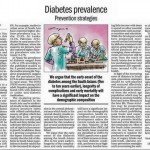 Pramod Regmi in today’s The Himalayan Times







 Food Price Research Shortlisted for Civil Service Prize
 It’s International Open Access week
 3C Event: Research Culture, Community & Connections – Wednesday 11 November 3-4pm
 ECR Opportunities: New Development Programme, Researcher Grants & Upcoming Events
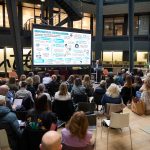 Help us capture BU’s knowledge exchange activity HE-BCI survey 2025–26
 Verbal autopsy paper published two days ago
 Horizon Europe Cluster 3 (Civil Security for Society) 2026 Calls Now Open
 MSCA Doctoral Networks 2026 Call Information Webinar
 ESRC Festival of Social Science 2026: Application Deadline Extended to Thursday 25 June 2026
 Reminder: Register for the ESRC Festival of Social Science 2026 Information Session
 ECR Funding Open Call: Research Culture & Community Grant – Apply now
 ERC Advanced Grant 2025 Webinar
 Update on UKRO services
 European research project exploring use of ‘virtual twins’ to better manage metabolic associated fatty liver disease