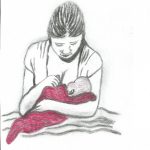
 Congratulations to Dr. Alison Taylor and her Ph.D. supervisors on the acceptance of the paper ‘’Scrutinised, judged and sabotaged’: A qualitative video diary study of first-time breastfeeding mothers’ by Midwifery (published by Elsevier) [1]. This is the second paper from Alison’s extremely interesting Ph.D. research, the first one was accepted late last year. The first article ‘The therapeutic role of video diaries: A qualitative study involving breastfeeding mothers’ was accepted by the international journal Women & Birth [2]. Alison is Senior Lecturer in Midwifery in the Centre for Midwifery, Maternal & Perinatal Health (CMMPH) and Infant Feeding Lead in the Faculty of Health & Social Sciences. Her co-authors are Professor Emerita Jo Alexander, Prof. Edwin van Teijlingen (in CMMPH) and Prof. Kath Ryan based at the University of Reading.
Reference:
- Taylor, A.M., van Teijlingen, E., Ryan, K., Alexander, J., 2019, Scrutinised, judged and sabotaged’: A qualitative video diary study of first-time breastfeeding mothers. Midwifery, 75: 16-23.
- Taylor, A.M., van Teijlingen, E., Alexander, J., Ryan, K., 2018, The therapeutic role of video diaries: A qualitative study involving breastfeeding mothers, Women and Birth, (online first) DOI. 10.1016/j.wombi.2018.08.160
 Congratulations to Dr. Alison Taylor
 Breastfeeding paper published today
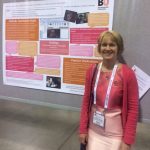 Poster presentation Dr Alison Taylor at ICM conference
 Dr. Rachel Arnold’s first paper as BU staff







 National Postdoc Appreciation Week 2026: The Changing Landscape of Postdoc Careers
 NIHR Insight South West Central Conference 2026 at Bournemouth University
 BU PhD student presented at World Safety Conference in South Africa
 National Research Supervision Recognition: Apply Now & Join the Supporting Workshop on 16 September
 3C Event: ECR Network Café – Wednesday 16 September 2-3pm
 Horizon Europe Cluster 3 (Civil Security for Society) 2026 Calls Now Open
 MSCA Doctoral Networks 2026 Call Information Webinar
 ESRC Festival of Social Science 2026: Application Deadline Extended to Thursday 25 June 2026
 Reminder: Register for the ESRC Festival of Social Science 2026 Information Session
 ECR Funding Open Call: Research Culture & Community Grant – Apply now
 ERC Advanced Grant 2025 Webinar
 Update on UKRO services
 European research project exploring use of ‘virtual twins’ to better manage metabolic associated fatty liver disease