Prof Alison McConnell of HSS’s iWell Research Centre has been part of an international, multi-centre placebo-controlled trial of adjunctive inspiratory muscle training for patients with chronic obstructive pulmonary disease (COPD). The trial, published in this month’s edition of the journal Thorax (impact factor 8.272) tested whether the addition of specific training of the inspiratory muscles enhanced the benefits to patients of traditional pulmonary rehabilitation programmes. It’s well-established that when undertaken separately, both interventions are effective; improving exercise tolerance, breathlessness and quality of life. However, there has been great controversy about whether adding the two interventions together provides superior outcomes.
The trial involved five centres in Europe and Canada, and 219 patients with COPD, taking 6 years to complete. The data indicated that exercise endurance time and breathlessness improved to a greater extent in patients who received rehabilitation plus inspiratory muscle training. The study also found that, irrespective of group allocation, those participants who achieved the greatest improvement in their inspiratory muscle function, also showed the greatest improvements in functional and clinical outcomes.
The full paper is available via Open Access here:
http://thorax.bmj.com/content/thoraxjnl/early/2018/06/18/thoraxjnl-2017-211417.full.pdf







 3C Event: Research Culture, Community & Connections – Wednesday 11 November 3-4pm
 ECR Opportunities: New Development Programme, Researcher Grants & Upcoming Events
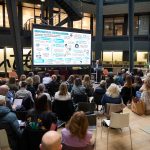 Help us capture BU’s knowledge exchange activity HE-BCI survey 2025–26
 Verbal autopsy paper published two days ago
 ESRC Studentships for 2027 Entry: Opportunity Now Open
 Horizon Europe Cluster 3 (Civil Security for Society) 2026 Calls Now Open
 MSCA Doctoral Networks 2026 Call Information Webinar
 ESRC Festival of Social Science 2026: Application Deadline Extended to Thursday 25 June 2026
 Reminder: Register for the ESRC Festival of Social Science 2026 Information Session
 ECR Funding Open Call: Research Culture & Community Grant – Apply now
 ERC Advanced Grant 2025 Webinar
 Update on UKRO services
 European research project exploring use of ‘virtual twins’ to better manage metabolic associated fatty liver disease