 Staff, students and members of the public are invited to join us for the next Cyber Security Seminar…
‘Understanding Crowdsourcing and CCTV surveillance’
Tuesday, 27th May
Coyne Lecture Theatre
4pm – 5pm
Closed Circuit Television (CCTV) has many different uses but is often considered an archetypal surveillance technology. These infrastructures generate large amounts of data; so much so that the technique of crowdsourcing has recently been applied to the problem of searching for abnormalities in live surveillance video; the premise being that many inexpert watchers are cheaper but as efficient as a small number of experienced security experts. However, the merits of crowdsourcing watchers of surveillance video are largely unknown.
In this talk Dr. Paul Dunphy will describe exemplar infrastructures of this type, and two user studies that assess the performance of the watchers of CCTV video online. The results prompt a discussion regarding the effectiveness of using crowdsourcing in such contexts, and the role such infrastructures can play in society.
Speaker Bio: Paul is a postdoctoral researcher in the Culture Lab at Newcastle University. He is interested in multi-disciplinary approaches to understand and design security and privacy technologies.
If you would like to join us for this presentation, please book your place via Eventbrite.







 3C Online Social: Thursday 26 March 1–2pm – Research Culture, Community & Can you Guess Who?
 Four BU students at national midwifery conference
 INRC book roundtable/presentation by Drs Jonathan Cole and Catherine Talbot, Wednesday 22/04/2026, 13:00h, P426
 BU M.Res. student’s evidence to UK Parliamentary Women & Equalities Committee
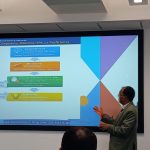 Prof Marahatta promoting BU-Nepal collaboration
 ECR Funding Open Call: Research Culture & Community Grant – Apply now
 ECR Funding Open Call: Research Culture & Community Grant – Application Deadline Friday 12 December
 MSCA Postdoctoral Fellowships 2025 Call
 ERC Advanced Grant 2025 Webinar
 Update on UKRO services
 European research project exploring use of ‘virtual twins’ to better manage metabolic associated fatty liver disease