 Would you be prepared to share your data with the wider research community or the general public?
A report published by the Research Information Network has found that UK data centres, which collect, store and supply research data to academics (such as the National Geoscience Data Centre at the British Geological Survey), have boosted research efficiency and improved a “culture of sharing data”. However, the report adds that work is needed to encourage researchers to submit more data to the centres.
The Royal Society has an ongoing major policy study that looks at the use of scientific information as it affects scientists and society, “Science As a Public Enterprise”. In theory raw data should be available for validation and further exploration but issues of quality control, appropriate retention policies, and the utility of storage of vast arrays of ‘raw’ data require urgent attention. The study is primarily focusing on the exchange of information among scientists and other scientifically literate audiences. A secondary focus of the study is public engagement with scientific information.
The British Academy response to the project is that all data produced through publicly funded research should be made available, provided confidentiality is protected, so that public policy and debate can be based on the best available evidence. They suggest that opening up data could also have the advantage of aiding interaction between the arts and sciences.







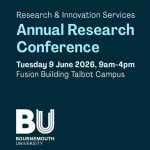 BU Annual Research Conference: Poster Exhibition Call for Applications
 Vitae Three Minute Thesis (3MT®) Competition: Applications Now Open
 3C Online Social: Thursday 26 March 1–2pm – Research Culture, Community & Can you Guess Who?
 Four BU students at national midwifery conference
 INRC book roundtable/presentation by Drs Jonathan Cole and Catherine Talbot, Wednesday 22/04/2026, 13:00h, P426
 ECR Funding Open Call: Research Culture & Community Grant – Apply now
 ECR Funding Open Call: Research Culture & Community Grant – Application Deadline Friday 12 December
 MSCA Postdoctoral Fellowships 2025 Call
 ERC Advanced Grant 2025 Webinar
 Update on UKRO services
 European research project exploring use of ‘virtual twins’ to better manage metabolic associated fatty liver disease