The joint meeting between the Creative & Digital Economies Research Theme and the Entrepreneurship & Economic Growth Research Theme took place last week. The small but focused group discussed strategies of moving forwards with the themes and ideas on how to bring people together.
The group decided that it need a central focus, and will use the recently signed Digital Manifesto as a way to bring people together for future meetings. To read more about the Digital Manifesto please read Samantha Leahy-Harland’s post here (link).
For the next joint meeting brief presentations will be given to initiate a focussed action list. So if you feel your area of research can benefit from speaking to other colleagues in areas such as social media and digital technology, and how businesses are using these emerging technologies come prepared to talk about possible collaboration projects and bids and your specific area of research.
Another link area is small local businesses, such as rural business or family run business. Again if you feel you could benefit from shared knowledge and experience join us at our next meeting.
It is hoped these actions can then be taken forward towards joint bids in areas such as Horizon 2020 (link), and to bring together like minded colleagues to share knowledge and experience.
If you would like to read a copy of the Digital Manifesto or want to discuss this further please get in touch via Nikki Gloyns ngloyns@bournemouth.ac.uk
The date of the next meeting is TBC likely to be in September.







 Verbal autopsy paper published two days ago
 ESRC Studentships for 2027 Entry: Opportunity Now Open
 SONAMONI contributions to Safety Conference 2026 in South Africa
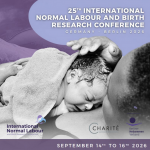 Three CMWH presentations at Berlin conference
 Horizon Europe Cluster 3 (Civil Security for Society) 2026 Calls Now Open
 MSCA Doctoral Networks 2026 Call Information Webinar
 ESRC Festival of Social Science 2026: Application Deadline Extended to Thursday 25 June 2026
 Reminder: Register for the ESRC Festival of Social Science 2026 Information Session
 ECR Funding Open Call: Research Culture & Community Grant – Apply now
 ERC Advanced Grant 2025 Webinar
 Update on UKRO services
 European research project exploring use of ‘virtual twins’ to better manage metabolic associated fatty liver disease