Sascha-Dov Bachmann, Associate Professor in International Law, was invited to present as a panel member the subject of Hybrid War/Threats/Ecothreats and Armed Conflict at the 5th International Symposium on Security and Military Law 2014 (the ISSML), to be held on September 25-27, 2014 in Seoul and organized by the Office of Judge Advocate General, Republic of Korea Army.
The purpose of the ISSML is to bring together leading authorities of the world including scholars, government officials, and military officers, to provide a meaningful opportunity to discuss, explore, and examine on current international law issues, and to serve as an effective forum of security and military diplomacy for peace and stability of the world.
This year’s ISSML has so far attracted high ranking military officers, government officials, scholars from 22 countries; and confirmed presenters including judge advocates having operational law assignments from US, UK, Australia, and S. Korea, Belgium General Counsel to the Office of Ministry of Defense and an ICRC Assembly member.
Sascha’s work on Hybrid War and Ecothreats has been published in various international and UK journals and is subject of continuing collaborative activities with colleagues and institutions from the UK, US, Sweden and Germany.
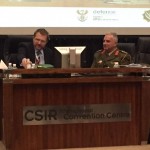 1st International Military Law Conference in South Africa – BU Research receives global attention
 BU Academic appointed as Extraordinary Visiting Professor (AP) at Swedish Defence University







 BU Annual Research Conference: Poster Exhibition Call for Applications
 Vitae Three Minute Thesis (3MT®) Competition: Applications Now Open
 3C Online Social: Thursday 26 March 1–2pm – Research Culture, Community & Can you Guess Who?
 Four BU students at national midwifery conference
 INRC book roundtable/presentation by Drs Jonathan Cole and Catherine Talbot, Wednesday 22/04/2026, 13:00h, P426
 ECR Funding Open Call: Research Culture & Community Grant – Apply now
 ECR Funding Open Call: Research Culture & Community Grant – Application Deadline Friday 12 December
 MSCA Postdoctoral Fellowships 2025 Call
 ERC Advanced Grant 2025 Webinar
 Update on UKRO services
 European research project exploring use of ‘virtual twins’ to better manage metabolic associated fatty liver disease