If you haven’t noticed by now, there is a giant bubble outside of Kimmeridge House this week in celebration of the International Open Access week. The Open Access Bubble will be set up outside of Kimmeridge House (weather permits) and you can visit us between 10am to 3pm, until this Friday.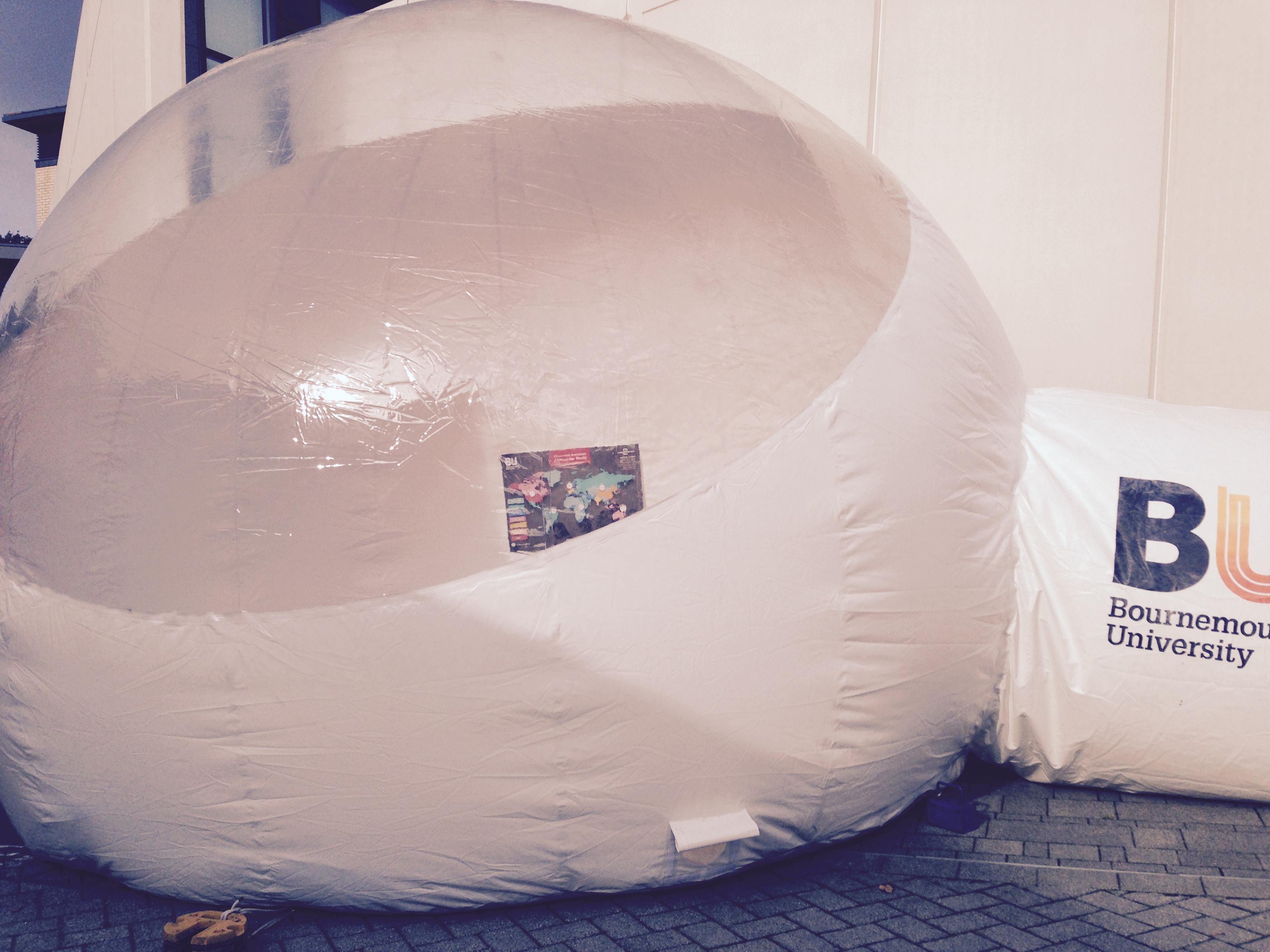 If you think that the Open Access Bubble looks cool from the outside, check out the inside
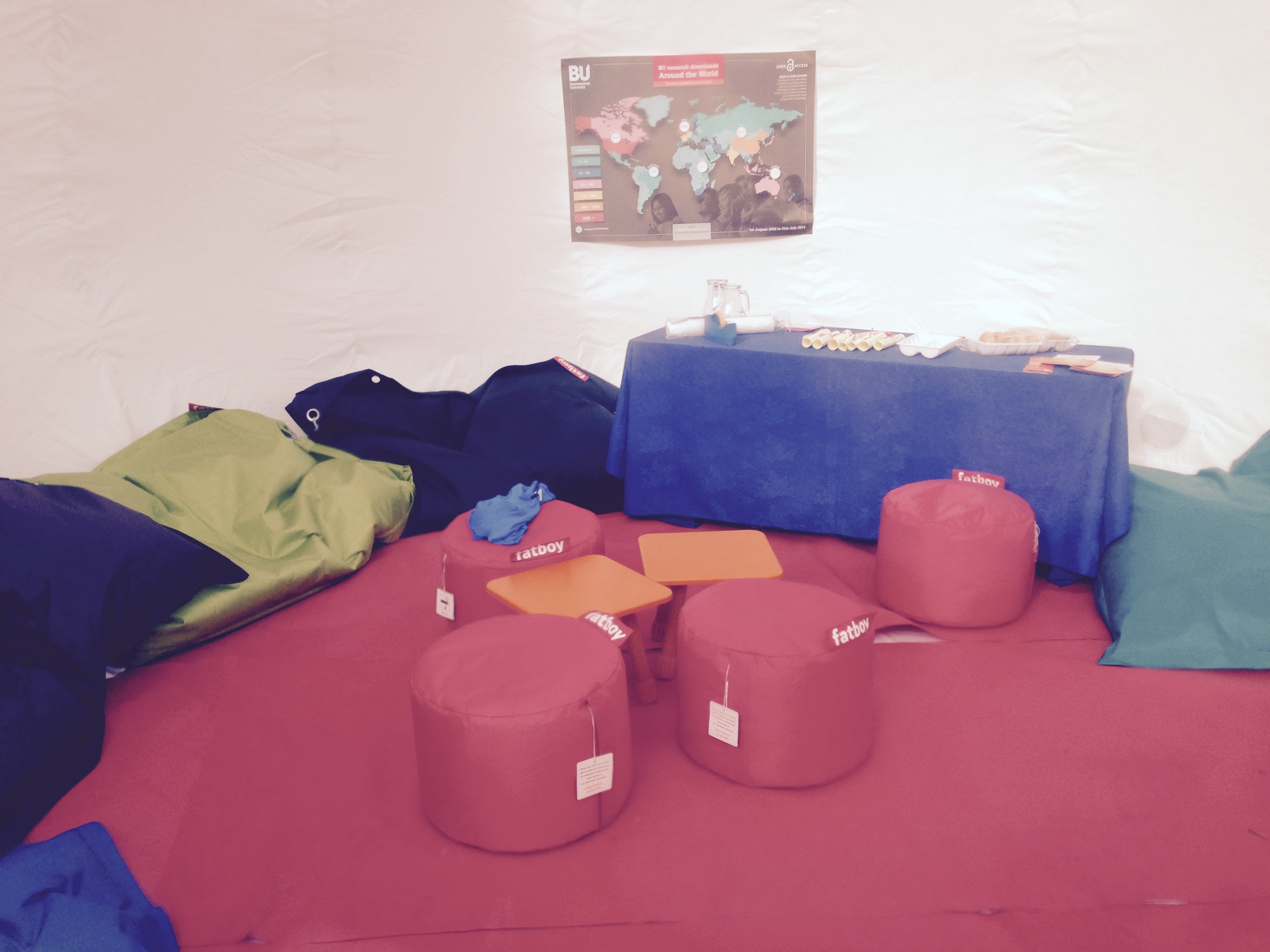 There is a Bubble talk every day from 10am to 11am, covering important topics like ‘The Benefits of Open Access’, ‘Open Access and the Philosophy of Openness’ and ‘Public Engagement Opportunities for Academics and Open Access’. Not only that, we also offer free doughnuts to visitors of the dome. You also get to laze on the bean bags while you watch some interesting video abstracts featuring some of our open access publications; and videos on the importance of open access.
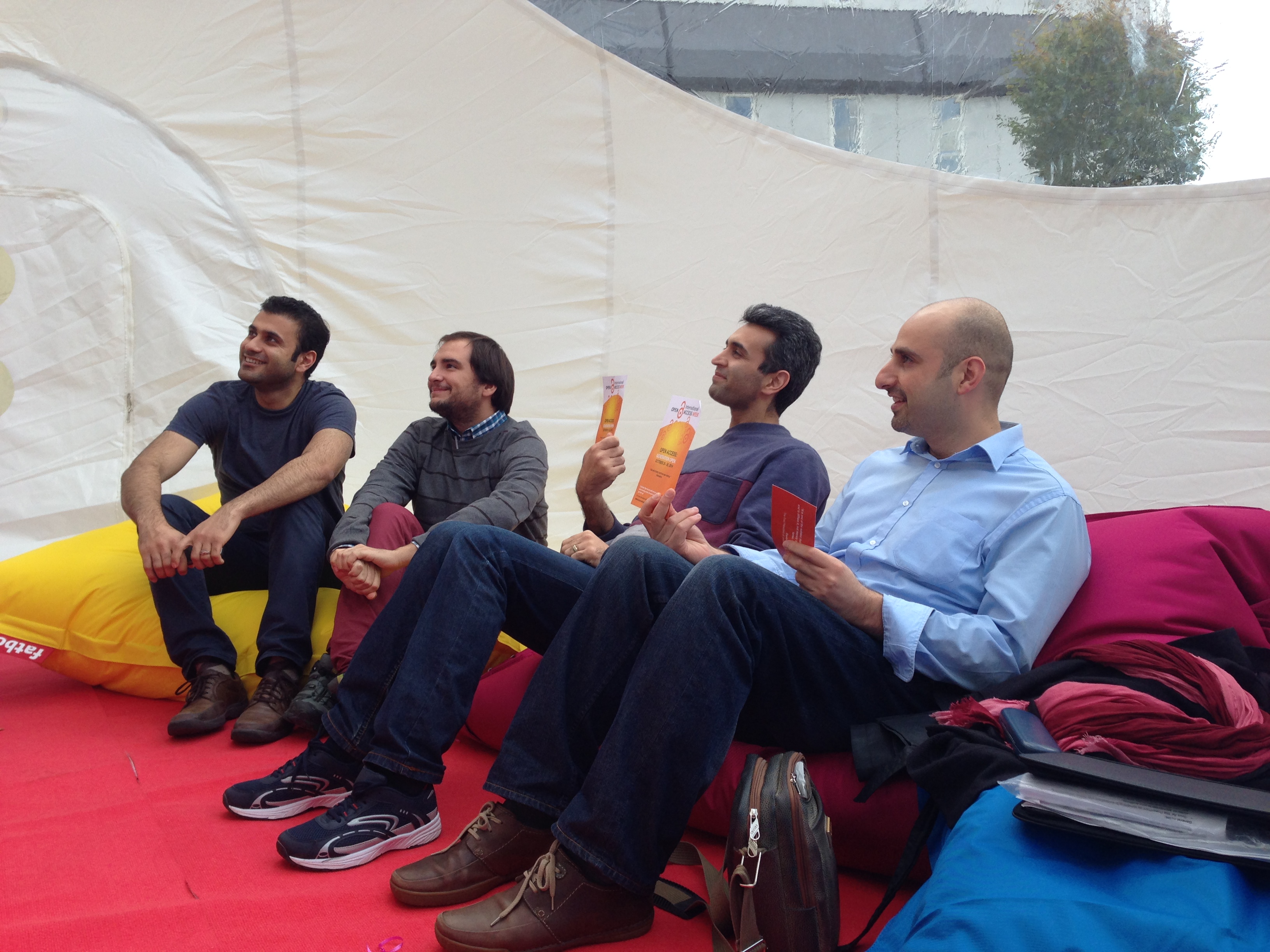 So please take this opportunity, visit the Open Access Bubble and get involved! For information on other events that are taking place, please visit www.bournemouth.ac.uk/open-access
NB: If the weather does not permit the setting up of the Open Access Bubble, the Open Access Room will be set up at CG02, Christchurch House.







 Verbal autopsy paper published two days ago
 ESRC Studentships for 2027 Entry: Opportunity Now Open
 SONAMONI contributions to Safety Conference 2026 in South Africa
 Three CMWH presentations at Berlin conference
 Horizon Europe Cluster 3 (Civil Security for Society) 2026 Calls Now Open
 MSCA Doctoral Networks 2026 Call Information Webinar
 ESRC Festival of Social Science 2026: Application Deadline Extended to Thursday 25 June 2026
 Reminder: Register for the ESRC Festival of Social Science 2026 Information Session
 ECR Funding Open Call: Research Culture & Community Grant – Apply now
 ERC Advanced Grant 2025 Webinar
 Update on UKRO services
 European research project exploring use of ‘virtual twins’ to better manage metabolic associated fatty liver disease