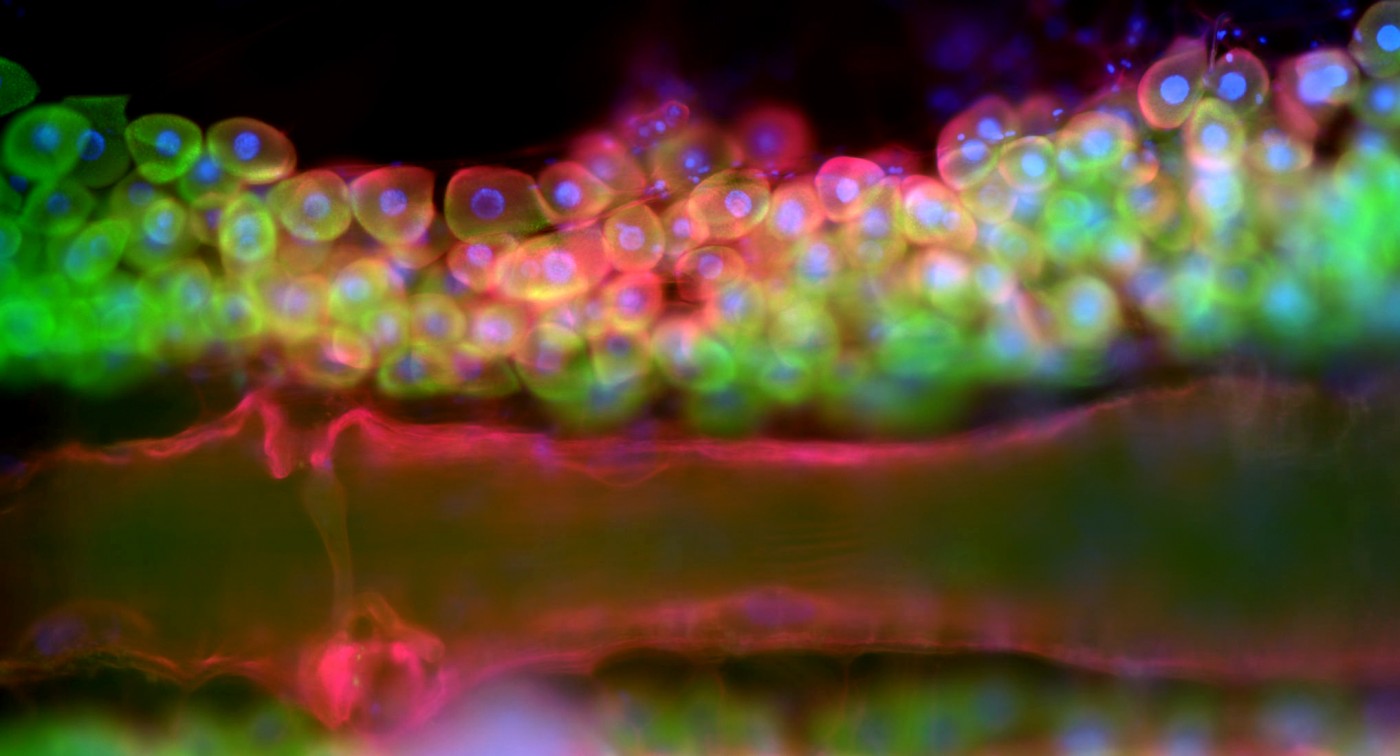
The heart of an insect.
A £100,000 Wellcome Trust Seed Award has been granted to fund a project using fruit flies (Drosophila) to examine an important yet poorly understood aspect of human heart physiology.
The heart senses and adapts to its own highly dynamic mechanical environment. This environment changes beat-by-beat, as well as over longer timescales, due to altered physiology or as a consequence of disease. Failure to detect and adjust cardiac performance accordingly is associated with arrhythmias and sudden cardiac death. The mechanism for this adaptation is not known.
The goal is to study the cellular and molecular basis of this mechanism using the Drosophila heart as a simple model. Preliminary data obtained for an Honours project suggests that stretch-activated mechanosensitive ion channels are key components.
Research supported by Paul Hartley’s lab here at Bournemouth University and led by Dr Barry Denholm (University of Edinburgh) will investigate the hypothesis that these channels provide a direct link to convert physical force (stretch of the cardiac tissue) into biochemical signal (ion flux), which in turn regulates heart physiology and function (contractility).







 Verbal autopsy paper published two days ago
 ESRC Studentships for 2027 Entry: Opportunity Now Open
 SONAMONI contributions to Safety Conference 2026 in South Africa
 Three CMWH presentations at Berlin conference
 Horizon Europe Cluster 3 (Civil Security for Society) 2026 Calls Now Open
 MSCA Doctoral Networks 2026 Call Information Webinar
 ESRC Festival of Social Science 2026: Application Deadline Extended to Thursday 25 June 2026
 Reminder: Register for the ESRC Festival of Social Science 2026 Information Session
 ECR Funding Open Call: Research Culture & Community Grant – Apply now
 ERC Advanced Grant 2025 Webinar
 Update on UKRO services
 European research project exploring use of ‘virtual twins’ to better manage metabolic associated fatty liver disease