New opportunity for your students to contribute to environmental, economic and social sustainability
As part of helping our students to make a difference to the world, BU has signed up to an NUS initiative called Dissertations for Good (DfG). The initiative connects students with external organisations who then work collaboratively to complete research projects into social, economic and environmental sustainability. The outcome is a piece of student work that contributes in a tangible way, a report that is useful for their partnered organisation and a project that forms their dissertation.
DfG helps students to improve their communication, interpersonal, problem-solving and organisation skills, as well as developing their ability to use their initiative and self-motivate. It also provides valuable CV-enhancing experience of working in the outside world.
All students looking to undertake a research project at BU can register at www.nus.org.uk/dfg and create a profile. This allows them to search the organisations participating in DfG. They then request to be partnered with the organisation and organise a planning meeting. The student, their supervisor and a representative from the partner organisation meet to discuss the project and work together to make the project a success.
Details will be circulated to students via the portal. We shall be monitoring and will seek to evaluate engagement.
 What a difference a game makes







 ECR Opportunities: New Development Programme, Researcher Grants & Upcoming Events
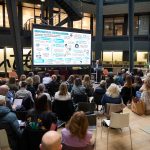 Help us capture BU’s knowledge exchange activity HE-BCI survey 2025–26
 Verbal autopsy paper published two days ago
 ESRC Studentships for 2027 Entry: Opportunity Now Open
 SONAMONI contributions to Safety Conference 2026 in South Africa
 Horizon Europe Cluster 3 (Civil Security for Society) 2026 Calls Now Open
 MSCA Doctoral Networks 2026 Call Information Webinar
 ESRC Festival of Social Science 2026: Application Deadline Extended to Thursday 25 June 2026
 Reminder: Register for the ESRC Festival of Social Science 2026 Information Session
 ECR Funding Open Call: Research Culture & Community Grant – Apply now
 ERC Advanced Grant 2025 Webinar
 Update on UKRO services
 European research project exploring use of ‘virtual twins’ to better manage metabolic associated fatty liver disease