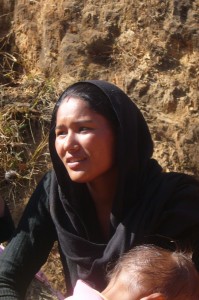
On previous occasions we have written on the BU Research Blog about our THET-funded project, for example earlier this year on the first training sessions in Nepal. Bournemouth University is leading on a project in collaboration with Tribhuvan University (the largest and oldest university in Nepal) and Liverpool John Moores University (LJMU). The project receives funding from DFID, and is managed through THET and supported locally in Nepal by a non-governmental organisation called Green Tara Nepal. We have been working with this charity for nearly ten years.
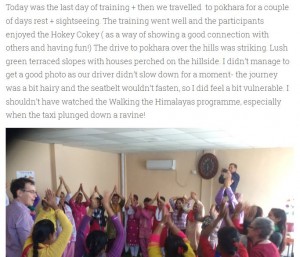 This time we would like to highlight a regular research blog written by Ish Fawcett who went out to Nepal last month as one of the UK volunteers. She has written some lovely blogs on her time in Nepal, about the training sessions as well as her general experiences of and observations on Nepal. Her blogs can be accessed here!
We would like to take this opportunity to repeat our call for volunteers. If you are a health or education professional with an interest in mental health and/or maternity care and you are interested in volunteering later this year for a week to ten days in Nepal please contact Edwin van Teijlingen (evteijlingen@bournemouth.ac.uk ).

Prof. Edwin van Teijlingen
CMMPH
 THET-project planning meeting in Kathmandu
 THET presentation at BNAC
 BU’s THET project in Nepal







 First publication for two CMWH PhD students
 Opportunities to support our REF preparations
 SPROUT Returns: Designing Sustainability in Research Practice – Wednesday 20 May 12-2pm
 Innovative Approaches to Doctoral Supervision: Selected Case Studies
 3C Event: Research Culture, Community & Canapés-Tuesday 19 May 1-2pm
 Apply now to take part in the 2026 ESRC Festival of Social Science
 Reminder: Register for the ESRC Festival of Social Science 2026 Information Session
 ECR Funding Open Call: Research Culture & Community Grant – Apply now
 ECR Funding Open Call: Research Culture & Community Grant – Application Deadline Friday 12 December
 MSCA Postdoctoral Fellowships 2025 Call
 ERC Advanced Grant 2025 Webinar
 Update on UKRO services
 European research project exploring use of ‘virtual twins’ to better manage metabolic associated fatty liver disease