The Concordat to Support Research Integrity provides a comprehensive national framework for good research conduct and its governance. It outlines five commitments which the University must be compliant with as recipients of HEFCE funding.
HEFCE’s letter to all the heads of HEFCE-funded higher education institutions explains the requirement for institutions to comply with the Concordat to Support Research Integrity. It sets out HEFCE’s view of compliance with the Concordat, and provides advice for institutions on finding further information. The five commitments are:
- Maintain the highest standards of rigour and integrity in all aspects of research;
- Ensure that research is conducted according to appropriate ethical, legal and professional frameworks, obligations and standards;
- Support a research environment that is underpinned by a culture of integrity and based on good governance, best practice and support for the development of researchers;
- Use transparent, robust and fair processes to deal with allegations of research misconduct should they arise;
- Work together to strengthen the integrity of research and to review process regularly and openly.
Each commitment outlines the responsibilities of the researcher, the employers of researchers and the funders of research.
Bournemouth University is committed to ensuring that the research conducted at the Univeristy follows appropriate ethical, legal and professional frameworks and obligations.
A link to the Concordat can be found here:







 Verbal autopsy paper published two days ago
 ESRC Studentships for 2027 Entry: Opportunity Now Open
 SONAMONI contributions to Safety Conference 2026 in South Africa
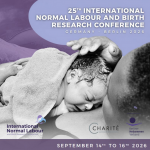 Three CMWH presentations at Berlin conference
 Horizon Europe Cluster 3 (Civil Security for Society) 2026 Calls Now Open
 MSCA Doctoral Networks 2026 Call Information Webinar
 ESRC Festival of Social Science 2026: Application Deadline Extended to Thursday 25 June 2026
 Reminder: Register for the ESRC Festival of Social Science 2026 Information Session
 ECR Funding Open Call: Research Culture & Community Grant – Apply now
 ERC Advanced Grant 2025 Webinar
 Update on UKRO services
 European research project exploring use of ‘virtual twins’ to better manage metabolic associated fatty liver disease