Representatives from Kidney Research UK conducted a site visit to Bournemouth on Monday hosted by the Department of Life and Environmental Science (Dr. Paul Hartley and Shruthi Sivakumar) as well as Prof. John Fletcher. The event was attended by clinician-researchers from Bristol and Brighton Universities and was intended as a ‘meet and greet’ between the charity and its funded researchers. The day was highly productive and KRUK’s representatives were very impressed by BU’s research labs, projects and learning environment (especially the spanking new Leica SP8 confocal microscope).
BU currently holds an Innovation Award from KRUK for the use of fruit flies to study the genetics of kidney failure in diabetes. This work is important because kidney disease is a common condition and major contributing factor to cardiovascular disease worldwide. Astonishingly, there are still very few treatments beyond dialysis and a very poor life expectancy (3 years) when diagnosed with kidney disease in your 40’s.
The charity stressed that they are highly receptive to new applications that tackle this problem. Funding is not restricted to basic science or clinical research…so if you have any good ideas…let them know and get an application started!!
http://www.kidneyresearchuk.org/research
An informative powerpoint by KRUK is available as pdf format – let me know if you’re interested in having a copy (phartley@bournemouth.ac.uk)
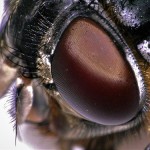 Strong Presence of BU at UK Kidney Week







 ESRC Festival of Social Science 2026: An Opportunity to Engage New Audiences
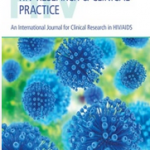 New HIV paper by BU PhD student
 BU Annual Research Conference: Poster Exhibition Call for Applications
 Vitae Three Minute Thesis (3MT®) Competition: Applications Now Open
 3C Online Social: Thursday 26 March 1–2pm – Research Culture, Community & Can you Guess Who?
 ECR Funding Open Call: Research Culture & Community Grant – Apply now
 ECR Funding Open Call: Research Culture & Community Grant – Application Deadline Friday 12 December
 MSCA Postdoctoral Fellowships 2025 Call
 ERC Advanced Grant 2025 Webinar
 Update on UKRO services
 European research project exploring use of ‘virtual twins’ to better manage metabolic associated fatty liver disease