Want to submit to this years Research Photography Competition but not sure where to start? Need some inspiration?
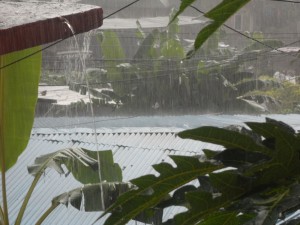
Over the past two years the competition has seen some fantastic entries from both staff and students across the University. From photos of the heart of a fly, the monsoons in Nepal, to Napoleon looking over St Helena and photos which represent the fantastic work academics at Bournemouth University are doing to improve nutritional care for the elderly. You can submit an image for any area of your research and it can be as creative or as simple as you like. Take a look below at some of the entries we had last year.
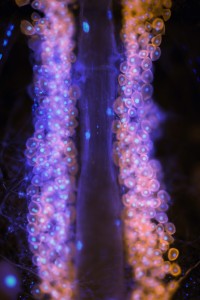
‘The heart of a fly- exploring cardiovascular disease’ Dr Paul Hartley Faculty of Science and Technology |
|
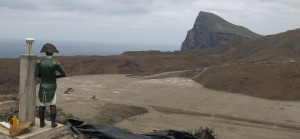
‘Napoleon looking over St Helena’ Dan Hogan Faculty of Media and Communication |
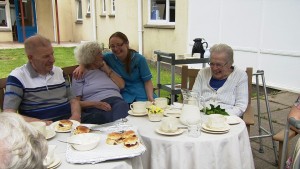
‘Dignity in care: improving nutrition in people with dementia’ Professor Jane Murphy Faculty of Health and Social Sciences |
Want to submit? All you have to do is send an email to research@bournemouth.ac.uk with your image and a 100-200 word blurb about the research behind the image, by 5pm on Friday 27 January.
If you’d like more information have a read through here or you can email Hannah Jones if you any questions.
 Submit to 2017’s Research Photography Competition
 Congratulations to your winners of the 2017 Research Photography Competition!







 Verbal autopsy paper published two days ago
 ESRC Studentships for 2027 Entry: Opportunity Now Open
 SONAMONI contributions to Safety Conference 2026 in South Africa
 Three CMWH presentations at Berlin conference
 Horizon Europe Cluster 3 (Civil Security for Society) 2026 Calls Now Open
 MSCA Doctoral Networks 2026 Call Information Webinar
 ESRC Festival of Social Science 2026: Application Deadline Extended to Thursday 25 June 2026
 Reminder: Register for the ESRC Festival of Social Science 2026 Information Session
 ECR Funding Open Call: Research Culture & Community Grant – Apply now
 ERC Advanced Grant 2025 Webinar
 Update on UKRO services
 European research project exploring use of ‘virtual twins’ to better manage metabolic associated fatty liver disease