
Improving Vehicle Transportation Safety and Security
Our next instalment of the ‘Photo of the Week’ series features Dr Neetesh Saxena‘s image of research being undertaken to improve vehicle transportation safety and security. The series is a weekly instalment which features an image taken by our fantastic BU staff and students. The photos give a glimpse into some of the fascinating work our researchers have been doing across BU and the wider community.
This research involves securing communications efficiently among vehicles (electrical vehicles, petrol/gas vehicles, and hybrid vehicles) between the vehicles and the road side equipment. This work ensures the availability of critical information to these vehicles that will ultimately help in reducing road accidents and injuries. This work is carried out in collaboration with Georgia Tech and BU.
If you’d like find out more about the research or the photo itself then please contact Dr Saxena.
This photo was originally an entry to the 2017 Research Photography Competition. If you have any other questions about the Photo of the Week series or the competition please email research@bournemouth.ac.uk
 Photo of the Week: This is me. I am Ron.
 Photo of the Week: Dramaturgical study of ‘Game of Thrones’
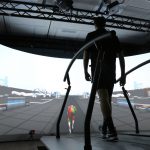 Photo of the Week: The ORI Gait Lab
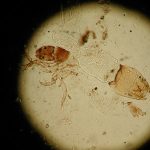 Photo of the Week: Zooming in on Dietary Differences







 BU Prof Jonathan Parker promoting social work in Malaysia
 New interdisciplinary paper accepted for publication
 Three NIHR Internships awarded at BU
 Research highlighted at the UN in New York
 Poverty in the UK: book launch today at BU
 BU contributions to successful Global Health conference
 Horizon Europe Cluster 3 (Civil Security for Society) 2026 Calls Now Open
 MSCA Doctoral Networks 2026 Call Information Webinar
 ESRC Festival of Social Science 2026: Application Deadline Extended to Thursday 25 June 2026
 Reminder: Register for the ESRC Festival of Social Science 2026 Information Session
 ECR Funding Open Call: Research Culture & Community Grant – Apply now
 ERC Advanced Grant 2025 Webinar
 Update on UKRO services
 European research project exploring use of ‘virtual twins’ to better manage metabolic associated fatty liver disease