Some carnivorous plants hold ‘pools’ within the plant consisting of rainwater and secreted substances such as sugars, used to lure and trap insect prey. Microscopic analysis of this fluid collected from pitcher plants (Sarracenia sp.) and bromeliads (Brocchinia sp.) growing in BU’s Biodome has revealed a rich diversity of single-celled microorganisms. These microbes, less than half a millimetre in length, are known as ciliates and distinguished by hair-like cilia that they use for locomotion and feeding.
Ciliates are incredible important grazers, feeding on bacteria, algae and organic matter, and are crucial part of the microecosystem within the bromeliad and pitcher plant pools, which also includes algae, bacteria and insect larvae and copepods that also grow in such pools, playing an important role in energy transfer from microbes to animals.

One of the microbes found within the pools was the the ciliate Euplotes, pictured about. Copyright Jack Dazley
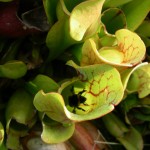 Eating out in Britain: the feeding habits of non-native pitcher plants
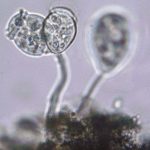 Hidden Microbes in Christchurch House “Pond”
 The secret information hidden in your hair







 Verbal autopsy paper published two days ago
 ESRC Studentships for 2027 Entry: Opportunity Now Open
 SONAMONI contributions to Safety Conference 2026 in South Africa
 Three CMWH presentations at Berlin conference
 Horizon Europe Cluster 3 (Civil Security for Society) 2026 Calls Now Open
 MSCA Doctoral Networks 2026 Call Information Webinar
 ESRC Festival of Social Science 2026: Application Deadline Extended to Thursday 25 June 2026
 Reminder: Register for the ESRC Festival of Social Science 2026 Information Session
 ECR Funding Open Call: Research Culture & Community Grant – Apply now
 ERC Advanced Grant 2025 Webinar
 Update on UKRO services
 European research project exploring use of ‘virtual twins’ to better manage metabolic associated fatty liver disease