2018-01-08T15:37:31Z
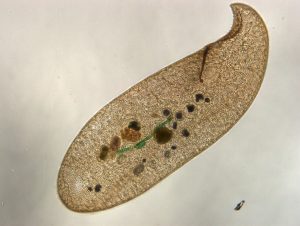
Hunter Hines, a PhD student supervised by Dr Genoveva Esteban in the Department of Life and Environmental Sciences (SciTech), has had a piece published by the prestigious journal Nature. Hines is the first author on an article about using social media in microbiology outreach at a global scale. Hunter’s Instagram account @microbialecology currently has 55,000 followers. At the end of 2018 his account received over 1.4 million views in a single week. Around this time this also went viral being picked up by ~30 international media outlets, including National Geographic (Russia). The Nature piece published this week can be read here: doi:10.1038/d41586-019-00493-3
https://www.nature.com/articles/d41586-019-00493-3
Hunter’s Instagram account: https://www.instagram.com/microbialecology
NatGeo Russia: http://www.nat-geo.ru/nature/1249648-snyato-cherez-mikroskop-ili-chto-proiskhodit-v-kaple-vody/
Hunter’s PhD research is on the global distribution of the single-celled organisms known as protists.
 New Research Collaboration between Bournemouth University and La Trobe University, Melbourne, Australia







 3C Event: Research Culture, Community & Connections – Wednesday 11 November 3-4pm
 ECR Opportunities: New Development Programme, Researcher Grants & Upcoming Events
 Help us capture BU’s knowledge exchange activity HE-BCI survey 2025–26
 Verbal autopsy paper published two days ago
 ESRC Studentships for 2027 Entry: Opportunity Now Open
 Horizon Europe Cluster 3 (Civil Security for Society) 2026 Calls Now Open
 MSCA Doctoral Networks 2026 Call Information Webinar
 ESRC Festival of Social Science 2026: Application Deadline Extended to Thursday 25 June 2026
 Reminder: Register for the ESRC Festival of Social Science 2026 Information Session
 ECR Funding Open Call: Research Culture & Community Grant – Apply now
 ERC Advanced Grant 2025 Webinar
 Update on UKRO services
 European research project exploring use of ‘virtual twins’ to better manage metabolic associated fatty liver disease