 When a funding call comes out that matches your own interest or experience, it is easy to get caught up in the whirl-wind of excitement in assembling a team to put together an application. One of the first things most applicants think about is their immediate colleagues, past or current, from the academic world.
Somewhere along the way in the process, non-academic participants are considered. In many cases, approaches are made to outside organisations – sometimes through existing contacts, to join on a proposal. When these organisations are approached, they are often asked to provide a letter of support, often without much substance or specificity when it is a new relationship. Feedback from various funders has demonstrated that what is being looked for is strong, existing relationships, in particular those that provide leveraged (matched) funding or resource. Good applications have been able to demonstrate true partnerships, and not tokenism through a bland letter of support. The RDS can help review draft letters of support to ensure they appear to meet funder need.
Why non-academic partnerships and collaborations?
Research partnerships and collaborations with non-academic experts (whether they be in business, health sectors, NGOs etc.) are likely to contribute in forms that will contribute to ‘real world’ uses, from practical experience.
Who you should approach will vary but it is best to have demonstrable proof of either working together or good strategic alignment with the planned research. The level of involvement will demonstrate a good partnership. A mistake that many make is contacting a ‘big’ company just because they are ‘big’, and not because they are the most appropriate partner for the research.
Support for finding non-academic collaborations
As well as any connections through current sectoral/subject experts within existing networks, at BU, there is support from Ehren Milner (emilner@bournemouth.ac.uk), the Research Facilitator for Industrial Collaborations, and Ian Jones (ijones@bournemouth.ac.uk), the Head of External Engagement. They field queries from organisations looking for collaborations from BU and may know of an organisation that would align with your research.
One of the best methods to build a network is to make yourself, and your research known through networking events. There are a series of collaborations events and STEAMlabs that BU run to help link together academics and external organisations. Many other organisations (e.g. the KTN) run their own networking events. You should think about building your networks years in advance, not days. One piece of advice that has come back from external organisations is that when it comes to leveraged funding, they like to know where their resources are going; so in most cases they wish to spend time getting to know academics first. A poor approach to new connections will start off asking for support before a direct conversation has even been held.
Guidance on Leading an external research application.
The above link will lead to a guide intended to assist you through the application stage when you intend to lead on an RKE project. The details of the process may vary between funding bodies, but the basic principles are likely to be very similar.
Helpful advice, and a pro forma table, are available to assist with ensuring the integrity of any collaborative relationships. Good luck, and happy networking!
 Institutional Learning from Funder Feedback: Institutional support to develop PDRAs within a project
 Institutional Learning from Funder Feedback: Research Methods
 Institutional Learning from Funder feedback
 BU Briefing – An action research approach to informing institutional e-Learning policy







 National Research Supervision Recognition: Apply Now & Join the Supporting Workshop on 16 September
 3C Event: ECR Network Café – Wednesday 16 September 2-3pm
 BU geography student’s undergraduate dissertation published in international journal
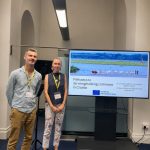 Why some commons survive and others don’t
 BU Research blog in 2023 grows into 2026 publication
 Horizon Europe Cluster 3 (Civil Security for Society) 2026 Calls Now Open
 MSCA Doctoral Networks 2026 Call Information Webinar
 ESRC Festival of Social Science 2026: Application Deadline Extended to Thursday 25 June 2026
 Reminder: Register for the ESRC Festival of Social Science 2026 Information Session
 ECR Funding Open Call: Research Culture & Community Grant – Apply now
 ERC Advanced Grant 2025 Webinar
 Update on UKRO services
 European research project exploring use of ‘virtual twins’ to better manage metabolic associated fatty liver disease