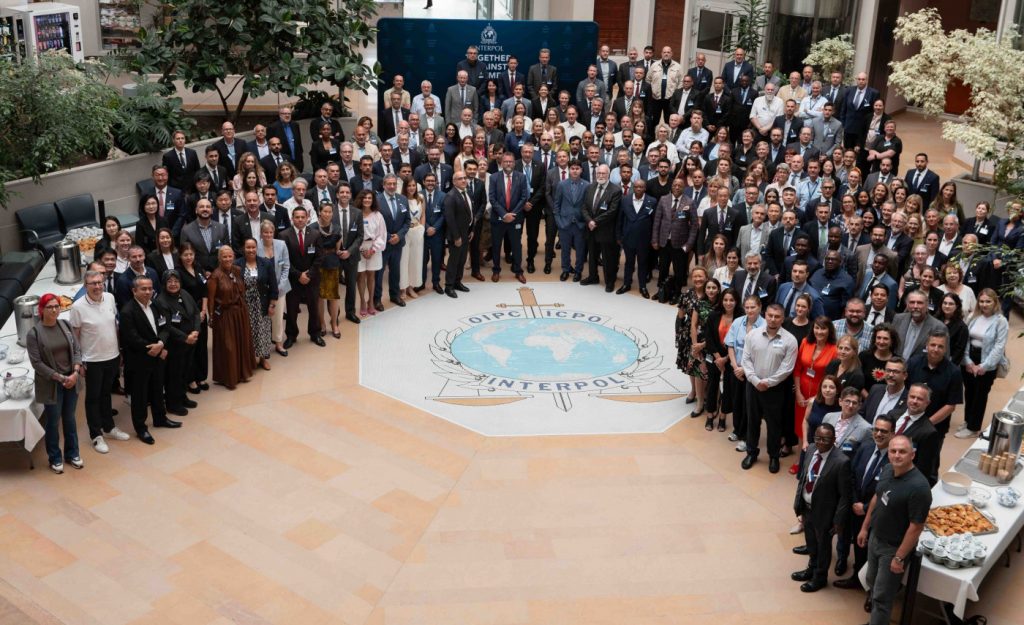
Last week saw INTERPOL’s 35th Disaster Victim Identification conference designed to strengthen global cooperation, improve forensic practices and enhance the identification of victims in mass fatality incidents. It featured a raft of highly topical presentations covering responses to disasters form the Crans-Montana Bar Fire on 1 January 2026, to Hong Kong’s Tai Po incident and the Bondi Beach Mass-Fatality Shooting along-side long-term, ongoing contexts and challenges, most notably identification efforts in Ukraine.
Part of Interpol’s Disaster Victim Identification (DVI) mission is to develop international standards that strengthen global cooperation and, crucially, support victims’ families in ensuring dignified identification, information and repatriation allowing for appropriate funerary practices. It is in this spirit that Professor Melanie Klinkner was invited to present on the Bournemouth Protocol on Mass Grave Protection and Investigation in front of 227 participants from 59 countries. Her presentation highlighted the rights-informed and victim-aware provisions governing mass graves that also apply to DVI.
Fundamental principles regarding the inherent dignity of the human person, non-discrimination, and recognition before the law extend beyond death. Under international law, the dead are protected either directly or indirectly; the latter, through the rights afforded to their living relatives. In the context of mass fatalities and humanitarian intervention, it is widely accepted that the right to dignity and physical integrity apply. Melanie highlighted core legal provisions stressing the importance of dignified, respectful and indiscriminate treatment for identification, return of human remains and funerary customs.
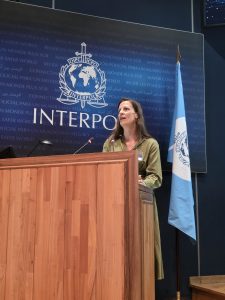
Her talk was extremely timely in two respects: Firstly, in light of current proposals to turn the 2016 draft articles on the Protection of Persons in the Event of Disaster into a fully-fledged international treaty. The definitions of disasters presently proffered
‘a calamitous event or series of events resulting in widespread loss of life, great human suffering and distress, mass displacement, or large-scale material or environmental damage, thereby seriously disrupting the functioning of society’ (Article 3)
clearly encompassing mass graves as possible sites of (or resulting from) disaster. Moreover, the treaty aims ‘to facilitate the adequate and effective response to disasters […] so as to meet the essential needs of the persons concerned, with full respect for their rights’ (Article 1). This concerns victims – dead and alive.
And secondly, due to the contemporary challenges that mass graves present globally: From July 2024 until February 2026 alone, a total of 584 entries from alerts on mass graves and related activities on missing persons from across the world have been recorded in the MaGPIE database suggesting the discovery and reporting of 135 new mass graves. This underscores the pressing need that the full range of victims’ rights must be given consideration if the framework is to be progressed that offers indiscriminate protection and respect.
 Bournemouth Research on mass grave protection and investigation presented to Iraqi authorities
 Professor Melanie Klinkner receives European Research Council Consolidator Grant







 ECR Opportunities: New Development Programme, Researcher Grants & Upcoming Events
 Help us capture BU’s knowledge exchange activity HE-BCI survey 2025–26
 Verbal autopsy paper published two days ago
 ESRC Studentships for 2027 Entry: Opportunity Now Open
 SONAMONI contributions to Safety Conference 2026 in South Africa
 Horizon Europe Cluster 3 (Civil Security for Society) 2026 Calls Now Open
 MSCA Doctoral Networks 2026 Call Information Webinar
 ESRC Festival of Social Science 2026: Application Deadline Extended to Thursday 25 June 2026
 Reminder: Register for the ESRC Festival of Social Science 2026 Information Session
 ECR Funding Open Call: Research Culture & Community Grant – Apply now
 ERC Advanced Grant 2025 Webinar
 Update on UKRO services
 European research project exploring use of ‘virtual twins’ to better manage metabolic associated fatty liver disease